While the noise from highway traffic, jet planes, and the ballistic missiles that have been arriving from Iran and Lebanon is an obvious nuisance to humans, its impact on the natural world reaches far deeper into the wilderness than previously understood.
Researchers at Beersheba’s Ben-Gurion University of the Negev (BGU) have pioneered a first-of-its-kind spatial model that maps how road noise disrupts animal behavior. They focused specifically on birds, revealing that nearly half of Israel’s open spaces may be compromised as viable nesting habitats for our feathered friends.
The research has just been published in the journal People and Nature in the article, “Effect distances of road traffic noise on wildlife behavior.” Their soundscape-mapping approach used bird-habitat selection that, instead of simply measuring decibels, mapped the “soundscape” through the eyes and ears of wildlife. A soundscape is an acoustic environment, either natural or man-made, of unwanted, disruptive, or mechanically generated sounds that are mixed with, or dominate, the ambient sounds of a place.
How noise pollution disrupts fundamental survival behaviors
Exposure to noise pollution is known to disrupt fundamental survival behaviors, including foraging, predator avoidance, and parental care. However, until now, conservationists lacked a tool to quantify exactly how much land is lost to these behavioral shifts.
The study was conducted by Yael Lehnardt and Dr. Gopal Murali, under the supervision of Prof. Uri Roll and Prof. Oded Berger-Tal from BGU’s Jacob Blaustein Institutes for Desert Research. By analyzing extensive scientific literature and spatial data, the team estimated the spatial cost of traffic noise across an entire country.

Israel is densely populated with a highly developed road network in some regions but not in others, encompasses diverse habitats from open deserts to densely vegetated forests, and supports a diverse array of bird species. Even though these species may differ from those represented in the synthesized literature, they are expected to exhibit a broad range of responses to noise, as expected across bird communities.
“Roads are key drivers of contemporary soundscapes, as they fragment natural environments while linking human activity centers,” Lehnardt told The Jerusalem Post in a phone interview from Germany, where she was speaking at a conference.
“We don’t have much research on all kinds of noises combined. There have been many studies on jet plane noise and sirens in many Western countries. Not only birds are affected – all animals including reptiles, birds, and mammals, can hear if they have ears. But if they don’t, they feel the vibrations and sense their environment. There are also lab experiments showing that loud, spontaneous sounds cause cortisol, the stress hormone, to be produced in the brain.”
The Iran-Israel War has been a very bad time for animals, as the breeding season is now, Lehnardt continued. “Animals that have to choose where to feed and rest are exposed to traffic noise – not just in highways outside cities but also on streets inside them. But as there are so many other noises in urban centers, we excluded them from the study. Some animals may get accommodated to the noise pollution, but it can even shorten their lives and preventing them from reproducing.”
Roads impose numerous ecological stressors, including direct mortality, habitat fragmentation and chemical pollution, but out of these, noise stands out as one of the most spatially widespread ecological stressors associated with roads, with only limited understanding and quantification of its physical extent. It is known to induce physiological effects on wildlife, including raising stress hormone levels, impairing hearing or cognitive performance, and reducing their success in reproducing.
“While we can model and map physical noise levels, those measurements don’t tell us directly how an animal experiences its environment,” Lehnardt explained. “By adapting soundscape mapping – a method usually used by urban planners to measure human subjective experience – we can finally see the world from the perspective of the animals.”
'The technology to reduce road noise exists'
THE TEAM set 5 km. as a threshold for impacts on various mammal species, many of which exhibit avoidance behavior up to that distance. They found that for birds, the distance of impact seemed to be shorter, with avoidance of breeding habitats observed up to three kilometers from roads.
They found that traffic noise negatively impacts bird nesting across 42% of Israel’s non-urban environments, making these areas significantly less attractive for breeding. Even within legally protected nature reserves and national parks, 23% of the territory is not actually protected from the intrusive reach of noise pollution.
In addition, the long-range nature of road noise means it disrupts key behaviors, including communication and predator detection far beyond the visible footprint of the road itself.
Lehnardt, who earned her BA at the Hebrew University of Jerusalem, her master’s degree at BGU and will soon get her PhD there, said that she was nevertheless optimistic. “I wouldn’t have chosen this subject to study if I thought it was hopeless. The technology to reduce road noise exists; we just need the policy shift and targeted management to apply it to wildlife conservation. This map is one more tool we have never had before.”
Many things can be done to reduce noise that harms humans as well as animals. It can be reduced with trees and other vegetation and physical barriers. There is some regulation in Germany that protects the natural environment from loud traffic. But there is no such protection in Israel’s nature parks or one authority that is responsible for supervision and enforcement.
“There’s a well-known gazelle park in Jerusalem, and they’re obviously disturbed not only by traffic from a nearby busy road, but certainly from the sirens and explosions from the missiles,” she added. “Even in Iran, there have been studies on road traffic and how it affects gazelles there.”
The researchers suggest that noise mitigation technologies, often used to protect human residential areas, must be integrated into environmental planning to protect biodiversity. Solutions include improved road maintenance, strategic landscape design, and prioritizing “acoustic corridors” in areas of high ecological value.
“The fact that nearly half of our non-urban environments are losing their appeal to nesting birds should be a wake-up call for authorities,” Lehnardt declared.
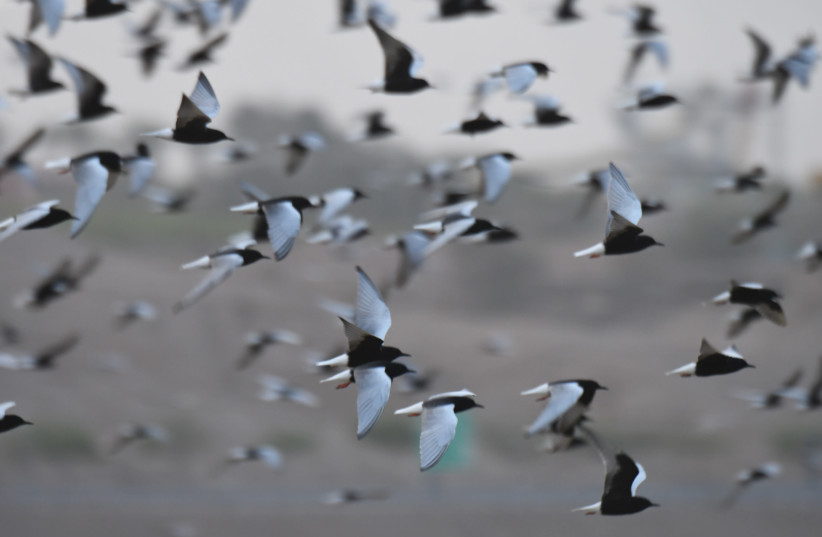
“Road traffic noise is shaped by the types of infrastructure, the number of vehicles passing in a day, the surrounding topography, weather conditions including temperature, wind speed and wind direction, and how much vegetation is present. Individual animals may tolerate certain noise levels while foraging but not during the rearing of young.
“These complexities underscore the need to consider physical, biological and temporal aspects when evaluating the influence of noisy infrastructures on wildlife or the impact distance of noise,” she concluded.
The Environment and Climate Change portal is produced in cooperation with the Goldman Sonnenfeldt School of Sustainability and Climate Change at Ben-Gurion University of the Negev. The Jerusalem Post maintains all editorial decisions related to the content.