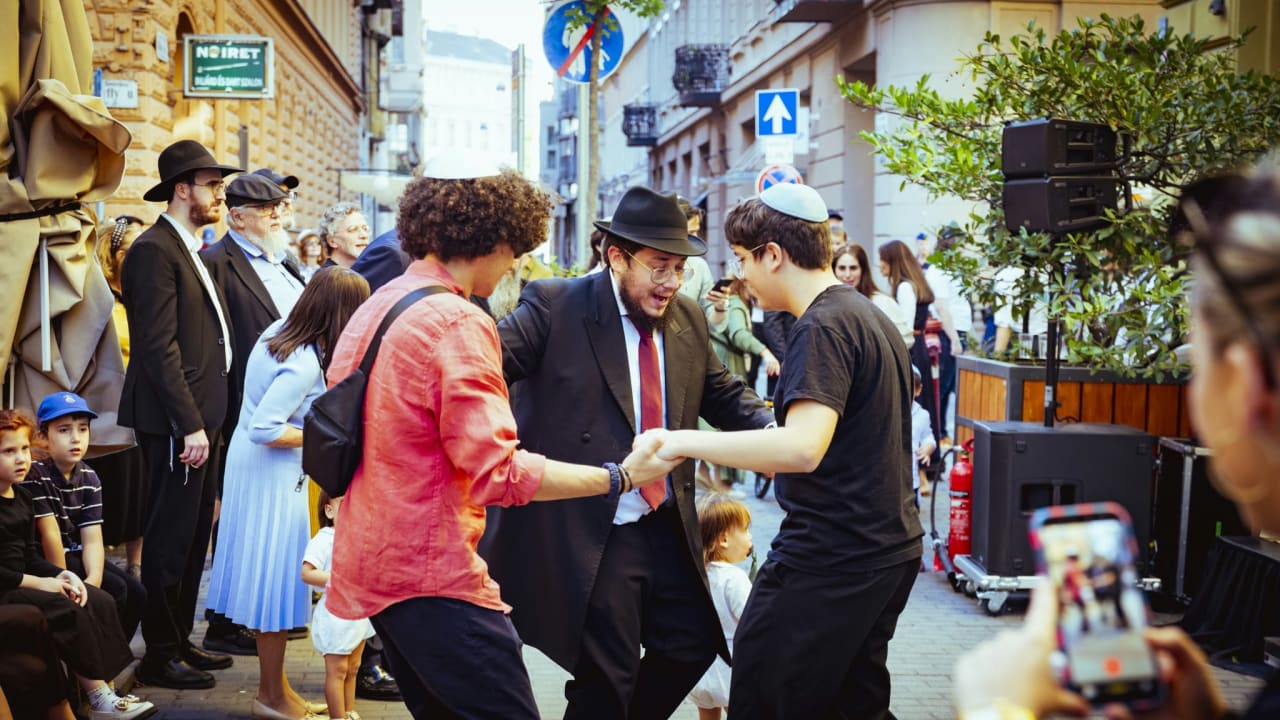
In a Budapest synagogue that has stood for more than 150 years, the next generation is now taking the lead. The Hungarian capital’s Jewish community has reopened the historic Wagon Drivers’ Synagogue as a space exclusively for teenagers, in what may be the world’s first teen-run synagogue.
Established in 1870, the building served as the central synagogue for the Orthodox community following the Communist era, until its closure in 2014. It has now reopened after extensive refurbishment and is designated exclusively for teens up to the age of 18.
The officer holders, board leaders, and event organizers are all local teens. The “oldest” regular worshiper at the sanctuary is youth community emissary Rabbi Tzami Bassman, an American-born and extremely jovial rabbi and Chabad emissary in his early 30s.
It will be operated moving forward by the C-Teen youth organization, with full funding and logistical support from the Association of Hungarian Jewish Communities (EMIH).
The Jerusalem Post visited the synagogue on Monday in Budapest. The inside of the building is beautifully decorated and still smells of fresh paint.

Rabbi Bassman took time out from helping a 12-year-old boy with his bar-mitzvah preparation to speak with the Post.
Opening ceremony drew 200 teens
At the opening ceremony, just before Rosh Hashanah, there were 200 teens present, he said.
“It was really, really incredible. We had a teen blow the shofar, a teen carrying the Torah, and teens cutting the ribbon. It was special and moving.”
During the ceremony, President of the Budapest Orthodox Rabbinate Rabbi Baruch Oberlander highlighted that it is critical for young people to be active leaders and decision-makers, not merely passive participants in communal life.
“These young people represent the future of Hungarian Jewry,” he said. “It is deeply moving to see that they are not satisfied merely learning and participating, but are eager to assume active responsibility for shaping Jewish life.”
Just two weeks after the opening, Bassman said there was a minyan of teens for Kol Nidrei. They also constructed a sukkah in the courtyard.
Now, every Thursday night, the synagogue hosts a learning program comprising 70 to 80 teens, Bassman said. It also includes Hebrew, Hungarian, and Russian classes, the latter because many members of the Budapest community are those who fled Ukraine during the war.
On Friday nights, Bassman said, they can expect between 30 and 50 teens.
The demographic is wide, he added, although the teens are “primarily not religious.”
“Some teens are familiar with davening [“praying”] and things like that, but primarily these are teens that come from non-religious families.” Many do not attend one of the Jewish schools in the city.

Several of the teens and their parents learned about the synagogue from social media – where Bassman and his wife are active – or met Bassman on one of his Chabad-mobile visits to the local stores.
Eventually, he said, there will be a kitchen and a lounge area with couches and games.
Bassman is most looking forward to growing Friday night Shabbats, which have only just started.
“I’m looking forward to growing them and making them really, really special,” he told the Post. “We’re really just at the beginning, and we have lots of ideas, lots of plans. With God’s help, it will be amazing.”