
An Australian inquiry into last year’s Bondi Beach mass shooting has recommended increased security around Jewish public events and more gun reforms.
The interim report, which was released on Thursday, included 14 initial recommendations. It found that Australia’s legal and regulatory frameworks had not hindered security agencies in preventing or responding to the terrorist attack.
Australian Prime Minister Anthony Albanese said his government would adopt all the initial recommendations made by the Royal Commission, the nation’s most powerful inquiry. Fifteen people were killed in the December 14 shooting at Sydney’s Bondi Beach during a Hanukkah celebration.
The report did not propose urgent changes, but it outlined recommendations to strengthen Australia’s counterterrorism capabilities, Albanese told reporters.
“This is as the government envisaged, that the first task of the Royal Commission, the priority, was to look at the security elements of these issues,” he said.
Five of the recommendations remain classified due to sensitive national security concerns, Albanese said.
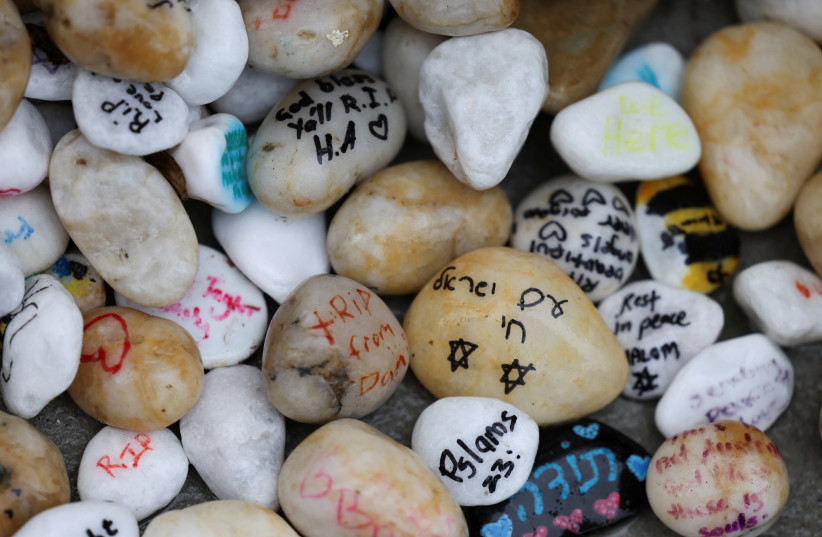
The attack at Bondi Beach stunned Australia, a country known for its strict gun laws, and prompted widespread calls for enhanced measures against antisemitism and tighter firearm controls.
Authorities have said the alleged perpetrators, a father and his son, were inspired by the Islamic State terrorist group. It was the deadliest mass gun attack in the country in three decades.
The Royal Commission was established in January, following mounting pressure from Jewish advocacy groups and victims’ families, who criticized Albanese’s initial hesitation to launch the inquiry.
Report recommends review of joint counter-terrorism teams
The 154-page interim report recommends a comprehensive review of the country’s joint counterterrorism teams, with findings to be submitted to police commissioners and the director-general of security within three months.
It also calls for expanded security protocols during the High Holy Days of Rosh Hashanah and Yom Kippur to include other high-profile Jewish festivals and events.
Additional measures include promptly updating the counterterrorism handbook, involving senior government officials in counterterrorism exercises, and accelerating efforts to implement a proposed national gun buyback plan.
“The review has revealed aspects in which counterterrorism capability at federal and state levels could be improved,” the report said.
Public hearings by the commission are scheduled to start next week, with a final report due by the end of the year.
Alex Ryvchin, co-chief executive officer of the Executive Council of Australian Jewry, told the Australian Broadcasting Commission the report was “a step in the process,” adding that “we need to get back to a point where Jewish Australians feel safe displaying their identities, congregating in public, and celebrating being Jewish and being an Australian.”
Ryvchin said he hoped that if the recommendations are embraced by the government, there will be stronger cooperation between agencies, better preparedness and planning, and better sharing of information.
“But again, having spoken to families of the dead, to some of the survivors, the burning questions which they had – How were these individuals able to acquire firearms? How were they able to travel to terror hot spots despite being known to authorities since at least 2019? How were they able to plan and plot and carry out reconnaissance in plain sight? Why wasn’t the event better resourced by police? – these haven’t been resolved,” Ryvchin said.
The Zionist Federation of Australia said the interim report was not the final account, but it does “put beyond doubt that Bondi occurred in a known and escalating threat environment for Jewish Australians.”
“The Federal Government’s full acceptance of the interim recommendations is welcome and should now be matched by State and Territory governments, particularly in areas of policing and event security,” it said. “Extending High Holy Days-style security arrangements to major Jewish events is a necessary interim measure to ensure communities can gather safely in the current threat environment.”
The Australian Jewish Association (AJA) said the report, “while limited in scope... addresses some important issues in the lead-up to the Bondi massacre.”
“The revelation that police attending the Bondi Chanukah event were reportedly told there was no need to remain for the full duration is particularly troubling,” it said.
The report’s credibility was undermined by its failure to address radical Islamist extremism, the AJA said.
“No serious analysis of the lead-up to the Bondi massacre can ignore this,” it said.