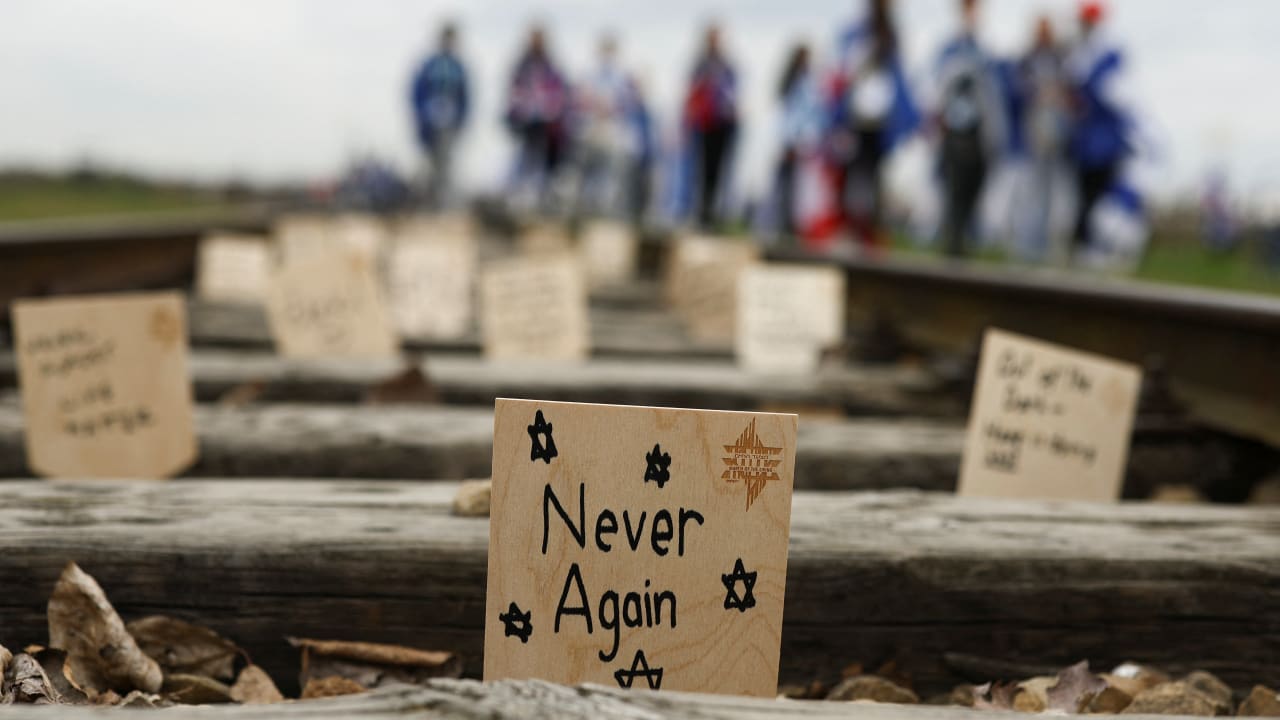
I returned from Poland last week after reporting on the European Jewish Association (EJA) delegation to Auschwitz for The Jerusalem Post. I first visited Poland on a tour 20 years ago, when 1930s conditions felt entirely absent from our horizon.
To be sure, real dangers loomed then: Israel endured the violence of the Second Intifada, the shadow of 9/11 remained fresh, and the memory of World War II sacrifices kept explicit Jew-hatred pushed to the margins.
Over the two decades following Israel’s 2005 disengagement from Gaza, recurrent conflicts with Hamas became routine behind the shield of the Iron Dome.
Yet while rocket barrages were intercepted, Israel steadily lost the information war as social media weaponized misinformation, fueling demonization and accelerating global antisemitism.
The 2001 Durban Conference served as the strategic birthplace of tactics later institutionalized by the 2005 BDS (Boycott, Divestment and Sanctions) movement.

West's moral test
When I last visited Poland, such voices were largely confined to academia; by 2026, they have conquered mainstream institutions. That gradual erosion collided with October 7, 2023, a moral test the West largely failed as Jew hatred erupted openly in Western capitals.
Standing later beside the ruins of the gas chambers at Birkenau, I was reminded of how desperately the Nazis worked to conceal their crimes, staging an elaborate facade at the Theresienstadt Ghetto to fool the Red Cross into believing deported Jews were living peaceful, normal lives, and blowing up the crematoria at Auschwitz as the Allies closed in to erase the evidence.
Even after the camps were liberated in 1945, organized Holocaust denial took years to fester on the extremist fringes.
Hamas did the exact opposite: they proudly broadcast their barbarism in real time, filming themselves burning families alive.
Within days, even hours, thousands in Western capitals were denying that babies were beheaded, women were raped and mutilated by gleeful perpetrators who reveled in the opportunity to slaughter children in front of their parents while live-streaming it on GoPros and the phones of their victims.
Immediate denial of October 7 massacre
Unlike post-war Holocaust denial, the denial of the October 7 massacre was immediate.
That comfortable historical distance I felt from any imminent danger comparable to the 1930s vanished when I arrived in Krakow. Joined by European diplomats, politicians, and Crown Prince Reza Pahlavi of Iran, the gathering served as an urgent call to action against threats facing European Jewry.
The night before, EJA vice chairman Alex Benjamin told me that holding this gathering on the anniversary of Kristallnacht was a deliberate alarm.
Panelist Ellen van Praagh from the Netherlands described a dangerous European inflection point, noting that Dutch Holocaust survivors are now “canceled” and unwelcome in schools.
I also met a Danish Jewish family whose daughter was instantly cut off by lifelong friends after a Birthright trip.
EJA Chairman Rabbi Menachem Margolin underscored throughout the delegation that a Europe where Jewish citizens require armed guards outside synagogues is not the Europe promised after Auschwitz, calling for the strict enforcement of protective laws and the expulsion of regime diplomats.
Addressing the delegation, Crown Prince Reza Pahlavi warned that Tehran’s totalitarian regime seeks to “finish what Hitler started,” contrasting Iran’s historic legacy of sheltering refugees with today’s tyranny.
On the second day, the delegation journeyed to Auschwitz-Birkenau. Twenty years ago, our organizers had bypassed the camps entirely; this was my first time visiting.
Unlike the then quiet bus journeys to the camps, where we would mentally prepare for emotionally difficult experiences, this time our convoy was heavily escorted by local police and security vehicles, wailing sirens echoing for the entire hour-long drive.
Those sirens felt like an urgent wake-up call, much like the shofar sounding on Rosh Hashanah.
We no longer have the luxury of taking these trips merely to honor past victims and learn abstract lessons; that danger is here for Europe’s Jews today.
Conquering prejudice with education
Walking through Auschwitz I and stepping into the red-brick blocks, the personal connection to my wife’s grandmother, Rachel, who survived Auschwitz while her family perished, resonated deeply.
While there, I read pages from Rachel’s biography, Life, describing her harrowing time in the camp. It became chillingly clear why she wrote about smelling the crematoria, given the shocking proximity between the living area and the gas chambers.
As our coach continued on to Birkenau, a newfound friend from Denmark sitting next to me recalled seeing graffiti nearby on his last visit that read, “Jews no! Soap, yes!” As we entered the camp, we stood under the warm midday sun near the destroyed crematoria for a moving memorial ceremony.
During the ceremony, chief rabbi of the Netherlands, Binyomin Jacobs, recalled an encounter outside his home where a woman felt compelled to reassure a young child that he would not be harmed by a rabbi, as the child had been conditioned to believe Jews harvest children’s eyes for Israel.
Jacobs stressed that targeting high school students with education is often too late when prejudice is planted from infancy.
He warned that society is repeating the dangerous passivity documented by Dutch historian Professor Jacob Presser during the Nazi occupation, where 5% collaborated, and 5% resisted, while 90% simply looked away.
Twenty years ago, I stood in the quiet woods outside Jozefow, in southeast Poland, where Reserve Police Battalion 101, ordinary, middle-aged reservists from Hamburg rather than front-line SS officers, were given an explicit choice by their commander to opt out of shooting the town’s Jewish population without penalty.
The vast majority participated in mass executions not out of rabid ideological hatred, but out of peer pressure, conformity, and a paralyzing desire not to stand apart. Genocide thrives when ordinary people, institutions, and leaders choose the path of least resistance, looking away when moral lines are crossed.
As rain began immediately following the ceremony, our convoy returned to Krakow amid wailing sirens.
The European leaders who traveled to Auschwitz heard Jacobs’ warning about the silent 90% and absorbed the urgent calls from Margolin and Pahlavi.
The era of comfortable detachment, statements of solidarity, and performative memorial wreaths is over.
The warning sirens are sounding across Europe: will leaders summon the political courage to enforce the law and protect Jewish life, or conform to the fatal comfort of looking away?