
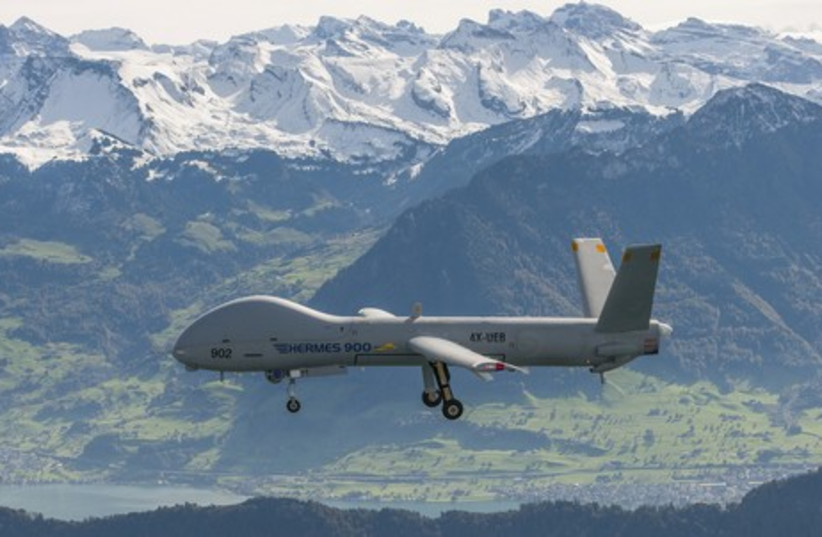
In September, Israeli military drones began to be assembled in the Western Balkans. The joint venture, majority-owned by Elbit Systems, is part of a reported $1.63 billion package, one of the largest export deals in the history of Israel’s defense industry.
Israeli technology is now being built in a region where Chinese air-defense systems, Russian fighter jets, and a Russian facility that Western governments have long viewed with suspicion are also part of the landscape.
That is not a reason for alarm. It is a reason for attention. Henry Kissinger argued in World Order that any stable order rests on two pillars: a balance of power and a sense of legitimacy that people accept. The Western Balkans are being tested on both.
This autumn, voters across the region went to the polls, and at least one government changed peacefully. That is legitimacy at work. But the balance of power on this small chessboard is being shaped by Moscow, Beijing, and Tehran through a domain Kissinger himself warned had no agreed rules: cyberspace and artificial intelligence.
On October 5, Reps. Ritchie Torres (D-N.Y.) and Joe Wilson (R-S.C.) introduced H.R. 10748, the Balkans Security Cooperation Act. Readers of this newspaper know both names. Torres, a Democrat from the Bronx, and Wilson, a Republican from South Carolina, are among the most consistent supporters of the US-Israel alliance in Congress.
Their bill asks the Pentagon and State Department to report on the security ties the Western Balkan countries have built with Russia and China since 2012: arms purchases, joint exercises, agreements, and intelligence cooperation, including a specific assessment of the Russian “humanitarian” center the bill names.
Why would two of Israel’s best friends on Capitol Hill turn to southeastern Europe? Because they understand that the partnership between Russia, Iran, and China is not confined to the Middle East.
It looks for open doors wherever they exist, and the Western Balkans have many: political deadlock in some capitals, fragmented institutions, weak cyber defenses, and a long history of outside powers competing for influence.
Iran has already walked through some of those doors.
Albania, a NATO member, has been its clearest target. A hacker group the Albanian government links to Tehran crippled the country’s online public services in 2022, prompting Tirana to cut diplomatic relations with Iran, and in March 2026 broke into Albania’s parliament, deleting data and publishing lawmakers’ emails.
Investigators believe the attackers may have been inside the network long before anyone noticed. Tehran’s interest in the region is not new; it sought footholds there in the 1990s, and it will exploit any vacuum that opens again.
Israel’s stake in the Western Balkans is not a matter of political sympathies, which in a diverse region naturally vary. It is a matter of strategic geography. Some countries in the region have already made their choice. Albania has paid a real price for confronting the Islamic Republic.
Kosovo opened its embassy in Jerusalem in 2021, the first Muslim-majority country to do so. These are partnerships worth investing in, at a time when Israel has few in Europe. Other countries in the region are still defining their path. But a vacuum at Europe’s southeastern edge will not stay empty for long, and those who fill it will not be friends of Israel.
The region’s own direction offers the answer. Most of its governments are NATO members or aspire to be, and those not yet in the European Union are working toward membership. Supporting that Euro-Atlantic path, while respecting the choices of those who prefer neutrality, is the surest way to narrow the space available to Tehran, Moscow, and Beijing.
This is where the Torres-Wilson bill becomes useful to Israel, too. A public, detailed map of who arms and trains whom in the Western Balkans would help Israeli industry and diplomacy make better decisions.
It would show where Russian and Chinese technicians, systems, and intelligence links sit close to Israeli technology, and help the region’s new leaders, several of whom have promised transparency, see what their predecessors left behind.
As someone who works on cybersecurity and data governance, I would add one recommendation. The bill counts weapons. It should also count networks. The greatest risk to Israeli technology in the region is less likely to be a stolen drone than a compromised server, a poorly protected supplier, or a surveillance system that sends data to the wrong place.
The same weaknesses that let hackers roam Albania’s parliament could expose Israeli firms, Israeli travelers, and Jewish communities. They also threaten the region’s elections, now its most important source of stability. A hacked voter roll or an AI-generated scandal on the eve of a vote can do more damage to a fragile democracy than a weapons shipment.
Congress should therefore widen the report in two ways: by adding Iran, whose cyber and intelligence activity in the region is well documented, and by adding a cyber and data annex covering hostile cyber operations, foreign vendors in critical networks, and the protection of sensitive defense data. With the session ending in January, the most realistic path is to include the requirement in the National Defense Authorization Act now being negotiated.
Israel can help, quietly and constructively. Its cyber agencies and companies are among the best in the world, and partners such as Albania and Kosovo, along with other governments in the region that want to strengthen their defenses, would benefit from that expertise.
Its defense industry can insist on strong security standards with local partners, and its friends in Washington can make sure H.R. 10748 does not die in committee.
Torres and Wilson understood that Israel’s security and the stability of Europe’s southeastern corner are no longer separate questions. With its technology now built in the Western Balkans and a clear interest in a region anchored in the Euro-Atlantic community, Israel has every reason to agree.
The author is a cybersecurity strategist and AI & data governance expert.