
Recent conflicts, from the Israel-Hamas War to the fight against Hezbollah in Lebanon to the Russia‑Ukraine war, have shaped our understanding of today’s battlefields. The confrontation with Iran, however, may point to something more significant: the emergence of a fundamentally new model of warfare.
This is not just another regional crisis. It may mark the initial phase of a global conflict, the scope of which resembles a world war, even as its methods diverge sharply from the total wars of the 20th century.
In this emerging model of war, strategic outcomes are shaped simultaneously across multiple domains: airspace, industrial production, financial systems, technological infrastructures, and alliance networks.
Warfare is no longer confined to the battlefields; it unfolds through interconnected systems that influence power balances long before armed forces engage directly.
Paradoxically, this new form of war enables major powers to conduct large‑scale strategic operations while much of civilian life is conducted with relative continuity. Citizens remain attentive and adhere to security guidelines as daily routines largely persist. In countries with advanced defense industries and multilayered defense systems, such as Israel, societies can maintain internal stability even while participating in conflicts with broader regional or global implications.
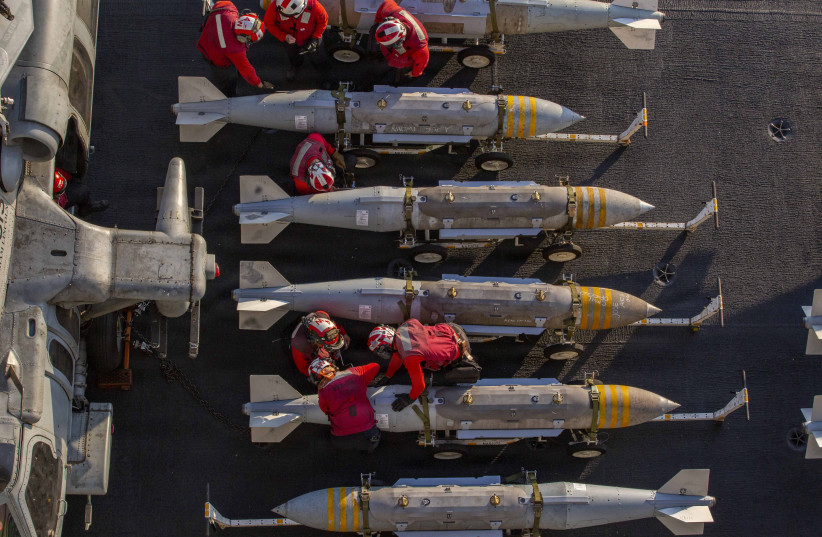
The contrast becomes particularly evident when viewed alongside states whose military‑industrial ecosystems are less developed. For them, the experience of war is far more immediate and disruptive, with civilian life absorbing the full impact of sustained conflict. The resulting asymmetry is not only military but systemic; national resilience itself has become a strategic capability.
Two visible trends serve to illustrate this broader transformation
First, defense industries have moved from the industrial rear to the battlefield. Production capacity, technological innovation, and research infrastructures are increasingly treated as strategic assets, and therefore also as strategic targets.
Contemporary warfare now includes strikes on development and manufacturing capabilities, accompanied by immediate reactions in global markets, often reflected in surging defense‑technology valuations.
The assassination of Hossein Jabal Amelian, head of the Islamic Republic’s Organization of Defensive Innovation and Research (SPND), during the opening phase of operations Roaring Lion and Epic Fury underscored this shift: Leadership in innovation has become a military objective in its own right.
Second, the evolving role of drones reflects a deeper structural change.
After years in which drones appeared to dominate modern battlefields, reaching a peak during the Russia‑Ukraine war, the current confrontation shifts the center of gravity back toward air superiority, precision‑guided missiles, and multilayered defense architectures.
Drones remain relevant, but they are no longer decisive on their own. Strategic advantage now derives from control of integrated, complex systems rather than reliance on any single technology.
Taken together, these developments indicate that modern wars are no longer determined solely by territorial gains or battlefield victories. Instead, outcomes are shaped by technological depth, industrial resilience, economic endurance, and the architecture of alliances.
If current dynamics continue along their present trajectory, this conflict may not be remembered as simply another Middle Eastern war but as the point at which the international system entered a new era of warfare –a quiet, distributed, and often opaque form of global confrontation.
This type of war resembles a world‑scale conflict, yet unfolds without the total societal breakdown that characterized earlier world wars.
At the center of this emerging model lies a single, decisive driver: the transformative role of modern defense industries.
The writer is the CEO of Robel Innovation and the founder of the 30 Under 30 competition for promising young leaders and Top Ten Start-ups competitions" in the defense sector.