Forged in the 1960s, the enduring US-Israel special relationship remains a cornerstone of regional stability. Central to this alliance is the United States’ statutory commitment, codified in Section 36(h) of the Arms Export Control Act, to maintain Israel’s Qualitative Military Edge (QME) vis-à-vis its adversaries.
There are three principal means of implementing this policy: bilateral executive agreements to operationalize the QME commitment, structured bilateral defense consultations prior to any significant US arms sale to the Middle East, and periodic classified reports and briefings to Congress on QME compliance.
Current trend dynamics heighten the urgency of QME preservation. Key dynamics in the aftermath of the October 7, 2023, terror attacks include potential Saudi-Israeli normalization and the expansion of the Abraham Accords, renewed warmth in US-Turkey relations, and the erosion of American public support for Israel. Despite the potential for positive strategic developments, maintaining Israel's edge has never been more critical or challenging.
This memo assesses the strategic risks posed by evolving Middle East balances and proposes actionable measures for Israel to safeguard and enhance its QME in a manner that aligns with its broader national interests. The analysis below identifies major anticipated military developments threatening QME and potential consequences of QME erosion, before concluding with recommendations for the Israeli government.

Major anticipated developments
In general, advanced arms transfers by the US to regional powers pose dual risks: Direct threats to the State of Israel and Israel Defense Forces operating across the region, as well as exposure of sensitive US technology (and Israeli-modified US technology) to peer competitors, such as Russia and China; and to Iran. Such exposure could enable effective countermeasures and generate new offensive capabilities for use against Israel.
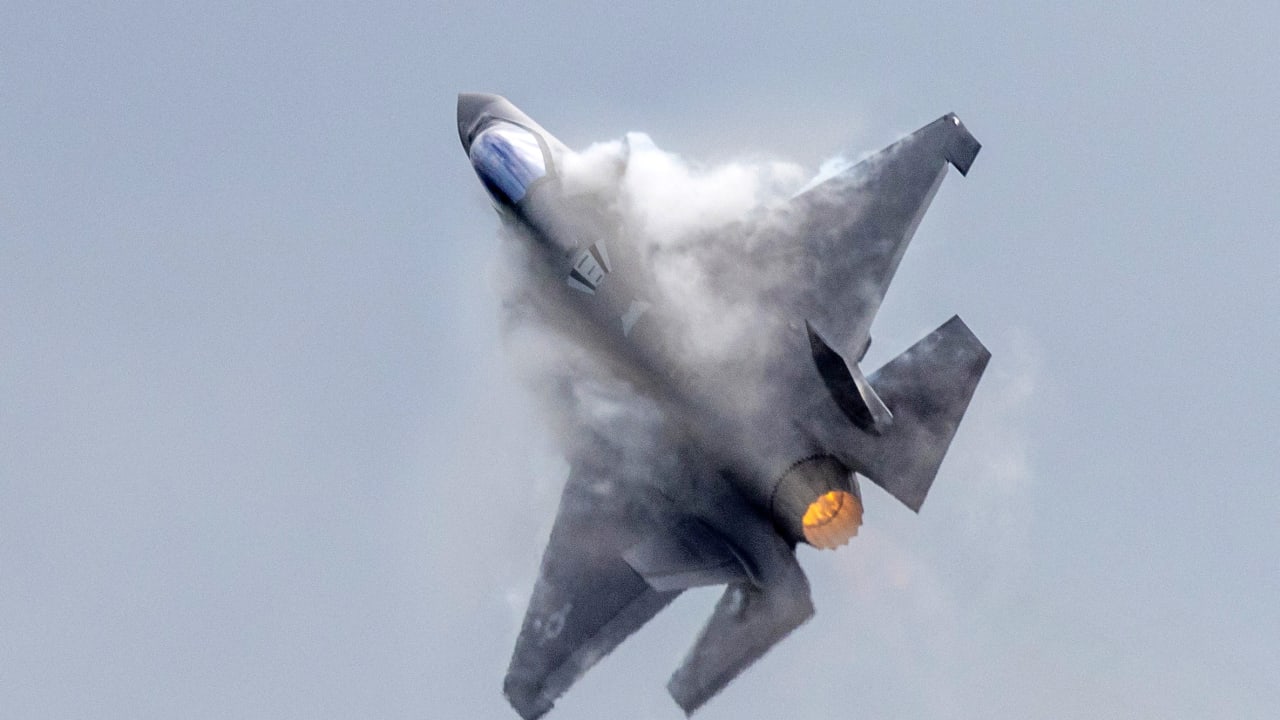
At present, multi-billion-dollar arms transfer packages are crystallizing, led by the proposed sale of approximately 50 F-35 fighter jets to Saudi Arabia.
For now, there is no direct Saudi threat to Israel in sight, but Israel should think ahead in terms of decades. Control of states and regional alliances can shift rapidly. The current disposition of the Saudi leader is very important, but sudden changes of leadership are not rare.
For Israeli military planning, the lesson of Middle East history is to ignore the current disposition of regimes and focus instead on acquiring the capabilities to maintain Israel’s QME.
Assuming the advancement of US President Donald Trump’s 20-Point Plan, the following types of proliferation are projected:
- F-35: Large-scale acquisitions by Saudi Arabia and the United Arab Emirates, even though this was rejected in the past; potential sales to Turkey.
- F-15: Likely compensatory sales of upgraded F-15 variants to states not receiving F-35s
- Advanced air munitions: Precision stand-off air-to-ground weapons and air-to-air missiles across multiple air forces
- Advanced ground systems: Mobile ballistic- and cruise-missile launchers, loitering munitions, one-way armed drones of all classes, and precision artillery munitions
- Naval systems: Comparable precision and long-range capabilities on surface vessels and submarines
- Armed Unmanned Aerial Vehicles (UAVs): Wide proliferation of low- to high-altitude, long-endurance armed drones
- Unmanned surface/underwater vessels: One-way attack craft and autonomous systems
Potential consequences of QME erosion
Transferring around 50 F-35s to Saudi Arabia without robust offsets would severely undermine Israel's QME.
The unique capabilities demonstrated by the Israel Air Force’s F-35s against Iran in Operation Rising Lion in June 2025 and Operation Roaring Lion in March 2026 constitute a genuine game-changer. These capabilities include undetected penetration of dense air-defense networks, real-time battlespace orchestration, precision strikes over almost all of Iran, and achieving Air Dominance.
Potential scenarios involving the transfer of F-35s highlight the vulnerabilities that a transfer would create:
A massive Saudi air offensive led by dozens of F-35s, paving the way for 200 to 300 cutting-edge F-15s, Typhoons, and Tornados approaching Israel from multiple vectors – northeast, east, southeast, south, and southwest (through Egypt).
In a case where Israel faces a coalition of states, the number of strikers would be 400-600 in all aspects of flight paths, including north and west.
Disruption of IAF eastern and southern operations (near and far from Israeli borders): Saudi F-35s intercepting IDF fighters, tankers, unmanned aerial systems (UAS), helicopters along extended flanks; real-time intelligence sharing providing adversaries early warning and enhanced readiness.
Widespread proliferation of precision, long-range air, ground, and naval munitions would enable rapid, high-volume saturation attacks on Israeli assets, infrastructure, and population centers, sustaining unprecedented levels of attrition.
Large-scale armed UAV proliferation, as evidenced in Ukraine, threatens ground maneuver dominance.
Recommendations for QME preservation
QME preservation is an issue of the highest national security sensitivity for Israel. It is a decades-long imperative and should begin with the application of general principles quantifying balance-of-power shifts resulting from approved transfers:
- Demonstrating concrete erosion of Israel’s edge
- Securing tailored, effective offsetting measures
- Minimizing risk of technology-exposure to China, Russia, and Iran
Recommendations for QME assessment methodology
Whereas tanks and planes can be counted, a qualitative edge is difficult to assess. The process that forms the cornerstone of the Pentagon’s QME assessments remains classified and open to broad interpretation. Accordingly, Israel lacks visibility into the detailed criteria.
Nevertheless, even without direct knowledge of the Pentagon’s methodology, one can identify capabilities along two vectors that would preserve the Israeli edge.
For “blue” (Israel), accelerate acquisition of cutting-edge US systems. For “red” (regional actors), impose qualitative and quantitative constraints supporting Israel’s edge. In the event that Saudi Arabia – and potentially other countries – receive F-35s, illustrative offsets for QME erosion should include the following:
- Exclusive Israeli F-35I upgrades (software, weapons) unavailable for export.
- Additional F-35 deliveries to Israel.
- Israel to be a partner country in the sixth-generation F-47 program, fielding it as soon as possible when mature.
- Advanced ground-based radars for detecting low radar cross-section (RCS)-aircraft, cruise missiles, and drones.
- Strengthening Israel’s multi-layered air defense system
- The customized Israeli F-35I must be superior to other regional F-35s.
The sale of F-35s to Turkey would be a source of particular concern. Although Turkey is a NATO member and not formally Middle Eastern, Turkey's regional posture and military activities (in Syria, northern Iraq, Libya, and lately, its Gaza interests), as well as its hostile stance toward Israel, warrant discussion.
With US efforts to reintegrate Turkey into the F-35 program, Israel should urge inclusion of Turkey’s F-35 transfer into QME evaluation.
The U.S. commitment to Israel’s security remains a major pillar of Israel’s national security architecture. Preserving Israel’s QME is of paramount strategic importance amid accelerating post-October 7 dynamics. The complexity of the QME challenge demands immediate professional engagement to secure Israel's enduring edge.
The writer is a Major General (ret.) and a senior fellow at the Foundation for Defense of Democracies (FDD). He served in the IDF for over 40 years, including as IAF commander from 2012 to 2017. From 2020 to 2023, he was director general of the Defense Ministry.