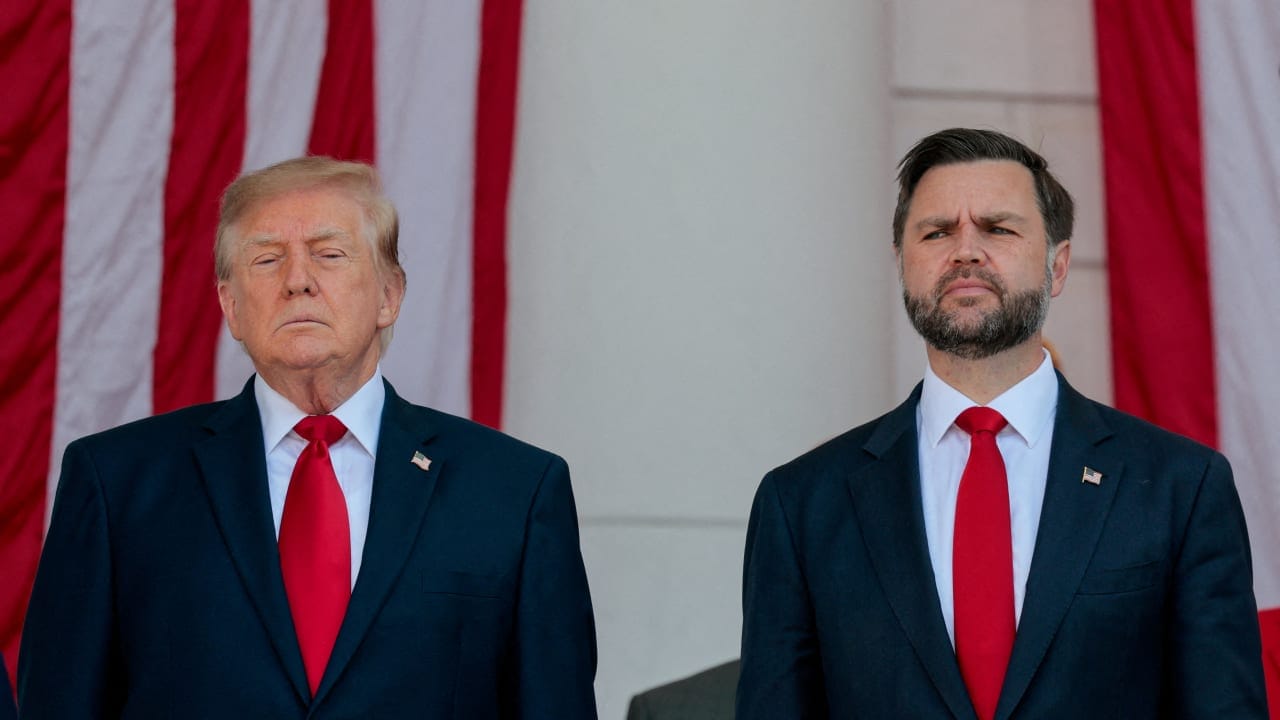
US President Donald Trump has grown increasingly frustrated with Vice President JD Vance over his recent criticism of the Iran war, The New York Times reported on Wednesday.
According to people familiar with Trump's comments, the NYT reported, the president has complained that Vance should have said that he had made the correct decision in launching the war against Iran.
On the other hand, sources also told the NYT that Trump has praised Secretary of State Marco Rubio, saying that he could be a good presidential candidate, after Rubio had repeatedly described the war against Iran as necessary for US security.
The White House did not respond to a request for comment, while Vance's office declined to respond.
Vance denied on Monday that he and Donald Trump are at odds over the war with Iran, insisting there is “no daylight” between them despite his criticism of the conflict’s political consequences for Republicans in the midterm elections.

Earlier this month, Vance said that America's relationship with Israel and the war with Iran were to blame for the major losses suffered by Republicans in the midterms.
In response, Trump told reporters later that day: "That's probably true. But at the same time, if I had to do it again, I'd have to do it again because long term, it's the only answer. You can't let Iran have nuclear."
Vance, Rubio main Republican candidates for 2028 US presidential election
Both Vance and Rubio are seen as frontrunners for the Republican candidacy for the 2028 presidential election, although neither has formally launched a campaign yet.
Vance allies told the NYT that the vice president is uncertain whether he will run, adding that if Trump decides to resume strikes or other major action against Iran, it will reduce the chances of his candidacy even further.
A recent Reuters poll found that some 45% of Republican voters polled said they believed Rubio would be an "excellent" presidential candidate, with 43% saying the same of Vance.
The poll, which surveyed 1,705 US adults nationwide, including roughly 500 registered voters from each party, was completed on Monday and had a margin of error of five percentage points for Republican and Democratic voters.
Reuters, Idan Kweller, and Jonah Davidov contributed to this report.