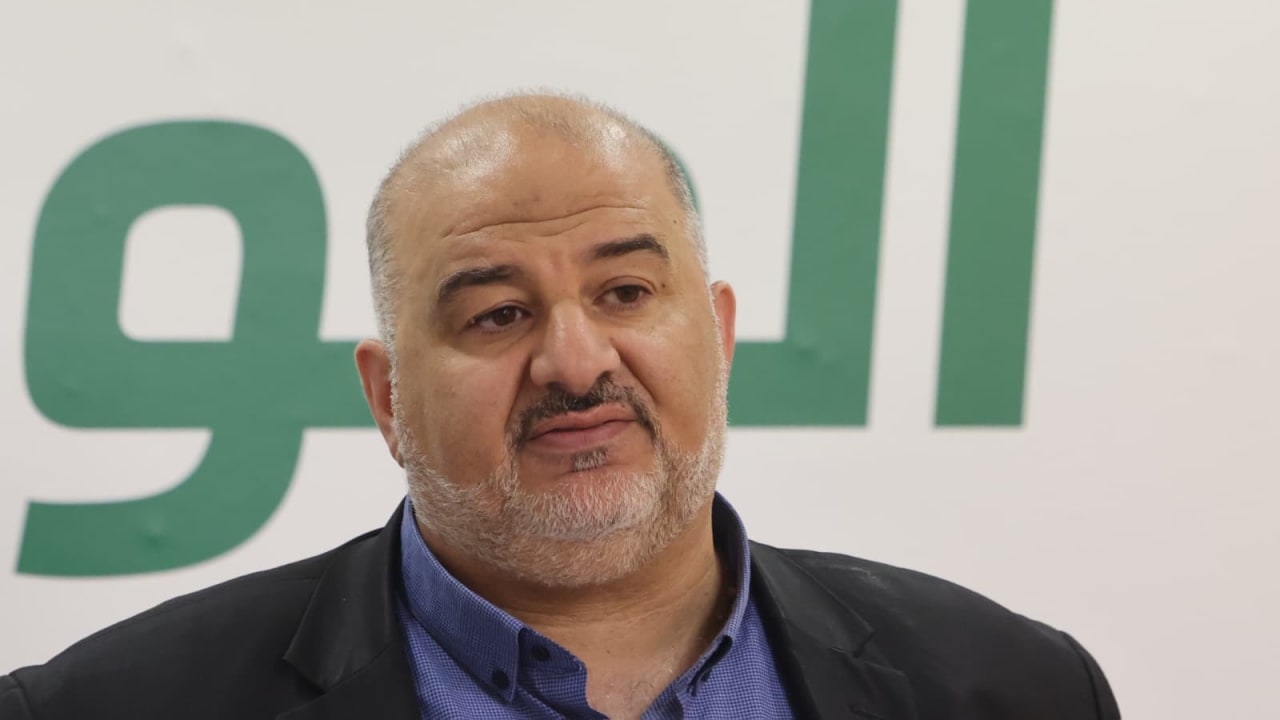
The results of the October 27 elections for the Knesset, while leaving the Jewish parties in a situation they did not fully expect, left no doubt as to the electorate of the Arab lists.
The Joint List, made up of the communist Hadash party, the secular nationalist Ta'al and the nationalist Balad party, received just over half a million votes, 8.8% of the total eligible population votes cast.
The Ra'am (United Arab List) party, an Islamist movement representative, received 5.9% of the total ballots, numbering some 330,000 votes. Almost 80% of the Arab electorate voted, and Jewish parties, too, received their votes.
Their combined showing was unprecedented. They took full advantage of Israel's genuine democratic society.
How full an opportunity was afforded them? One critical example was an astounding move by the Supreme Court's sitting president, Justice Isaac Amit.
At the beginning of October, the High Court of Justice heard a petition to disallow Sami Abu Shehadeh, chairman of Balad and the third candidate on the Joint List slate, from being a candidate for election. He had expressed views too sympathetic to Hamas's invasion and massacre of 2023 and had expressed a hope for more.
Even the Attorney General, Gali Baharav-Miara, and State Attorney Amit Aisman supported disqualification, arguing that his statements amounted to support for armed struggle against Israel.
Avoiding setting a precedent
As a majority of the nine-justice panel favored disqualifying him, Amit told Abu Shehadeh during the hearing that he recommended that he withdraw his candidacy. Abu Shehadeh did so the following morning. The court consequently did not issue a judgment on his individual disqualification.
In getting Abu Shehadeh to cooperate with him, Amit thereby avoided having to issue a written precedent that might affect future cases involving disqualification based on a single statement. In the past, the denial of the right to be elected to Meir Kahane and Michael Ben-Ari, Jews, required more substantive utterances. An Arab was privileged.
With the results of the impressive gains in the elections, not only Arabs but the very liberal progressive camp in Israel, and their supporters from abroad, got the right to work to ensure their inclusion in a future cabinet.
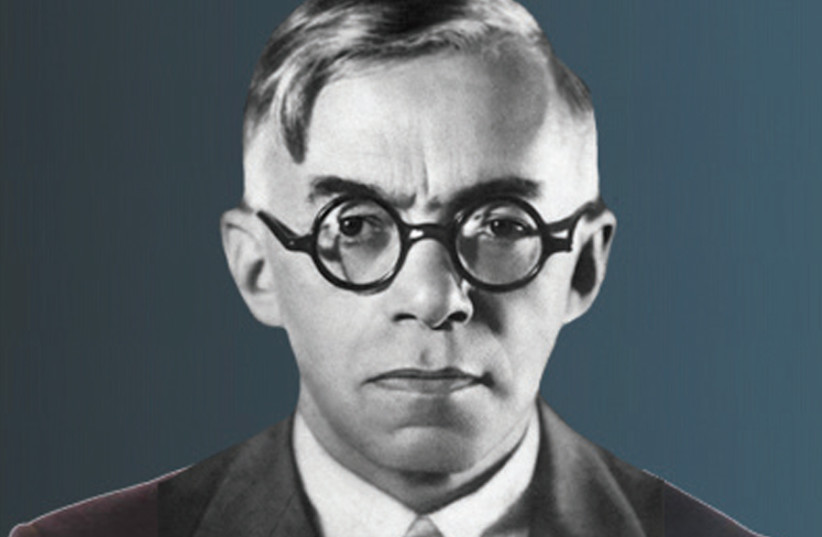
Interestingly, if not intriguing, was the appearance on social media platforms of a poster with the words of Ze'ev Jabotinsky, taken from a chapter of his last book, The War and the Jew, published in 1940, page 215.
The meme that was uploaded read: "In every Cabinet where the prime minister is a Jew, the vice-premiership shall be offered to an Arab, and vice versa." That, however, was but one section out of 22.
One of its uploaders, Dr. Uki Maroshek, is no right-winger. She is CEO and Academic Director of the Adam Institute for Democracy and Peace, and she added her own caption: "Jabotinsky - An early advocate of fair shared citizenship."
Her post went up on October 30, and it turned out to be copied from Mike Prashker of the Kiryat Ono-based London Initiative, a project of the baneful anti-Netanyahu British Sir Mick Davis.
In 2020, Davis wrote of Netanyahu being "A prime minister seemingly driven by holding onto power” and that "Avoiding corruption charges is not a principle for governance." I hope he is following Netanyahu's trial.
Just recently, Davis' November 1 op-ed in Haaretz was entitled: "A Jewish Democracy With Arab Partners – or a Jewish Autocracy Without Them," leaving little room, seemingly, between the two extremes.
Prashker is also connected, as a founding director, to a "shared citizenship" NGO, Merchavim, which works for "mature liberal democracy, societal fairness and secure peace and a better shared future for Israel, the Jewish people, the Palestinian people."
It is always suspect to me when those of the liberal Left and further to the Left quote Jabotinsky. I have found that one needs to search for context and additional text to provide balance.
For example, besides the obvious principled demand of Jabotinsky to include Transjordan as part of the future Jewish state, a territorial position that would be anathema to Maroshek, Davis, and comrades, I found this from 1938 on the subject of Arabs as a minority in the future state:
"While denying their national claims over Palestine, we have ever stressed that those Arabs who are in Palestine have a right to be there, and in the Jewish state toward which we aspire they shall be given every freedom and right demanded by humanity and justice."
Of course, that selection is yet another proof that Jabotinsky was a liberal in his political fundamentals. And just as, of course, if Jabotinsky were to be alive today, after all the wars and all the terror of the past 78 years, the radicalization of Israel's Arabs and their Guardian of the Walls intercommunal violence and the behavior of the Palestinian Authority in rejecting all territorial compromises, would he hold such a position today?
Indeed, would Berl Katznelson or Yitzchak Tabenkin, socialist Zionism stalwarts who were Jabotinsky's contemporaries, be thinking exactly as they did then?
There is another angle to this political advertising. Mick Davis of England is facing a stark reality in his country of residence as regards the election of Muslims to city councils, mayors, and such. I would even suggest the experience is much more negative than positive for the Jewish community there.
It really should behoove NGOs like the London Initiative (is the Geneva Initiative kaput?) to learn from their own local experience rather than rushing to offer Israelis advice on how to deal with our own minority problems.
At the very least, they could be more critical of the Palestinian Authority's lack of democracy in postponing elections for two decades and could even press Arab Israeli leaders to be less strident or be more attuned to the calamitous situation of Arabs murdering fellow Arabs in great numbers.
Until then, even quoting Jabotinsky, and in a misleading fashion, is useless.
The writer is a researcher, analyst, and commentator on political, cultural, and media issues.