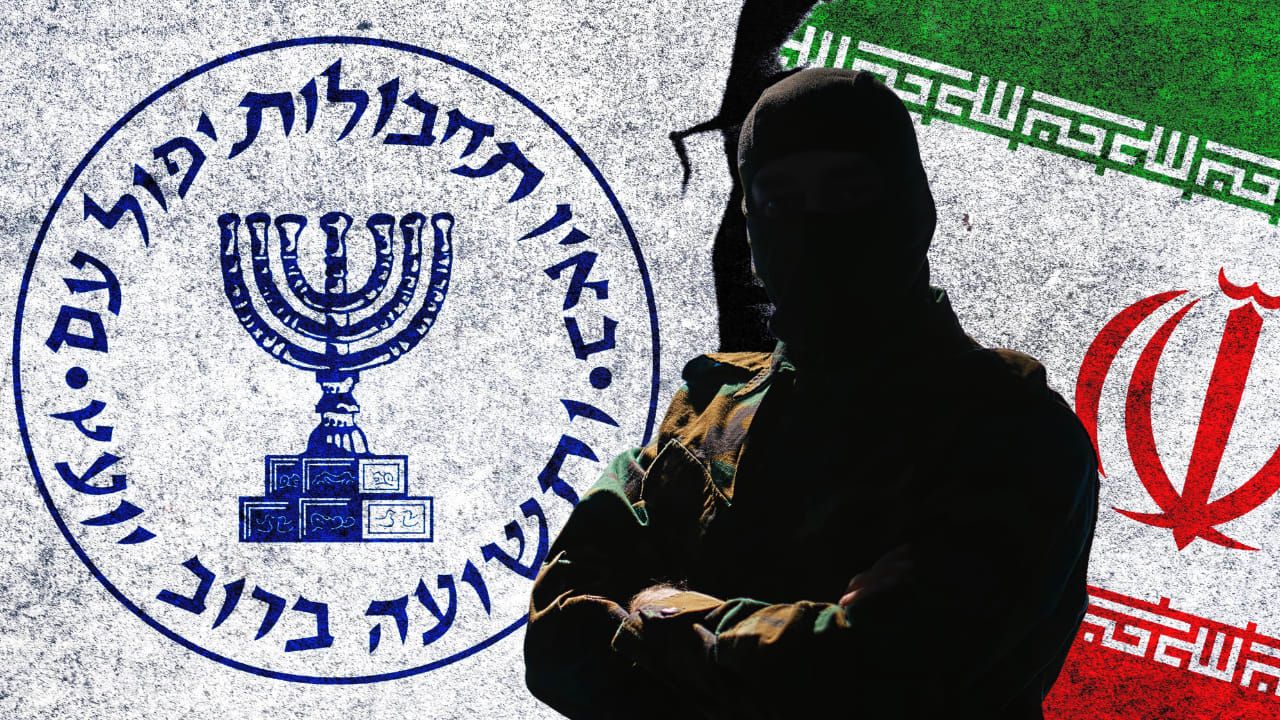
Middle Eastern wars do not always begin with the first missile. Their outcomes are often shaped weeks or months earlier, inside intelligence headquarters, through clandestine networks, and across the unseen battlefield of covert operations.
As the prospect of renewed conflict between the Islamic Republic of the criminal Shi’ite ayatollahs and the United States and Israel grows, the critical question is not who will strike first, but how much of the intelligence war is already unfolding inside Iran.
After eight months of war and severe military and economic losses, the Islamic Republic continues to pursue its survival through nuclear blackmail, threats to global energy security, and protracted negotiations.
President Donald Trump faces a strategic choice: accept a deal that allows Tehran to rebuild or sustain pressure until its security threats are verifiably constrained. In this confrontation, the CIA and Mossad’s intelligence capabilities, particularly their ability to identify and assess vulnerabilities within Tehran’s security establishment, may prove decisive.
Tehran has abandoned none of its tactics of intimidation, deception, and extortion. While speaking of peace, its officials impose unrealistic conditions on Washington. Mohsen Rezaei, a former IRGC commander associated with the Islamic terrorist cult of Mansouroun, insists that not a single gram of enriched uranium will leave Iran.

Foreign Minister Abbas Araghchi has likewise conditioned reopening the Strait of Hormuz on acceptance of Tehran’s proposal. These demands reveal not a willingness to compromise, but a calculated effort to preserve leverage, prolong the confrontation, and buy time.
In intelligence warfare, time does not necessarily favor the side prolonging futile negotiations. Tehran may calculate that rising oil prices, American voter anxiety, and the November 3 midterm elections will pressure Trump into concessions.
Yet a prolonged crisis may also give Washington and Israel valuable opportunities to collect intelligence, assess military capabilities, and expose vulnerabilities within the Islamic Republic’s security apparatus. This remains a strategic assessment, not confirmation of ongoing covert operations.
Israel’s intelligence campaign against Iran’s nuclear program has already demonstrated the depth of Tehran’s counterintelligence vulnerabilities. Mossad’s 2018 seizure of Iran’s nuclear archive, sabotage attributed to Israel at nuclear facilities, and the 2020 assassination of Mohsen Fakhrizadeh exposed serious weaknesses in the regime’s security defenses.
Although the CIA’s direct involvement in these operations remains publicly unverified, US-Israeli intelligence cooperation is well established. Their shared strategic interests, however, should not be confused with evidence of joint participation in every operation attributed to Mossad.
Iran’s greatest vulnerability
For Tehran’s Shi’ite caliphate, the greatest danger extends beyond American air superiority or Israeli missile capabilities.
It is the prospect of intelligence penetration into the institutions sustaining the regime: the IRGC, counterintelligence agencies, national security decision-making centers, nuclear networks, and the increasingly compromised Intelligence Ministry.
A regime unable to protect its secrets, personnel, and command structure remains strategically vulnerable regardless of its military arsenal. Ideological loyalty and internal repression cannot compensate for counterintelligence failures.
The Strait of Hormuz represents another dimension of this asymmetric confrontation. The IRGC claims Iranian naval mines blocked three oil tankers, although independent verification remains lacking. Tehran’s broader objective is to weaponize maritime insecurity and energy-market uncertainty.
It need not win a naval battle to impose economic costs on Washington; threats to shipping can raise insurance premiums, transportation costs, and oil prices. Accurate intelligence on Iran’s actual maritime capabilities is therefore essential to distinguishing credible threats from coercive bluffing and preventing strategic miscalculation.
The Islamic Republic’s asymmetric warfare extends far beyond the Persian Gulf. For decades, Tehran’s outlaw regime has relied on terrorist militias, intelligence networks, cyberoperations, and terrorist proxies to project power and threaten adversaries.
The Iranian and Russian efforts to fuel unrest in France, alongside British counterterrorism investigations into suspected Iranian intelligence connections, underscore Europe’s growing security concerns. While allegations must be distinguished from verified intelligence, Washington cannot afford to view Tehran’s transnational threat solely through the nuclear lens.
Tehran’s refusal to relinquish its enriched uranium raises a critical question: If the regime genuinely seeks to resolve international concerns, why preserve one of its most dangerous strategic bargaining chips?
Enrichment alone does not establish an intention to build nuclear weapons. Yet uranium stockpiles, centrifuge capacity, and independent verification remain central to assessing nuclear breakout risks. Any agreement that leaves these vulnerabilities unresolved risks granting Tehran the time and strategic breathing space to rebuild.
For the CIA and Mossad, the strategic imperative is to deliver precise, independent intelligence that exposes Tehran’s capabilities, vulnerabilities, and intentions. Covert operations, however successful, cannot replace a coherent national strategy or independently guarantee regime collapse.
Intelligence achievements can degrade an adversary’s capabilities, but lasting strategic change requires political, economic, social, and security pressure working together.
Trump must distinguish between ending military operations and neutralizing the Islamic Republic’s criminal ruling apparatus. Destroying weapons, damaging facilities, and degrading IRGC capabilities does not necessarily dismantle the regime’s command structure, political will, or capacity to regenerate.
Tehran has repeatedly exploited periods of reduced pressure to rebuild its military, intelligence services, and proxy networks. American success must therefore be measured not merely by silenced missiles or a temporarily reopened Strait of Hormuz, but by the enduring degradation of the regime’s capacity to threaten regional and international security.
One strategic distinction must remain clear: Iran is not the Islamic Republic. Iranians have endured decades of repression, systemic corruption, isolation, and the regime’s regional adventurism.
Washington must not mistake the regime’s survival for Iran’s stability or sacrifice the Iranian people’s right to determine their political future in a closed-door security bargain. The demand for regime change among significant elements of the Iranian opposition deserves consideration in any serious diplomatic assessment.
This does not justify an unlimited war. Washington must weigh the human, economic, and military costs of another prolonged conflict. But avoiding war must not mean accepting a weak agreement.
Any settlement requires verifiable nuclear restrictions, independent monitoring, maritime security guarantees, and enforceable consequences for violations. Diplomacy must reduce threats, not reward their continuation.
Tehran is betting that rising oil prices, public exhaustion, and approaching US elections will force Trump to concede. Yet its leadership cannot know the full extent of American and Israeli intelligence assessments or the options under consideration. That uncertainty is a strategic factor in itself.
Covert operations may already be underway, but their existence and scope cannot be established from publicly available evidence, nor is another war inevitable.
History will judge this confrontation not by bombs dropped or facilities destroyed, but by whether a persistent security threat was durably contained. Tehran must not regain through diplomacy what it lost militarily without meaningful security concessions.
Trump must ensure that ending the war does not allow the Islamic Republic to rebuild its capacity for aggression. The intelligence battle may precede the first missile, but strategic victory requires lasting results.
The CIA and Mossad’s intelligence capabilities remain central to understanding and confronting Tehran’s intelligence apparatus. Whether their operations contribute to regime change remains uncertain, but their documented achievements deserve serious recognition.
For those seeking an end to the Islamic Republic, dismantling its machinery of repression and external aggression remains a fundamental objective. The regime’s continued existence offers no inherent guarantee of regional peace, stability, or international security.
The writer is a Middle East political analyst. His latest book, Tehran’s Dictator, examines the theocratic era of Ali Khamenei (1989-2026). @EQFard