
IDF reservist Neria Leiter was seriously wounded Wednesday when a Palestinian attacker rammed a vehicle into him at a checkpoint near Beit Horon on Route 443.
After hours of surgery at Jerusalem’s Shaare Zedek Medical Center, doctors said his condition had stabilized, but his life remained in danger. His family has asked the public to pray for Neria Dov ben Chana.
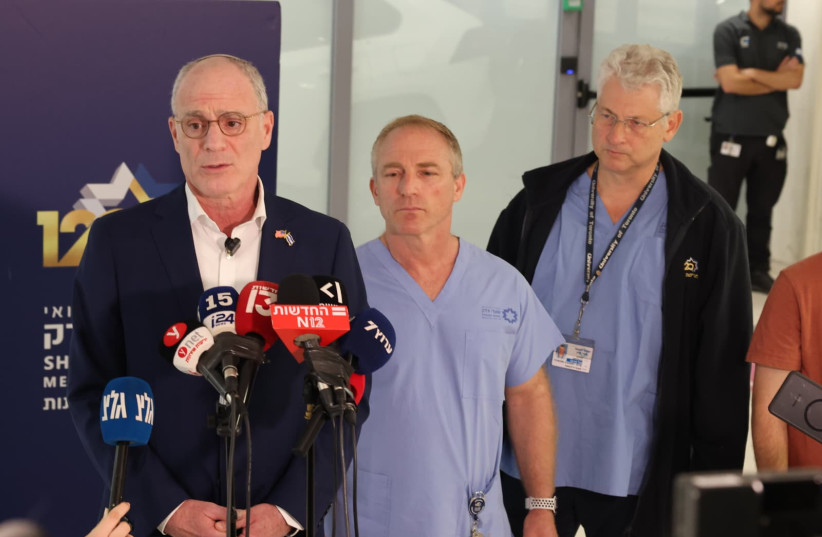
His father, Israel’s ambassador to the US, Yechiel Leiter, flew home from New York. At the hospital on Thursday, he spoke about a previous journey through grief. In November 2023, his eldest son, Maj. (res.) Moshe Yedidya Leiter, was killed fighting in Gaza.
“He died instantly,” Yechiel said. This time, he said, the family could gather at Neria’s bedside while doctors worked to save him, and they could pray together and ask others to join them. “His life is still in danger,” he told reporters.
There are many ways to describe this family. Yechiel Leiter left the United States for Israel at 18, making a deliberate choice about where to build his life. His children grew up here and made their own choices about service.
Neria returned to reserve duty after his brother's death
Moshe served for years, became a father of six, and was studying medicine when war called him back. After Moshe’s death, Neria returned to reserve duty.
Their father has spoken about other sons and sons-in-law who served on the front lines, of a son in a support role, and of another son who has Down syndrome, living through the war with the family. Each has a life beyond this accounting of service.
Neria described the decision to go back in a post this year. “As a bereaved brother,” he wrote, returning to the reserves “was not simple at all.” Losing Moshe had torn at him.
He also had opinions and criticisms about how the war and the country were being run. The question he posed, in translation, was: “What do I need to do? What is in my control?”
He could not sit at home while his friends reported for one reserve stint after another. His team included religious and secular men, husbands and fathers, alongside single men, from Israel’s center and its periphery. By then, the rounds of duty were too numerous to count. His closing words were about the privilege of defending home.
Israel's reservists carry an enormous weight for their country
Read the whole account, and its honesty becomes clear. A person can believe in his duty and feel the strain of carrying it.
He can disagree with those making the decisions and still answer the call. No country should mistake that resolve for an inexhaustible supply of time, health, or courage.
Israel has needed its reservists across multiple fronts since the October 7 massacre. Their families have lived with repeated departures, interrupted work, and the fear that accompanies every call.
The Leiter family’s name is known because Yechiel represents Israel in Washington. Countless families whose names never reach a newspaper have carried comparable burdens. They, too, deserve to be seen while they are serving and long after they return.
'Choosing life' means caring for the soldiers who protect it
Yechiel wrote after the attack that he believes prayer and national unity can bring miracles. “Neria needs a miracle,” he said, adding: “They choose death – we choose life.”
A father whose son is fighting for his life is entitled to speak with that force. For the rest of us, choosing life must also mean tending to those who protect it: giving wounded service members and their families sustained care, making repeated reserve service bearable, examining attacks seriously, and sharing the demands of defense as fairly as possible.
That requires support for families and employers long after the headlines have moved on. Officials must hear reservists who voice criticism, even when those same reservists continue to serve.
At Shaare Zedek, Yechiel’s daughter gave birth after visiting her brother. A new life began in one part of the hospital while doctors worked to save Neria in another. Nothing about that proximity tells us how Neria’s story will end. For now, the only ending to seek is his recovery.
The family has asked us to pray. We join that prayer. We should also listen to what Neria wrote when he was well enough to explain why he kept going – and make sure Israel lives up to the people who do.