Even in the contentious months before an election, Israel keeps being handed reminders of the values and bonds that hold the country together. Last week it was the return of Yehuda Katz, one of the soldiers lost in southern Lebanon 44 years ago.
In his homecoming, Israelis were reminded of an eternal principle: no matter who you are or where you fall, Israel will never give up on bringing its children home.
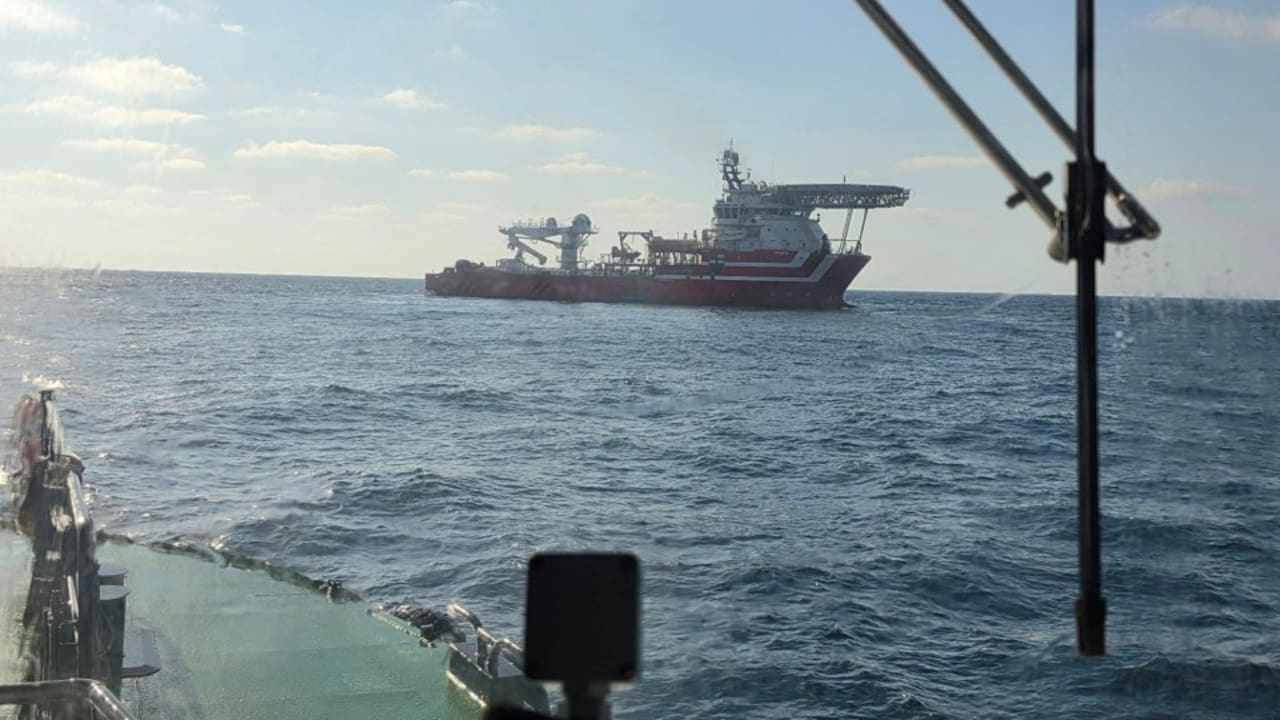
This week it is the surfacing of the Altalena – and the message it carries is far more important.
The ship, named for the ideological father of the Revisionist Zionist movement, carried fighters, immigrants and Holocaust survivors, along with a smuggled cache of weapons into the new state. Waiting on the beach to meet it was Menachem Begin – leader of the opposition and head of the Irgun militia.
Begin wanted a share of the weapons routed to his own organization, including its still-independent force in Jerusalem. David Ben-Gurion, prime minister of the young state, demanded every rifle be handed to the IDF, reading the whole affair as the seed of “an army within an army.”

The cabinet, meeting in Tel Aviv, resolved to force the issue. When the ship came to rest off the Tel Aviv beach – in full view of the city, foreign journalists and UN observers – Ben-Gurion ordered it taken by force, and it was shelled with his chief political rival still aboard.
'Do not raise a hand against a brother'
Yet even after the ship burned and 16 Irgun members lay dead, Begin told his followers: “Do not raise a hand against a brother, not even today. It is forbidden for a Hebrew weapon to be used against Hebrew fighters.” There were bigger enemies to fight – the Arab world was still determined to crush the fledgling state – but more than that, a brother must not fight a brother.
The Altalena is usually remembered as the closest Israel has ever come to civil war, though the judicial-reform protests and the strain of a long war have, in recent years, produced serious contenders for the title.
IT IS often felt – and the October 7 massacre proved it anew – that what has held Israel together is the presence of enemies who want it eliminated. I only half-exaggerate when I paraphrase Voltaire: if the threat of Israel’s annihilation did not exist, it would be necessary to invent it. Strip the external enemy away, and watch how quickly the label “greatest threat to the state” gets pinned on a fellow Jew.
Democrats leader Yair Golan has called Netanyahu exactly that; Heritage Minister Amichai Eliyahu has turned the same charge back on Golan, casting him – not Hamas, not Iran – as the danger, even as the real enemies go on trying to kill Israelis of the right and the left alike.
But I refuse to believe that all that keeps Israel together is that our enemies want to kill us more than we want to kill each other.
The 2026 election is undoubtedly one of Israel’s most pivotal – and though there has rarely been an election not hailed as definitive, few have placed the haredi (ultra-Orthodox) draft, the future of the judiciary, and a commission of inquiry into Israel’s worst security failure in 50 years on a single ballot.
But the State of Israel is bigger than any one election, no matter how pivotal. It is the project of all the people of Israel, no matter their political persuasion, no matter the ruling party at the time.
The debate over the Altalena has always turned on two questions: was Begin right to demand preferential treatment for the Irgun, and was Ben-Gurion right to fire?
Ben-Gurion never doubted his own answer. He dubbed the artillery piece that shelled the ship the “Holy Cannon,” and said it should stand beside the Temple, were it ever rebuilt. But no historian, however revisionist in sympathy, has argued that Begin should have fired back – because, as is plain in hindsight, some principles matter more than who holds the right in the moment.
Personally, I cannot say whether Ben-Gurion’s decision was correct in its moment. But I am certain it would not be today. In our current climate, we cannot rely on a magnanimous Begin-like figure deferring to the larger principle when it matters. Knowing that, issuing ultimatums and drawing lines in the sand risks far too much.
I cannot help reading the ship’s return, in this contentious chapter of Israel’s history, as a sign. Whatever the outcome of this election, do not give up on the project of Israel.
Remember why Begin held his fire – not merely because larger enemies loomed, nor because the other side was justified, but because of the truth that has bound this country together in war and in peace, through every contentious election: a brother must not fight a brother.
The writer serves as the English director of the Ribo Center and the editor of Amit Segal’s newsletter, It’s Noon in Israel.