It’s appalling. The more viciously anti-Zionists libel the State of Israel while targeting all Jews, the more some American Jewish institutions welcome Jewish anti-Zionists into their oh so inclusive “tent.”
Only fools and politicians mistake trendy popularity for moral clarity. And those who won’t defend themselves or their people will never succeed in respecting themselves or earning respect.
Last week, the Reform movement’s rift over anti-Zionist enabling deepened.
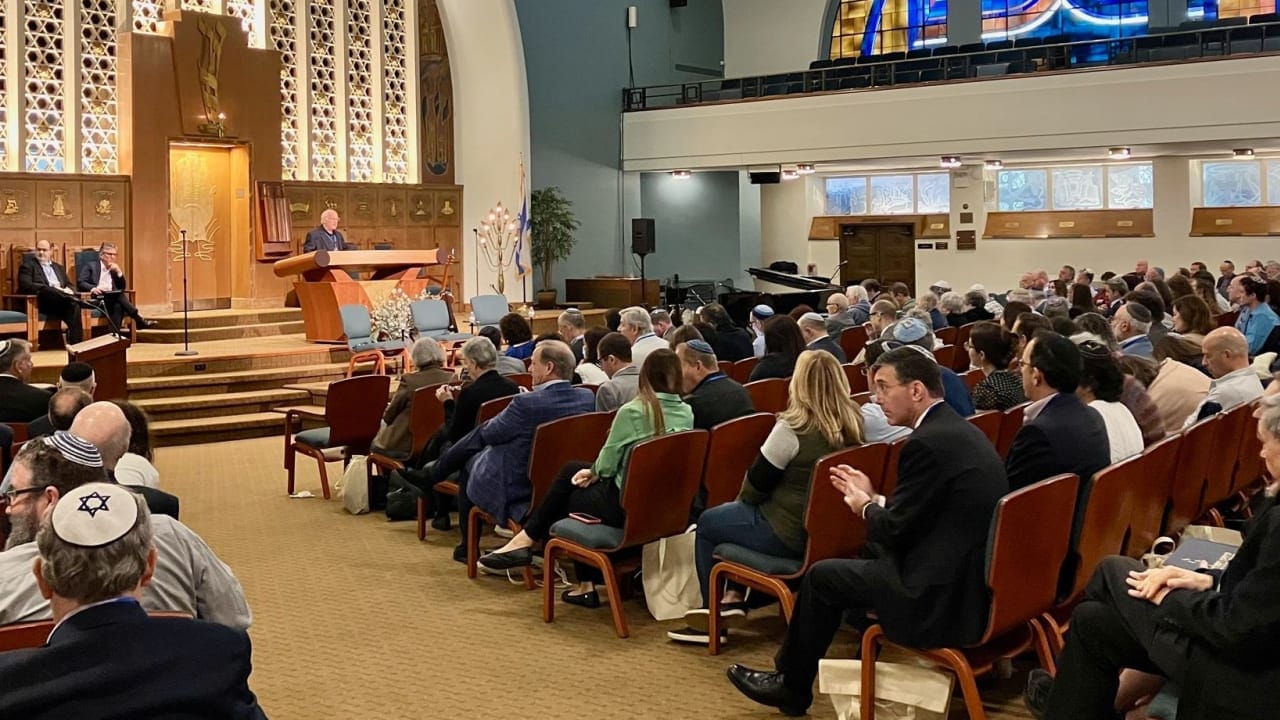
Keynoting the Re-Charging Reform Judaism Conference, Rabbi Ammiel Hirsch chided the Hebrew Union College-Jewish Institute of Religion for welcoming anti-Zionist rabbinical students.
“Any seminary” that “acquires the reputation of being hostile to Zionism” or “ordains anti-Zionist clergy has no future in America,” Hirsch warned.
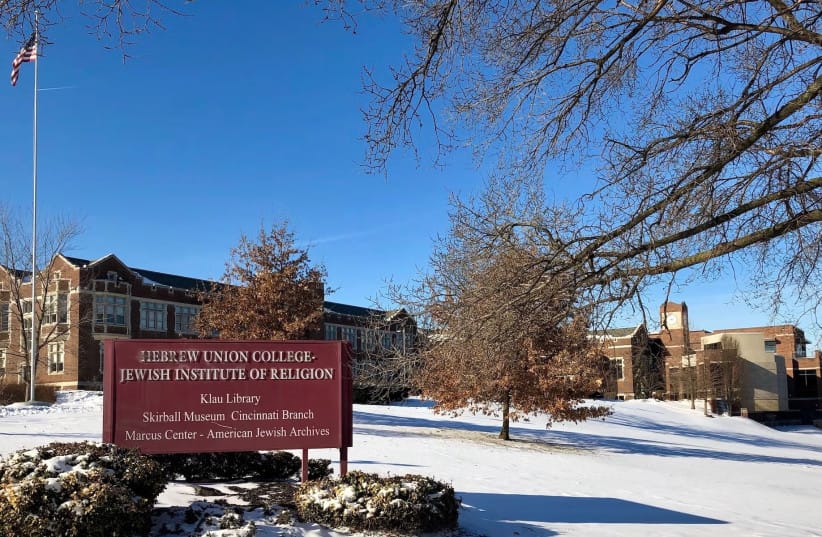
The seminary’s president, Andrew Rehfeld, blasted Hirsch for embracing “anti-intellectualism” and attacking “the very Enlightenment principles that founded our movement.”
Rehfeld keeps rejecting such “litmus tests,” although the movement wouldn’t ordain male rabbinical students who pray separately from women.
Others ducked, pretending they were being forced to choose between championing social justice or remaining Zionist.
That’s poppycock. Liberal Zionists questioning Israel’s tactics are not Zio-deniers who dishonor Israel’s president or won’t stand for “Hatikvah.” Our blue-and-white tent is broad enough to welcome critical liberal Zionists. Hirsch and others oppose Jewish anti-Zionists whose wish to collapse the tent encourages antisemitic anti-Zionists trying to burn the tent down.
Somehow, if you value a liberal value – like banning racists – you “stand on principle.” But, when it comes to Zionism, the appeasers swallow the slow-acting sweet-tasting poison of inclusivity, suspending “judgment,” warning against “imposing orthodoxies.”
Rehfeld is a distinguished political scientist. Beyond recognizing how illiberal anti-Zionism is, he knows that “Enlightenment” and “intellectualism” don’t mean having no standards or being self-destructive.
Enlightenment philosophers envisioned open, tolerant, societies. But they understood that a community without boundaries is as doomed as a language without grammar.
John Locke’s A Letter Concerning Toleration (1689) championed intellectual freedom, trusting people to find meaning within “the inward persuasion of the mind.” Nevertheless, collectively, Locke warned against embracing positions “prejudicial to the commonweal of a people.”
Locke explained that while the social contract validates dreams of untrammeled freedom, individuals nevertheless sacrificed some liberty to receive governmental protection, join functional communities, and enjoy defined religious and political identities.
Liberals juggle. In Locke’s spirit, academics map out the world, asking questions, to encourage openness while cultivating certain skills. But any rabbinical program – or teaching and leadership institute – should offer blueprints to build one particular house, answering key questions; so in this case the denomination should remain “Reform,” not just some generic religion.
The future of Zionism in Reform Judaism
As a voluntary religious movement in free societies, the Reform movement sidestepped the harder Enlightenment calculation sacrificing genuine, inherent liberties for political benefits. Still, Karl Popper’s 1945 warning about the “paradox of tolerance” remains relevant. In The Open Society and Its Enemies, Popper wrote: “In the name of tolerance, we should claim the right not to tolerate the intolerant.”
The Reform movement and American Jewry ultimately must assess: how intolerable is Jewish anti-Zionism? Those who recognize anti-Zionists’ genocidal allies and their assault on the modern Jewish consensus uniting Israel, Zionism, and Judaism, draw redlines; others shilly-shally or soft-pedal.
Reform thinkers have struggled with these Enlightenment-era dilemmas since launching their 19th-century rebellion against traditional Judaism. Abraham Geiger and others preserved what they identified as Judaism’s prophetic and moral core, then deemed Judaism’s remaining traditions updatable.
Reframing today’s dilemma more positively: Reform Jews – and their seminaries – must decide, especially with 46% of Jews living in Israel, whether a big-tent Zionism and commitment to Israel and Jewish peoplehood still anchor Judaism’s core identity, or whether Reformers will again exile Zionism to the periphery as optional, not existential.
Reform Jews often became liberal zealots. Geiger repudiated Jewish law’s rigidity, any messianic hopes, the all-Hebrew service. His successors, the “Classical Reform” Jews, had an orthodox, close-minded, approach to openness.
Eventually, temples experienced “yarmulke rebellions,” as Reform counterrevolutionaries offended their elders – and funders – by wearing kippot. And, since the 1937 Columbus Platform, Reform Judaism has rejected its anti-Zionist past, affirming as it did in 1976 that “we are bound to that land and to the newly reborn State of Israel by innumerable religious and ethnic ties.”
Some Reform Jews joke: their obsession with political liberalism, especially tikkun olam, risks treating Reform theology as the latest Democratic platform topped by a colorful, non-gender-specific kippah. As more and more Democrats don keffiyehs, Reform Jews, like most liberal American Jews, feel increasingly homeless.
And let’s stop misreading the dispute over anti-Zionism as a generational clash. Last Sunday, young and old paraded in New York celebrating Israel. Shouldn’t we stand with them and our Hillel Heroes who’ve endured social ostracism – or worse – for embracing Zionism? The millions of American Jews whose nerve-endings remain intertwined with Israel deserve future rabbinical lions to lead them, not simpering PC sheep.
Eight years ago, my book The Zionist Ideas traced how Reform Judaism became “Zionized” by 1937. I then categorized various Reform rabbis as “Religious Zionists,” fusing their Reform theology with Zionism. Many Reform Jews blessed me for affirming Reform Zionism as fundamental and religious, while some Orthodox rabbis cursed me.
Today, when I make the same argument, quoting modern Reform Jews’ and Reform seminaries’ affirmations of Zionism, some Reform leaders curse me.
The majority at Hirsch’s conference approved a resolution demanding that Reform seminaries neither admit nor ordain anti-Zionists. That’s no litmus test. It’s an intellectually consistent gold standard, rooted in Enlightenment values, Jewish tradition, Reform ideology, and self-preservation.
The writer is an American presidential historian and a senior fellow in Zionist thought at the Jewish People Policy Institute in Jerusalem. Last year he published To Resist the Academic Intifada: Letters to My Students on Defending the Zionist Dream and The Essential Guide to Zionism, Anti-Zionism, Antisemitism and Jew-hatred, available on the JPPI website. Next month, he will publish The Essential Guide to the US-Israel Partnership, the 250th Edition.