
In recent years, Japan has gradually changed the language it uses when discussing China and Taiwan.
Whereas Tokyo once sought to avoid almost any statement that could be interpreted as preparation for military confrontation, senior Japanese officials now speak openly about the possibility that a war over Taiwan could become a direct security crisis for Japan itself.
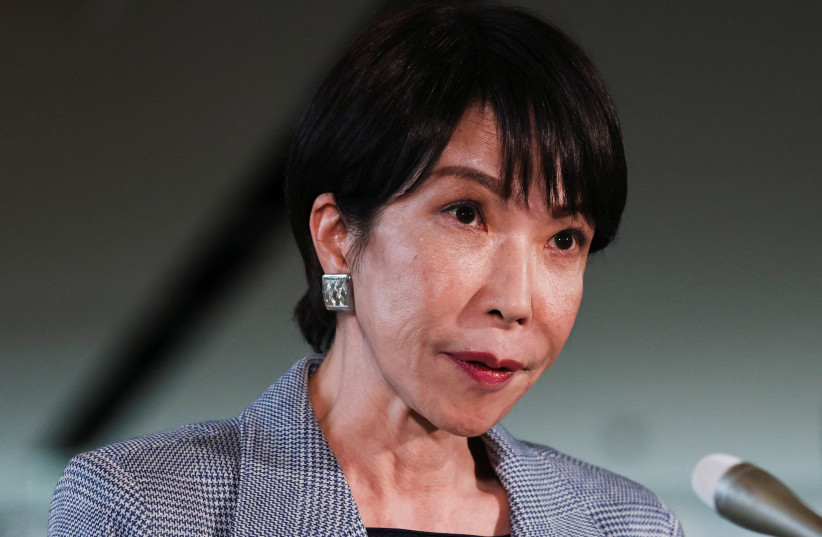
A major turning point came on November 7, 2025, when Japanese Prime Minister Sanae Takaichi stated during a parliamentary debate that a Taiwan emergency involving the use of force and naval vessels could constitute a situation threatening Japan’s national survival.
The implication was unmistakable: Tokyo no longer views Taiwan as a distant issue, but rather as a focal point with direct consequences for Japan’s national security.
Japan’s concerns stem primarily from China’s position.
On December 31, 2023, Chinese President Xi Jinping declared in his New Year address that China would “surely be reunified” with Taiwan. Xi has repeatedly emphasized that Taiwan’s reunification with China is a strategic and historical objective that is not open to negotiation.
During his summit with US President Donald Trump in Beijing in May 2026, Xi further sharpened his rhetoric, warning that the Taiwan issue constituted the most sensitive and important matter in Sino-American relations and that mishandling it could lead to confrontation between the two powers.
From the perspective of both Japan and Taiwan, however, the most troubling development is not China alone, but rather the shift in the American approach.
The shifting American posture
During the same summit, Trump avoided making an explicit commitment to defend Taiwan in the event of a Chinese attack. Asked whether the United States would protect Taiwan, he replied that he did not wish to discuss the matter.
He also appeared to defend the Chinese president, asserting that Xi did not seek war.
At the same time, Trump emphasized that the United States should avoid being drawn into a distant war in Asia. He also reiterated his longstanding argument that semiconductor manufacturing should be returned to American territory.
Washington has not abandoned Taiwan, yet in both Taipei and Tokyo, there is a growing perception that the American commitment is no longer as unequivocal as it once appeared.
Increasingly, regional actors believe that in the event of a direct confrontation with China, the US would act with extreme caution and seek to avoid a large-scale war whenever possible.
This perception has been reinforced by the United States’s conduct toward Iran. Despite the clear military superiority of the US and Israel, and despite Iran’s severe strategic difficulties after years of sanctions and economic erosion, Trump has thus far failed to bring Tehran to a clear breaking point.
In the eyes of many countries, the very fact that the Iranian regime remains standing and has not capitulated to American pressure is interpreted as evidence of American indecisiveness – or at least of an unwillingness to go all the way.
Under such circumstances, any future agreement between Washington and Tehran that leaves the Iranian regime intact without a decisive outcome could be perceived internationally as proof that the US and Israel failed to secure a complete victory.
Such a message could also shape the way China and North Korea assess American resolve and Washington’s willingness to defend its allies in Asia, including Japan, the Philippines, and Taiwan.
This also carries a broader lesson for Israel. Even a state enjoying a deep strategic alliance with the United States, such as Taiwan, is discovering that no guarantees are absolute or permanent.
American support may be extremely strong, but it is always contingent upon changing political and strategic circumstances.
From Israel’s perspective, therefore, the conclusion must be clear: Israel needs its alliance with the United States, but it must always ensure that it retains the ability to defend itself even without direct American military intervention.
The writer is a senior fellow at the Misgav Institute for National Security and Zionist Strategy.