
Sometimes heated ideological debates become battles over language. We get drawn into arguments about terminology and gradually lose sight of the issue itself.
Few modern terms carry as much weight and controversy as the Hebrew word geula, or “redemption.” Redemption is the terminus of history. History begins with Creation and ends with redemption, a future stage in which God’s presence, now hidden, becomes openly felt and recognized. In that reality, the Jewish people lives in Israel with a clear awareness of God guiding its history.
Has that process begun? Are we already living in the early stages of redemption? Can the establishment of the largely secular State of Israel be seen as the first step in that unfolding?
For many, the answer is yes. The Chief Rabbinate gave voice to this assumption when, in 1949, the phrase reishit tzemihat geulatenu – “the first flowering of our redemption” – was incorporated into the prayer for the State of Israel by chief Rabbi Isaac Halevi Herzog. Some attribute the phrase even earlier to Rabbi Abraham Isaac Kook.
Since then, it has become the language through which many express their hopes for the state, but also a source of tension and debate. Can something be called redemptive if it is not yet fully religious?
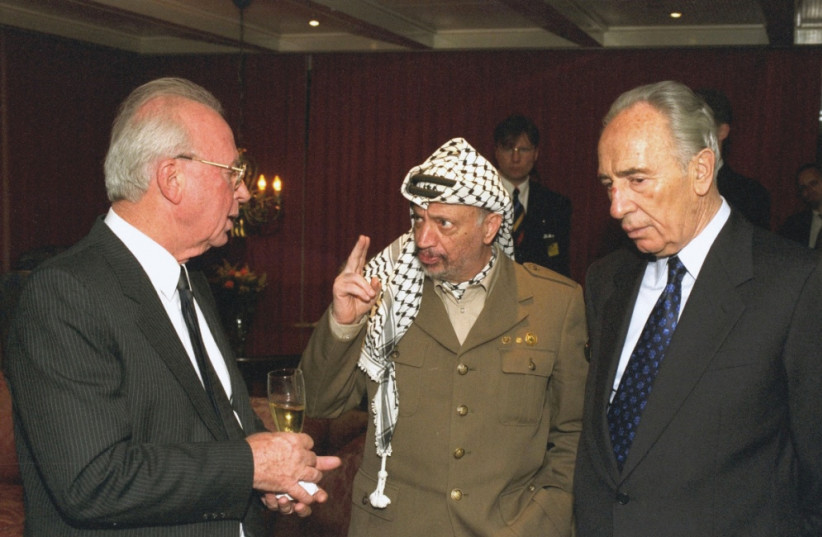
As the state developed, the questions only deepened. In the aftermath of the Oslo Accords and the disengagement from the Gaza Strip, new doubts were raised. If redemption promises Jewish sovereignty in Eretz Yisrael, can the relinquishing of parts of that land be seen as the flowering of redemption?
And the questions do not end there. Can it be called redemptive when we continue to pay such a heavy price for our presence? Can it be redemptive when the country still struggles with so many internal flaws? These questions return almost every year around Independence Day as we reflect on the religious and historical meaning of the State of Israel.
It may be better to ease away from the debate over the word “redemption” or even the phrase “reishit tzemihat geulatenu.” The language itself may be carrying more weight than it can comfortably hold. Is there a different metaphor, one that is more universal and more broadly resonant? A way to describe this process that allows for setbacks and does not require us, at every moment, to define the precise role of the divine?
Perhaps a shift in language can make the experience itself clearer and more universally embraced, helping us better understand what we are living through together.
Perhaps we should be describing an era, instead of speculating about the process. Perhaps it is better to speak in terms of rooms we inhabit than processes we are trying to define. Why not refer to our era as the fourth room of Jewish history?
First room: Pre-Sinai
Jewish history can be divided into four chapters, or four rooms. The first chapter was a 2,400-year pre-Sinai era, in which God had not yet directly revealed Himself, His will, and His Torah to a human audience.
Sadly, most of humanity was adrift in theological confusion and moral chaos. Unable to grasp that from One came many, they imagined a world dominated by multiple warring gods who toyed with their weaker human subjects. Without accountability to a single moral God, moral behavior was neither expected nor sustained.
Finally, roughly 2,000 years after Creation, a single man uncovered God from behind the veil of nature. He began to teach his world about a single, moral God, while building a family shaped by that vision. Slowly, the idea of one God, beyond human form and grounded in moral purpose, began to take hold. The march of monotheism had begun, though it would take generations to work its way into human consciousness.
Second room: Redemption and revelation
Liberated from Egypt, we stood beneath Mount Sinai and experienced a once-in-history event. No religion has ever staked such a claim: An entire nation, three million strong, stood shoulder to shoulder and listened together to the direct voice of God, not as vision or imagination but as shared encounter.
Mount Sinai marked the beginning of a 1,400-year era in which Jewish history unfolded with sovereignty and open divine presence. We lived in our land, revolving around the Sanctuary and Jerusalem, with access to prophecy and a life shaped by prophecy.
Though prophecy and the holy spirit waned during the Second Temple period, the presence of God in Jerusalem remained tangible. Yet we turned against one another. Internal strife fractured the nation and unraveled what had been built. The failures that had already surfaced at the end of the First Temple period returned with force, and this time they carried us into collapse. That unraveling led us into the third room of Jewish history, the darkest of them all.
Third room: The dark room
Scattered among the peoples of this Earth, we spent 2,000 years wrestling with history. Stripped of almost every public expression of Jewish life, we clung to the word and will of God and proved more resilient than history and more faithful than our enemies presumed. We defended our beliefs and preserved our cultural identity in a world often marked by violence and instability.
Not only did we survive this long passage; we endured with purpose. Over time, the ancient world of paganism and superstition gave way to a different order, shaped by monotheism, moral awareness, and intellectual growth. In ways both visible and unseen, we played a role in that transformation. As the world emerged from the long shadow of the Dark Ages, it began to rediscover science, morality, and a deeper respect for human dignity. The culmination of that process brought history to the threshold of its final stage, as we entered the fourth room.
Fourth room: The exit room
In 1948, we turned a door handle and entered the final room of history. The Holocaust marked a terrible climax to the third chapter of Jewish history. As its horrific conclusion, it also marked a transition into the next chapter and the next room.
Living through the past 80 years of Jewish history, from the Holocaust to the founding of the State of Israel, through its military victories, the ingathering of millions of Jews, its remarkable growth across so many areas, and the disorienting challenges of the past two and a half years, one fact stands out. We are not in the same place. History has moved, and we are now living inside a different room, the fourth and final stage of that journey.
We have entered that final room, the one through which we move toward what we call redemption. But it is still a room. How long it will take to pass through it remains unclear. There may be delays, detours, even moments that feel like retreat.
Is this a divinely guided process? I believe it is. But even for those who do not frame it that way, something has shifted. We are no longer where we once were. History has moved, and we now find ourselves in a different place, the fourth room.■
The writer is a YU-ordained rabbi at Yeshivat Har Etzion (Gush), a hesder yeshiva. His latest book, Reclaiming Redemption, Vol. II: Faith, Identity, Peoplehood, and the Storms of War, is available at mtaraginbooks.com.