On a recent work trip back to Manchester, I found myself in a conversation that left a deeper impression than any meeting on my schedule. It was with Rabbi Chaim Cohen, the head of religious studies at King David School, Manchester, a school that, for decades, stood as the flagship of mainstream Jewish education in the city.
For years, King David was bursting at the seams. Classrooms were full of Jewish children receiving an outstanding dual education: rigorous secular studies alongside a serious commitment to Jewish learning and identity. It was, in many ways, the gold standard of what a Diaspora Jewish school could and should be.
But demographics change. Communities evolve. And like many Jewish institutions across the Diaspora, the school has faced a sobering reality: fewer Jewish children, less engagement from certain segments of the community, and the painful inability to fill classrooms with Jewish students alone.
This is, by any measure, a lemon.
The easy response would have been quiet decline, lowered expectations, or a slow erosion of identity.
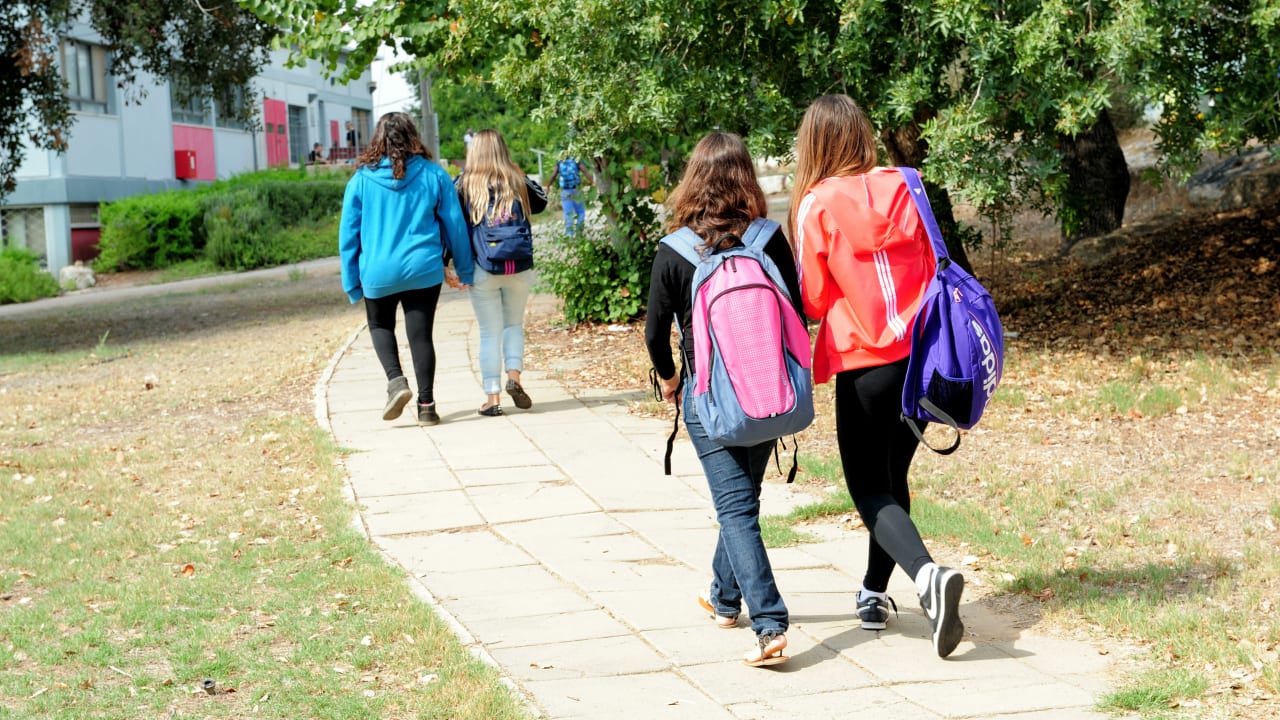
![Classroom [Illustrative]](https://images.jpost.com/image/upload/f_auto,fl_lossy/c_fill,g_faces:center,h_537,w_822/240086)
Instead, something quite extraordinary has happened. Under the thoughtful leadership of Rabbi Cohen and his colleagues, King David has turned that lemon into lemonade, not by diluting its Jewish character, but by deepening it in an unexpected way.
Today, the school includes a small but significant number of non-Jewish students, Muslim, Christian, and others. On paper, this might sound like a compromise. In practice, it has become a powerful engine for kiddush Hashem – honoring God through good conduct – that is as profound as it is unplanned.
Coexistence at a Jewish School in Manchester
What makes this story remarkable is not simply coexistence. It is a transformation.
Rabbi Cohen shared with me the story of a 13-year-old Nigerian Christian girl. After a parents’ evening, she approached him to say thank you for a positive report. As a reward, her parents had taken her to McDonald’s, a small but meaningful celebration. But the real story emerged later.
Her mother had initially been hesitant about sending her daughter to a Jewish school. Even her local pastor had expressed concern. Would her faith be diluted? Would she lose her Christian identity?
The opposite happened.
The pastor later observed that this girl had become more engaged with her faith, more animated in discussing it, more confident in expressing it. Something about being in a Jewish environment, where religion is taken seriously, where identity is lived rather than whispered, had ignited her own spiritual curiosity and pride. The pastor, once wary, became supportive.
A Jewish school had strengthened a Christian child’s Christianity.
Another story: a highly capable Muslim girl was placed in the top academic set, 30 students, all Jewish, except for her. She was offered the option to move to a class with more Muslim peers. She refused.
She wanted to stay.
In that classroom, she studied Judaism in depth. She also learned about Christianity, appropriate in a country shaped by its Christian heritage, and Sikhism, part of the broader curriculum. What she absorbed was not confusion, but clarity: one can be deeply rooted in one’s own faith while treating others with dignity and respect.
Her mother later contacted the school with words that should give us all pause. She described herself as having become, in her own words, “an ambassador” within the Muslim community, speaking positively about Jews and Judaism because of what her daughter had experienced.
Think about that for a moment.
In a world increasingly fractured by suspicion and hostility, where anti-Israel sentiment bleeds all too easily into antisemitism, a Muslim parent is advocating for Jews because of the impact of a Jewish school on her child.
That is not just lemonade. That is something close to alchemy.
And then there is perhaps the most striking story of all. A 12-year-old Muslim girl, visibly religious, wearing a hijab, first-generation British. She arrived at the school knowing no one. Within a month, she had not only settled in but had taken the initiative to write a Shanah Tovah – happy Jewish New Year – greeting, in Hebrew, to Rabbi Cohen. Many Jewish students, Rabbi Cohen noted with a wry smile, had not done the same.
She didn’t stop there.
This young girl volunteered to read the Prayer for the State of Israel during school assemblies. On Independence Day, when students were encouraged to come dressed in blue and white, she and a group of other girls wearing hijabs participated fully, joining in celebrations in a school that is unapologetically Zionist.
Pause again.
In today’s climate, where public expressions of support for Israel can invite hostility, here are Muslim girls, confident in their own identity, standing shoulder to shoulder with their Jewish peers, celebrating.
These students will go home. They will speak to their families. They will shape conversations in communities where Jews are often misunderstood or misrepresented. And they will do so not as outsiders, but as insiders, trusted voices carrying a different narrative.
This is what Rabbi Cohen and all the team at King David School have achieved. Not by accident, but by refusing to see a challenge as a threat to identity. Instead, they have treated it as an opportunity to model what a confident Judaism looks like: open, proud, and deeply rooted.
There is a lesson here for Jewish communities far beyond Manchester.
Too often, we respond to external pressures by retreating inward, circling the wagons, fearing that engagement will lead to erosion. Sometimes that instinct is justified. But sometimes, as King David School demonstrates, the opposite is true: it is precisely through engagement, when done from a place of strength, that identity is reinforced.
Jewish students in this environment are not becoming less Jewish. If anything, they are becoming more so. They are asked questions. They are observed. They are, whether they realize it or not, ambassadors of their own tradition. And in rising to that challenge, they deepen their understanding and commitment.
At the same time, non-Jewish students are encountering a Judaism that is lived with integrity and seriousness. Not caricatured, not politicized, but experienced firsthand, in classrooms, in assemblies, in the rhythms of school life.
In an age of polarization, this is quietly revolutionary.
None of this means that the original “lemon” has disappeared. The demographic challenges remain real. The desire for robust Jewish enrolment is entirely legitimate. But what has changed is the narrative. This is no longer a story of loss alone. It is also a story of opportunity seized.
We often speak about kiddush Hashem in abstract terms.
Here, it has a face: a Nigerian girl rediscovering her Christianity, a Muslim mother becoming an advocate for Jews, a hijab-wearing student reading a prayer for the State of Israel.
These are not headlines. They are something more powerful: lived moments of dignity, respect, and shared humanity.
What King David School, Manchester, has created is not just a school adapting to circumstances. It is a model, one that deserves attention, study, and, where appropriate, replication.
Turning lemons into lemonade is a familiar phrase. But rarely is it as richly deserved as it is here.
Kol hakavod – Well done.
The writer is a rabbi and physician. He writes and teaches on Jewish ethics, leadership, and resilience. His work appears on rabbidrjonathanlieberman.substack.com and youtube.com/@rabbidrjonathanlieberman