The late Jonathan Sacks described rabbis as “stewards of Judaism’s sacred fire,” but in America, the number of people assuming that sacred responsibility is steadily declining.
This growing shortage of rabbis – especially in the non-Orthodox community, which comprises nearly 80% of American Jewry – is troubling. Why is 21st-century American Jewry struggling to provide future generations with the spiritual leaders needed to sustain a hopeful Jewish future in North America?
From 1982 to 1998, my rabbinate was dedicated to encouraging outstanding men and women to become rabbis. More than 850 students entered Hebrew Union College’s Rabbinical School during those 16 years. This experience taught me much about those who are drawn to the rabbinate and what convinces prospects to prepare themselves for this noble calling.
In November 2025, the Atra Center for Rabbinic Innovation released the first data-driven report on the American rabbinate pipeline. One key finding: people remain interested in the rabbinate, but systemic obstacles lead them away.
Financial strain is, without question, the greatest deterrent. Tuition alone costs about $30,000 per year in most non-Orthodox seminaries, with living expenses often funded by federal loans.

This burden is compounded by the fact that three of the four cities hosting non-Orthodox rabbinical schools – New York, Boston, and Los Angeles – are among the most expensive in the country. Many promising candidates concede that lifelong debt discourages them from entering the rabbinate.
Rabbinate as a second career
According to the study, the rabbinate is a second career for 66% of today’s non-Orthodox rabbinical students. For them, relocating to expensive coastal cities – including a year in Jerusalem – constitutes another barrier.
Those entering the rabbinate from undergraduate studies express different concerns, namely, the relentless pace of congregational life discourages them from embracing this calling. The Atra report also asserts that rabbinical education “no longer aligns with the realities of the leaders these institutions seek to cultivate.”
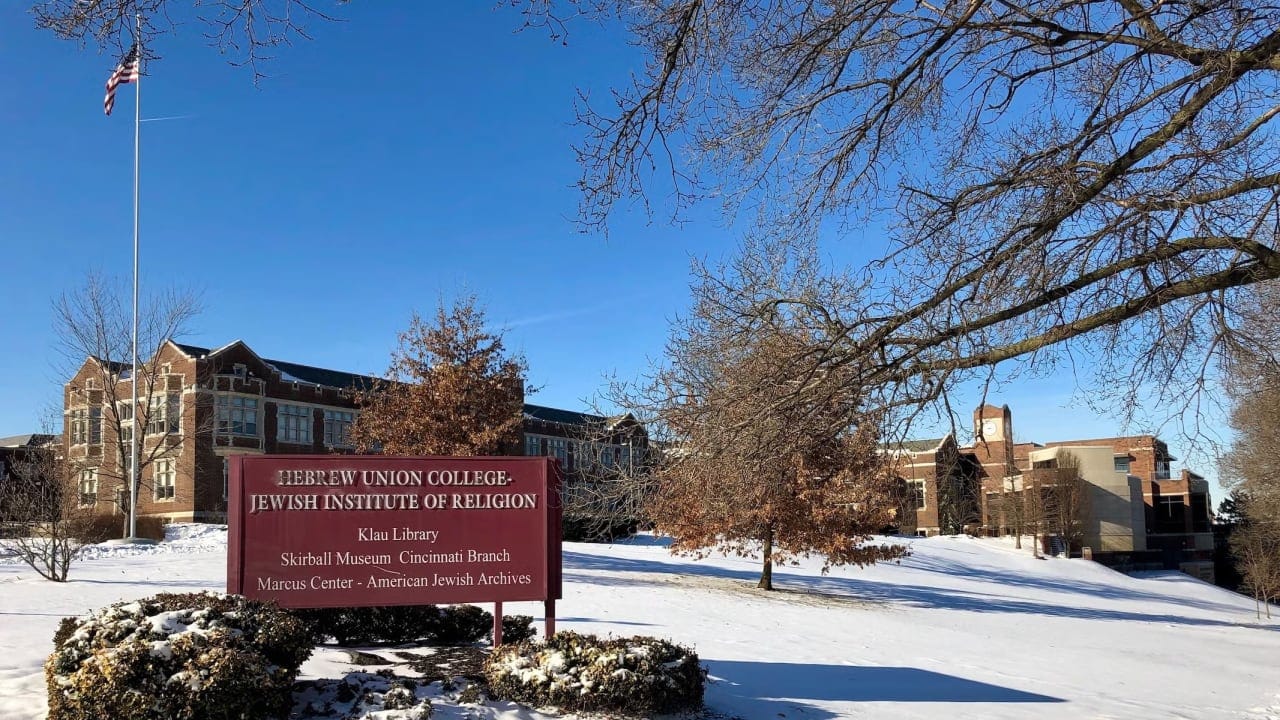
Today, for instance, all accredited non-Orthodox seminaries sit on two coasts. In 2022, Hebrew Union College announced that by 2026 it would shutter its 150-year-old Cincinnati campus, the school’s birthplace and home of the Klau Library and the American Jewish Archives.
The vast American heartland, where 40% of American Jews live and where several Southern and Southwestern cities have booming Jewish populations, now has no rabbinical students. Little wonder the Atra study noted that communities in the Midwest, South, and Southwest face the greatest challenge in attracting rabbis.
The push toward low-residency rabbinical education raises equally significant questions. Will students who study in virtual isolation learn how to foster a community of Jewish learners? Recent sociological studies show that 60-65% of Gen Z and Gen Alpha say they prefer in-person learning, with 80% desiring more face-to-face interaction.
Rising generations want teachers who serve as role models – scholarly mentors invested in their intellectual growth. This means rabbinical schools must be led by learned rabbis qualified to teach, mentor, and inspire their future colleagues.
The 2025 Deloitte Gen Z and Millennial Global Survey found that rising generations prioritize learning and personal growth. They seek lives of meaning, well-being, and financial security. They increasingly identify with Robert Coles' observation in The Call to Service: those who serve their fellows find spiritual and emotional fulfillment, a benefit that AI will never replicate.
That said, AI poses critical questions for rabbinic education. If ChatGPT can provide a Jewish community with homilies, teachings, essays, and counsel, what becomes of the rabbi’s historic role as the knowledgeable teacher of Jewish life and lore?
More than two decades ago, Professor Norman Lamm predicted universal access to searchable Torah, Talmud, midrashim, and responsa literature. He asked rhetorically, “What more would one need?”
Rabbinical education must cultivate a love of Jewish learning, Lamm insisted, not a proficiency for harvesting data with help from AI. Torah Lishmah – learning for its own sake – constitutes the heart of the rabbinate.
Seminaries that fail to endow students with a love of Jewish learning are destined to become lifeless centers of Jewish irrelevancy.
The path forward in rabbinical education will be paved neither by radical reinvention nor stubborn resistance to change. The future of the rabbinate stands on a foundation of accumulated wisdom built over time: Rabbinic education must be affordable, rooted in community, accessible to the heart of the country, and instill students with an enduring love of learning.
Roman Emperor Augustus popularized the Latin adage Festina Lente – “make haste slowly.” Pressing tasks require balancing innovation with time-tested values that have ennobled the rabbinate for nearly two millennia. As the character Peanut from the Broadway musical Shucked wisely notes: “Old things aren’t worth keeping because they’re old. They’re worth keeping because they’re loved.”
Rabbinical educators who bear this in mind will succeed in reanimating the rabbinate. As our sages taught long ago, we can renew our days with inspiration from our past greatness.
The writer serves as the founding president of the College for Contemporary Judaism, a new rabbinical school being established in Cincinnati, Ohio. He is also executive director emeritus of The Jacob Rader Marcus Center of the American Jewish Archives, and The Edward M. Ackerman Family distinguished professor emeritus of the American Jewish Experience and Reform Jewish History at Hebrew Union College.