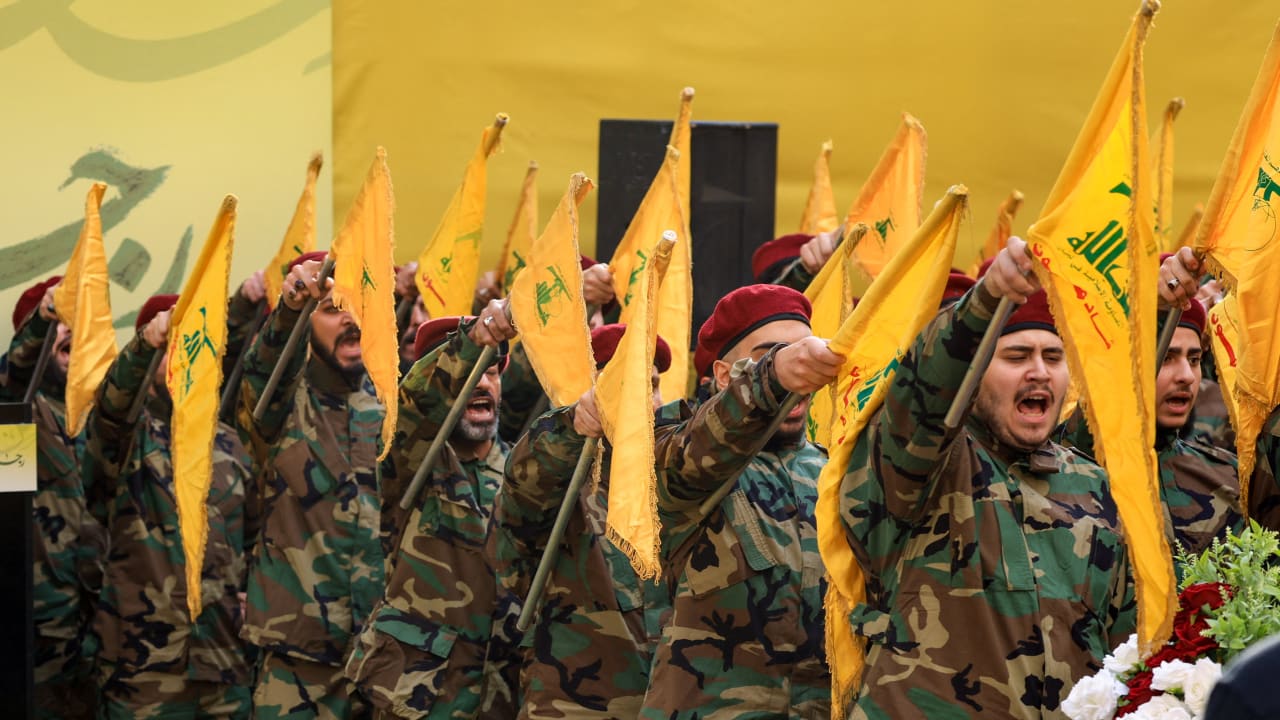
From the outset of US-Iran negotiations, a key fault line emerged: whether the ceasefire applied to the Israel-Hezbollah front. As expected, Tehran tested American resolve, seeking concessions beyond the framework, from unfreezing assets to pressing President Donald Trump to restrain Israel in Lebanon.
While Washington has treated the Lebanon and Iran fronts as separate, that distinction is inaccurate. Hezbollah is not an independent actor, but a forward arm of Iran’s Islamic Revolutionary Guard Corps, deeply intertwined with the regime and responsible, alongside Tehran, for American bloodshed.
Over the past two and a half years, I have spent extensive time on the front lines with Israeli troops along the Lebanese border, witnessing Iran’s crown jewel, Hezbollah, repeatedly strike Israeli civilians across the western and northern Galilee, and now even central Israel with drone and missile fire.
More than 60,000 Israeli civilians were evacuated beginning on October 8, 2023, amid fears of a cross-border invasion by Hezbollah’s Radwan forces. I am now returning for my 10th visit to the northern border since October 2023. Regardless of developments involving Iran, Israel’s northern front will remain volatile. These conflicts are not isolated; they are interconnected theaters in a regional campaign driven by Iran’s hegemonic ambitions and revolutionary Islamist ideology.
This raises a critical question: If the United States reaches a deal with Iran, will Washington pressure Israel to halt operations in the North, leaving tens of thousands of Hezbollah missiles intact and its terror infrastructure free to regenerate?

Hezbollah's control over Lebanon
Having covered every Israeli war since the Second Intifada, including the 2006 Lebanon War, I have seen Hezbollah evolve into far more than a terrorist organization. It now exercises effective veto power over the Lebanese state. On April 11, Hezbollah reportedly threatened Lebanon’s prime minister, forcing him to acquiesce to its demands and cancel a visit to Washington amid US-facilitated talks with Israel.
Funded and directed by Tehran, Hezbollah operates under the Twelver Shi’ite doctrine of Wilayat al-Faqih, aligning its decisions with Iran’s supreme leader. In practice, it functions as a forward-deployed arm of the IRGC, who control the regime.
This is not merely Israel’s problem; it is a direct challenge to US strategic interests. Hezbollah has killed hundreds of Americans, most notably in the 1983 Beirut barracks bombing. It maintains global terror and criminal networks, including narcotics pipelines in Latin America that fuel addiction in the United States, generate revenue for terrorism, and destabilize US partners.
Allowing Hezbollah to consolidate power and reconstitute would not only endanger Israel but also expand a transnational threat network that directly impacts American homeland security, law enforcement, and regional stability.
The non-Shi’ite part of the Lebanese government, comprising Sunnis, Christians, and Druze, would welcome relief from Hezbollah’s dominance, but its ability to act is constrained by the power of Hezbollah and the risk of civil war. Hezbollah has deeply penetrated Lebanese state institutions, including the armed forces. Many within its ranks sympathize with Hezbollah and Iran, complicating any expectation that the state can confront the group.
There have been symbolic gestures of resistance. Lebanon’s decision to declare the Iranian ambassador persona non grata would have been unthinkable just a few years ago. But symbolism does not alter strategic reality. The ambassador, in effect, is no diplomat; he is an IRGC operative and has reportedly refused to leave Lebanon.
The Lebanese government claims Hezbollah was disarmed in southern Lebanon in accordance with UN Security Council Resolution 1701. That claim does not withstand scrutiny. Before Israel’s recent offensive, while embedded with the IDF’s 91st Division, I observed that Hezbollah remains deeply entrenched in the south. Israeli intelligence on weapons depots and rearmament has been shared with the Lebanese Armed Forces, yet enforcement has been minimal, forcing Israel to act unilaterally.
Hezbollah’s control over southern Lebanon, the Bekaa Valley, and parts of Beirut has been built over decades. Its forces never withdrew, despite binding international resolutions and commitments by the Lebanese government.
Following the killing of senior Iranian figures, the Iranian-directed militia escalated its attacks on Israel. In response, Israel expanded operations into southern Lebanon, targeting entrenched positions. IRGC commanders remain embedded within Hezbollah units, underscoring the depth of operational integration.
Lebanon’s internal dynamics further complicate matters. Nearly half the population is Shi’ite, and many rely on Hezbollah’s extensive social services network, subsidized by roughly $1 billion from Iran in 2025. The Lebanese state remains weak, lacking both the will and the capability to confront Hezbollah.
In Washington, a dangerous assumption appears to be taking hold: that if the United States de-escalates with Iran, Israel should follow suit, not only with Tehran, but with Hezbollah. This assumption ignores reality.
Israel has attempted to change the security equation in southern Lebanon, learning from past failures. It has taken steps, including evacuating Lebanese Shi’ites from areas near the Israeli border, to prevent Hezbollah from using them as human shields.
Jerusalem will inevitably face American pressure to allow their return. If Prime Minister Benjamin Netanyahu acquiesces prematurely, northern Israeli communities will again be exposed to immediate threat.
Even after thousands of Israeli strikes, Hezbollah retains significant military capabilities, including long-range missiles, drones, and domestic production infrastructure. Much of the American media has focused on Iran while largely overlooking the sustained conflict along Israel’s northern border, where civilians remain under constant threat.
Across the Middle East, a consistent concern is emerging: if the United States leaves Iran weakened but intact while allowing its proxy network to survive, regional actors will lose confidence in American resolve. They may hedge toward China or Russia, accommodate Tehran, or pursue independent security arrangements.
As Alma’s Sarit Zehavi put it to me, “The loss of Lebanon to Hezbollah would directly undermine US interests by entrenching an ideologically anti-American Iranian proxy with long-range missiles capable of threatening US forces, assets, and allies across the region and beyond.”
The question is not only whether Israel would agree to halt operations, but whether it should. Israeli defense and intelligence leaders increasingly view this moment as a rare strategic window, one unlikely to recur soon.
A premature halt to military pressure on Hezbollah would not stabilize the region; it would all but guarantee the next, more dangerous war. If the United States deprioritizes Israel’s campaign against Hezbollah, it is not a tactical oversight – it is a strategic failure, one that leaves Iran’s most powerful proxy intact, emboldened, and positioned to threaten American interests for decades to come.
The writer is director of the Middle East Political Information Network (MEPIN) and senior security editor of The Jerusalem Report. He frequently briefs Congress, think tanks, and the State Department on Middle East affairs and their implications for US national security.