
Some of the earliest and most fateful steps that paved the way to the Holocaust took place not in German government offices but in German churches. In 1932, a group of German Christians drafted a platform of beliefs for a new form of “positive Christianity” that aimed to create a centralized, unified national church aligned with the rising Nazi movement.
German Christianity completely rejected the Jewish roots of the Christian faith, argued unreasonably that Jesus was an Aryan and not a Jew, and audaciously declared, “We demand liberation from the Old Testament.” The abandonment of the Hebrew Bible and other religious manipulations helped lay the theological groundwork for Adolf Hitler’s political rise to power in 1933, and accelerated menacingly after his unlikely ascension. Antisemitism became officially embedded throughout European Protestant churches and the Nazis enforced this interpretation with brutality and intimidation, recruiting church leaders into their orbit and silencing voices of dissent.
As some influential American podcasters embrace many of these same provenly dangerous Christian tropes, this week’s commemoration of Holocaust Remembrance Day (Yom Hashoah in Hebrew) calls Americans to remember their history. One heroic pastor can inspire us to speak loudly against the dangerous manipulation of Christianity unfolding in American society today.
Bonhoeffer's understanding of Christian faith
Dietrich Bonhoeffer was born in 1906 and displayed exceptional intellectual gifts from an early age. He studied theology at the University of Berlin, and at just 21, completed his doctoral dissertation before serving in pastoral ministry. In 1930, Bonhoeffer left to New York City to study at Union Theological Seminary where he connected to African American church life in Harlem and deepened his sensitivity to racial injustice in ways that would shape the rest of his life.
Upon returning to a Germany increasingly intoxicated by nationalist fervor, Bonhoeffer became an outspoken critic of the growing German Christian movement. At great personal risk, he argued that Christian faith is inseparable from Israel’s story and declared that “to expel the Old Testament from the Christian Bible is to deny the God of Jesus Christ.”
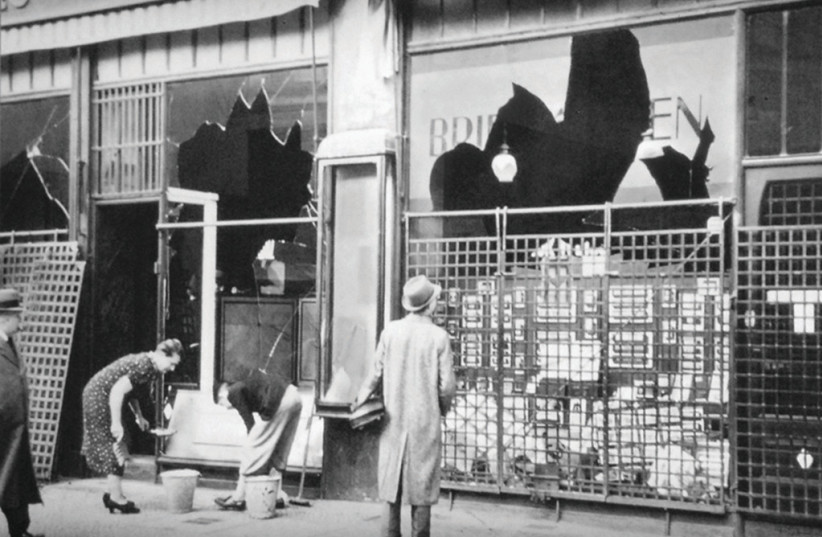
Then came Kristallnacht, the night that changed everything. As Nazi mobs destroyed hundreds of synagogues, Bonhoeffer read Psalm 74: “They set Your sanctuary afire; to the ground they profaned the dwelling place of Your name.” In those ancient words, Bonhoeffer understood that the attack on the Jewish people was an attack on God Himself.
From that moment, Bonhoeffer risked everything and began to help smuggle Jews to Switzerland in a clandestine rescue operation. He abandoned his personal pacifism and joined the conspiracy to assassinate Hitler before he was arrested, imprisoned, and ultimately murdered.
Antisemitism in America
Sadly, many Americans today are failing what we might call the Bonhoeffer Test. Voices are growing louder on social media that are normalizing deeply antisemitic Christian beliefs, denying the continuity between the Jews of the Bible and the modern State of Israel, and undermining the legitimacy of Israel’s right to defend itself.
Rather than engaging, too many church leaders are retreating into what Bonhoeffer himself called “private virtuousness.” Bonhoeffer railed against Christians who neither steal, nor murder, nor commit violence themselves, but who “close their eyes and ears to the injustice around them.” Bonhoeffer understood that faith is not a private intellectual matter, but one that demands action.
For decades, Christian support for Israel and the Jewish people has grown into a genuine movement of Jewish-Christian cooperation and reconciliation. Indeed, we have experienced a growing and hopeful chapter in a long and complicated shared history. In recent years, however, those positive trends are reversing sharply. Antisemitism is surging, and while most American Christians are not participating directly, they are watching it spread across their social media feeds and remaining silent. That silence is a choice, and Bonhoeffer’s life reminds us that it is a choice with grave consequences.
This year, to mark Holocaust Remembrance Day, Israel365 is hosting a special webinar exploring Bonhoeffer’s life and legacy, and what his example demands of Christians and Jews alike in this moment. We will examine his courage and his ultimate sacrifice, and ask what it truly means to stand with Israel and the Jewish people when doing so comes at a cost.
Eighty-one years ago this month, Bonhoeffer was led to the gallows at the Flossenbürg concentration camp and executed at the age of 39, less than a month before Germany’s defeat. Beyond his bravery, Bonhoeffer led a religious revolt against the German Christian church, insisting that theological clarity and moral courage were inseparable. He left the world words that we must internalize deeply and urgently: “Silence in the face of evil is itself evil. Not to speak is to speak. Not to act is to act.”
This Holocaust Remembrance Day, we must ask ourselves whether we are speaking when silence would be easier and acting when inaction would be safer, and whether we are passing or failing the Bonhoeffer Test.
The writer is the founder of Israel365, editor of The Israel Bible, and author of Universal Zionism. Join Israel365 this Yom HaShoah for a special webinar: “The Bonhoeffer Test,” registration at Israel365.com