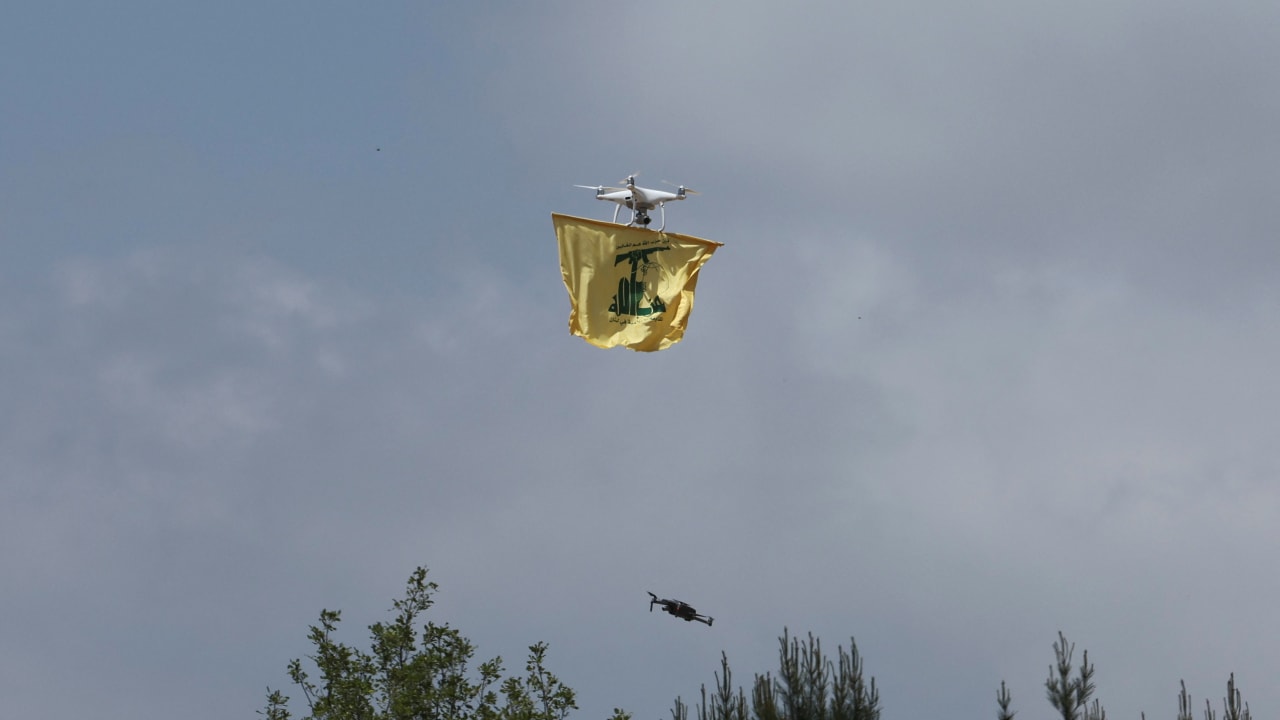
Hezbollah has increasingly been using first-person-view (FPV) explosive suicide drones against Israeli forces in Lebanon, and while these technologies and tactics have been emerging in the Levant, they have long been established in the war between Ukraine and Russia. Drone warfare has rapidly evolved in the Russia-Ukraine War, as have countermeasures, providing the Israeli military with an opportunity to preempt greater adoption of FPV drones by the Islamic Regime with best defense practices. The IDF can learn from the mistakes and trials of others, rather than paying for the innovation process in blood.
Following the IDF invasion of Lebanon to counter Hezbollah attacks, FPV drones appear to be gaining popularity among the Jihadist group's ranks. The IDF seized several high points along the border, which previously cast a shadow of anti-tank guided missiles on Israeli towns, bases, and roads below. The ATGMs favored by Hezbollah require line of sight and can strike up to five kilometers. The IDF has also emphasized fielded armored vehicles with the Trophy active defense system installed. Other tactics and technologies focused on ATGM teams have also been employed.
FPV drones don't need the same line of sight that ATGMs require, and some models can operate from a much further distance. Hezbollah has been publishing FPV drone footage of strikes on stationary and parked IDF vehicles. While it is not always clear if the FPV strikes have truly scored hits, the videos already represent some of the most successful propaganda pieces produced by the terrorist organization during an otherwise disastrous war. The pilots of these unmanned vehicles are unsteady and not as accurate as their Ukrainian or Russian counterparts, but this may not always be the case. If Hezbollah manages to capture footage of Israeli soldiers being slain or maimed in a FPV drone strike, the images would be deeply impactful for Israeli society and raise the morale of Iranian proxies.
Broadcasting death
Such attacks are common in the Russia-Ukraine War, and both sides have published footage of FPV drones hunting down enemy soldiers, broadcasting their final moments for the world to see. If Israeli officers were not watching, they may have at least noticed that Ukraine provided advisers and aid in shooting another breed of drone threat in the Middle East — the same Iranian-developed Shahed drones that have fallen upon Ukrainian cities. This aid emphasized Ukraine's role as a leader in drone countermeasure tactics and technologies, and should entice the IDF to learn their best practices for the FPV drone threat.
A low-technology disruptive innovation present throughout large swathes of Ukraine is the use of netting. Nets effectively catch and prevent drones from reaching their targets. In areas near the frontline in Ukraine, netting has been set up to cover roads, creating protective tunnels. The IDF is awash with netting for shade or camouflage which aren't being used. They could be brought out of storage and requisitioned from training bases and set up not only in Israeli border towns if the threat expands, but within Lebanon. Many of the targets struck in Hezbollah videos are stationary vehicles, which could be shielded by setting up a simple net canopy and fencing. Once roads are used more by vehicles, similar netting tunnels could be built to anticipate FPV attacks.

While on the move, Russian armored vehicles have also used a variety of metal cages to create distance between drone explosions and their vehicle. While some tanks in Gaza in the early October 7 war were equipped with turret plates to shield them from the drone bombers that were once ubiquitous in drone warfare, they do not provide the degree of protection that may be needed against mass FPV drone attacks. IDF armored vehicles may need to adopt similar makeshift armor.
Electronic warfare suites are also widely used across Ukraine. Military vehicles in frontline areas can be seen with pylons and antennas on their roofs, jamming and disrupting the radio frequencies of attacking drones. Infantry also needs its own protection. Currently, soldiers rely on battalion and brigade-level alerts to make them aware that drones may be in the area. Specialist units deploy stationary EW systems in established forward operating bases. Ukrainian defense companies have introduced UAV detectors that can be used at the company and platoon levels. Some models not only can detect drone activity, but also allow the user to tap into the FPV drone's broadcast. These tools can be provided to platoon and company drone specialists and aid infantrymen in evading incoming drones by seeing their approach and trajectory.
As a last resort, some Ukrainian soldiers are trained to use shotguns to intercept these small drones before they impact. If there are shotguns in Israeli armories, it might be beneficial to train and arm select soldiers accordingly.
On October 7, despite having observed the developments in Ukraine for over a year, the IDF was caught off guard and blinded when cameras and remotely controlled weapon systems on watchtowers were destroyed by bombs dropped by cheap quadcopter drones. The IDF cannot afford another failure of imagination.
Armies prepare for the last war they fight, and the IDF readied for years to combat the ATGM threat it encountered in the Second Lebanon War. Yet with new weapon platforms being employed around the world, IDF planners need to also prepare for the last wars fought by others.