The relationship between Spain and the Jewish world stretches back centuries, through exile and reconciliation, through darkness and a long, painful rebuilding of trust. That is why, and because of the warm and substantive conversation I was honored to have with His Majesty King Felipe VI, as well as the constructive dialogue with representatives of Spanish diplomacy, what I feel compelled to write today causes me genuine pain.
Something is going wrong in Spain. And the Jewish world, along with all those who care about the integrity of European democracy, cannot afford to look away.
October 7 and what followed: a revealing sequence
When Hamas carried out its barbaric attack against Israel on October 7, 2023, murdering over 1,200 people, burning families alive and taking 251 hostages, Spain’s Prime Minister Pedro Sánchez, like most democratic leaders, issued a condemnation. The words were correct. What followed was not.
Within days, and at times within hours, the emphasis shifted. Attention moved rapidly from the atrocity committed against Israel to calls for restraint in Israel’s response, criticism of its military operation, and public expressions of doubt regarding its compliance with international law. The condemnation of terrorism became a brief preface, and an ever shorter one, to a sustained campaign of pressure on the victim.
This sequence matters. It is not a minor rhetorical nuance. When a democratic leader moves so quickly from “we condemn this massacre” to “but Israel must stop,” the signal received by Jewish communities, by Israelis, and by Hamas itself is not one of moral clarity. At best, it is moral equivalence. At worst, it is encouragement.
From ambiguity to relativization
What began as ambiguity evolved into something far more troubling. In subsequent public statements, there were attempts to relativize and, in effect, justify acts of terror and mass murder. These are not the words of a responsible democratic statesman. They are the words of a leader who has made a choice, and a profoundly unfortunate one.
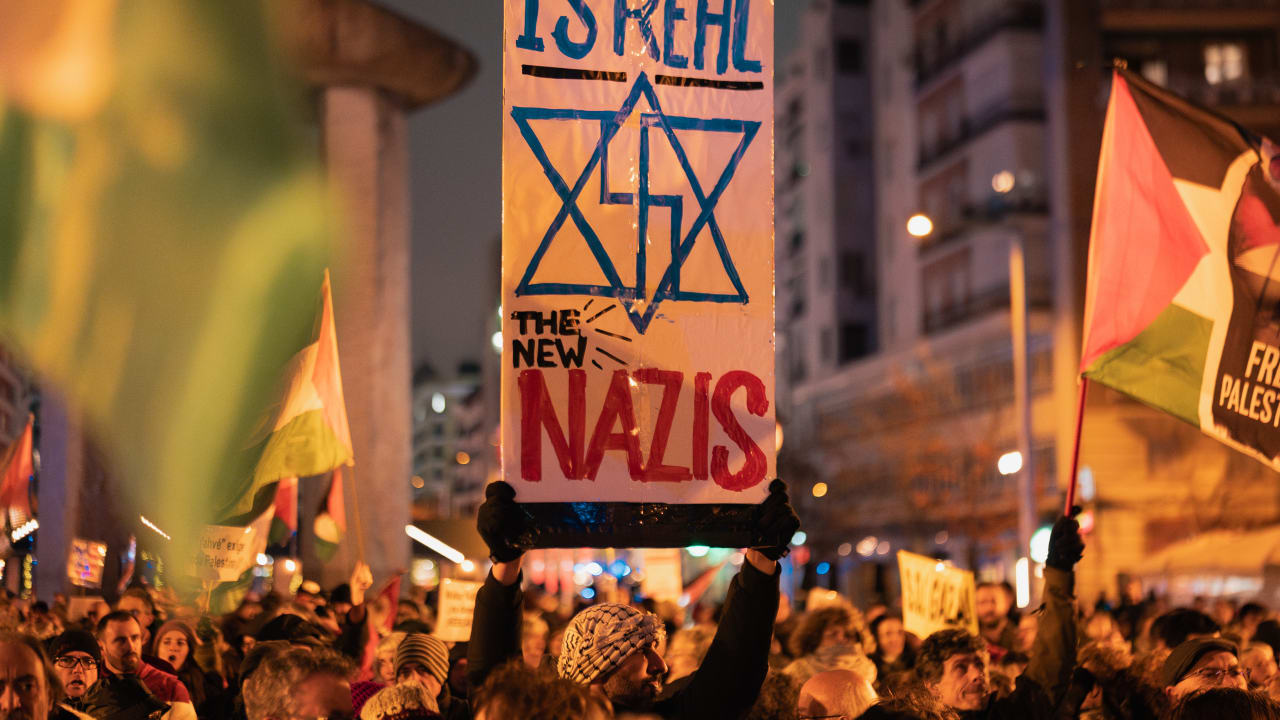
The consequences of such rhetoric are not abstract. Since October 7, antisemitic incidents across Europe have surged. The atmosphere in which Jewish communities live and raise their children has deteriorated significantly. Political leaders who engage in moral relativism regarding the murder of Jews do not merely reflect this atmosphere; they help create and sustain it. Pedro Sánchez has become one of the more prominent voices in Europe fueling this dangerous trend.
Tehran’s approval: a warning that cannot be ignored
Perhaps the most alarming dimension of this situation is the reaction it has elicited in Iran.
Representatives of Iranian diplomacy have publicly indicated their readiness to take Spain’s interests into account, explicitly linking Tehran’s attitude toward European states to their position on Israel. This is not a veiled hint. It is a direct offer of political reward for an anti-Israeli stance.
The fact that such an offer comes from a regime with a long and well-documented record of financing and directing terrorist organizations worldwide should give pause to every European leader. The fact that it is directed at Spain, and that Spain’s government has not seen fit to publicly reject it, raises the gravest concerns.
When the foreign policy of a democratic European government is met with explicit approval from the Islamic Republic of Iran, something has gone deeply wrong.
The voice of the Spanish people
And yet, there is another Spain, and it deserves to be heard.
For the second consecutive year, including the 2025 Eurovision Song Contest, Spanish viewers have given Israel their highest level of support. This is not accidental. It is a consistent, repeated, democratically expressed sentiment of solidarity and goodwill toward Israel and the Israeli people.
The contrast with the rhetoric of the country’s political leadership could hardly be sharper. When Pedro Sánchez publicly questioned the legitimacy of the vote of his own citizens who supported Israeli performers, he crossed a line that goes beyond political disagreement. He exposed a bias that his voters, the Spanish people themselves, clearly do not share.
This gap between the will of the citizens and the position of their government is not merely a domestic matter. It sends a signal: the current anti-Israeli posture of Spain’s government does not reflect the values of Spanish society. Through their democratic choices, the Spanish people have demonstrated greater wisdom and humanity than their prime minister.
What is at stake
Spain is a great country with a great history. Its tradition of tolerance, hard-won, imperfect, yet real, is part of the European heritage in whose preservation we all have a stake.
King Felipe VI, through his personal conduct and his engagement with Jewish delegations, has made it clear that he understands the weight of this history and the importance of these relationships. The values he embodies—dialogue, responsibility, moral seriousness - are precisely the values Spain’s government should be projecting to the world.
Instead, under Pedro Sánchez, Spain has become a country whose government is praised in Tehran, equivocates in the face of the murder of Jews, and disregards the democratic will of its own citizens when that will expresses solidarity with Israel.
This is not the Spain Europe needs. It is not the Spain the Spanish people deserve. And it is not a Spain that Jewish communities in Europe and around the world can continue to place their trust in, as long as this trajectory persists.
A lesson from history that cannot be ignored
Spain’s history offers a powerful and instructive lesson. For centuries, the Jewish community was an integral part of the country’s intellectual, cultural, and economic flourishing. The period known as the Golden Age was a time of extraordinary achievement not only for the Jewish people but also for Spain, which was one of the leading centers of civilization of its era.
The expulsion of the Jews at the end of the 15th century was not only a tragedy for an entire people, but also a turning point for Spain. Many historians associate this decision with the gradual loss of the creative and intellectual dynamism that had previously driven the country’s development and influence.
History does not repeat itself literally. But it consistently points to the consequences of losing moral clarity and abandoning the principles of openness, respect, and responsibility.
A call for moral clarity
We are not asking Spain to abandon its independent foreign policy. We are not asking for agreement with every decision of the Israeli government. Genuine debate on complex issues is the lifeblood of democracy.
Our demands are far more modest: that terrorism not be relativized, that the murder of civilians not be explained away in ways that dilute its moral gravity, that the foreign policy of a democratic state not be shaped with an eye toward the approval of regimes that sponsor terror, and that the democratic voice of the Spanish people—clearly and repeatedly expressed in support of Israel - be respected rather than dismissed.
Spain deserves political leadership fully aligned with its historical traditions of tolerance, responsibility, and respect for the Jewish people. Through their actions, Spaniards have shown they are ready for such leadership.
The question is whether their government is.
Mikhail Mirilashvili is President of the Euro-Asian Jewish Congress (EAJC). He has had the honor of meeting His Majesty King Felipe VI of Spain, as well as previously His Majesty King Juan Carlos I.