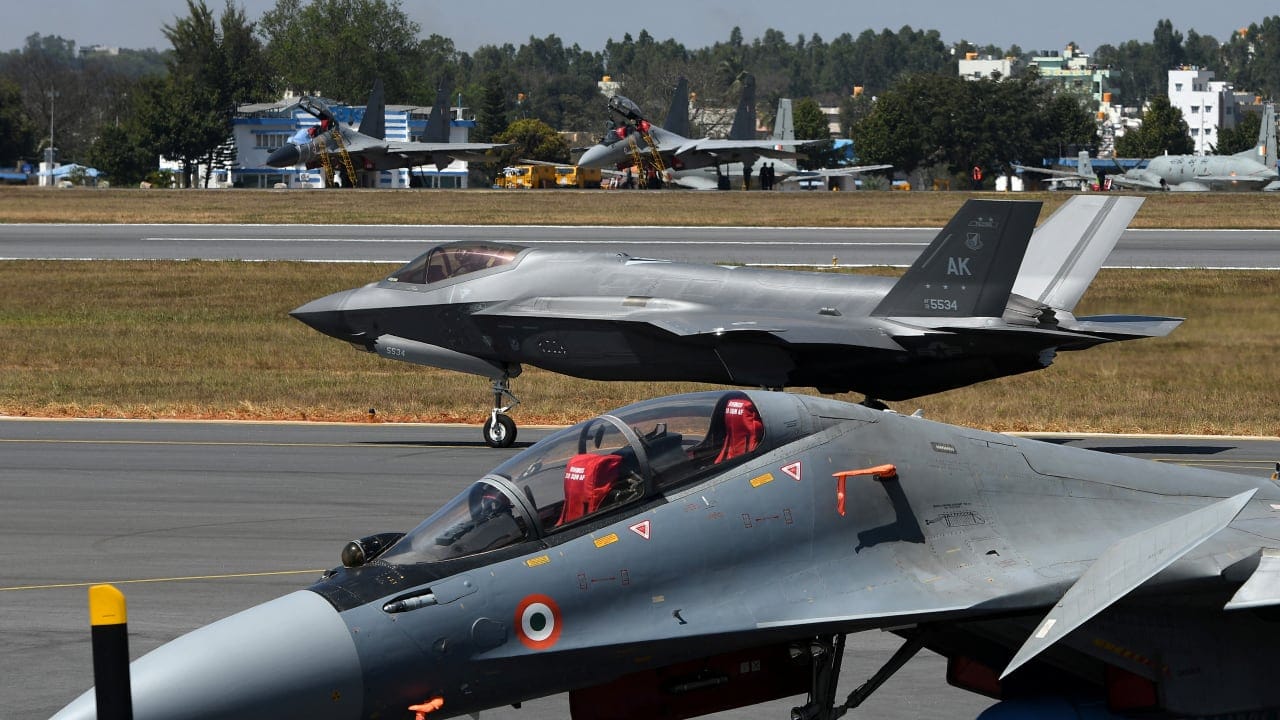
In recent days, the public has begun to show signs of impatience. Two full weeks of massive and successful airstrikes have not yet brought the Iranian regime to its knees. The early hope that Iran’s leadership might flee as Bashar al-Assad eventually did is beginning to fade, and a more sober realization is slowly taking hold: This war will not be decided quickly.
This raises a fundamental question: Can Iran be defeated from the air alone, or is a ground component ultimately necessary for victory?
On paper, the idea of defeating a country solely through air power sounds almost ideal. Fighter jets, cruise missiles, and drones can strike deep inside enemy territory, destroy military infrastructure, disable air defenses, and disrupt the economy. In an era of precision intelligence and guided munitions, it sometimes appears possible to push a regime – whether in Iran or elsewhere – to the breaking point without sending even a single soldier into enemy territory.
History does provide examples in which air campaigns played a decisive role in achieving political outcomes.
The most notable case is NATO’s campaign against Yugoslavia in 1999. For 78 days, alliance aircraft struck military and civilian infrastructure across the country in an effort to force Belgrade to halt its violent repression in Kosovo.
Thousands of sorties targeted military installations, bridges, factories, and government facilities, while the cumulative pressure on the country’s economy and strategic rear steadily mounted. Ultimately, Yugoslavia’s leadership agreed to a political settlement and withdrew from Kosovo. There was no large-scale ground invasion; the concession was made under sustained air and economic pressure.

Another example occurred in Libya in 2011. When civil war broke out against Muammar Gaddafi’s regime, NATO intervened through Operation Unified Protector. Hundreds of aircraft struck air defenses, military bases, and regime forces. Within a relatively short period, Gaddafi lost control of the air and much of his ability to operate his military effectively. Although local rebel forces advanced on the ground, it is doubtful they could have defeated Gaddafi’s army and toppled the regime without the massive aerial support provided by NATO.
Ground forces needed to topple Iranian regime
These examples show that air campaigns can undermine regimes, dismantle military capabilities, and push leaders toward political collapse. Yet they also highlight an important point: Even when the skies are the main arena, a ground element ultimately completes the process – whether through internal political pressure or through forces operating on the ground.
When we attempt to apply these lessons to Iran, the complexity becomes immediately clear.
First, Iran is enormous in geographic terms – larger than France, Germany, Italy, and the United Kingdom combined.
Its military infrastructure is dispersed between densely populated urban areas and remote mountainous regions.
Even if a large portion of these targets could be struck from the air, the number of mobile and scattered assets is immense.
Second, the regime maintains a large military apparatus consisting of hundreds of thousands of personnel, including the powerful Islamic Revolutionary Guard Corps. Many of these forces are structured precisely for a protracted conflict – designed to disperse, conceal themselves, operate from urban terrain, and complicate precision targeting.
But perhaps the most critical factor is political and societal. Bringing down a regime like Iran’s requires more than destroying bases and factories – it requires destabilizing the mechanisms of control that sustain the regime. This is where the potential role of Iran’s civilian opposition becomes significant.
Iranian society has witnessed several major waves of protest in recent years. Economic demonstrations, student protests, and widespread movements for women’s rights have revealed a deep undercurrent of opposition to the regime. Millions of young people, professionals, and members of the urban middle class do not identify with the ideological framework of the Revolutionary Guards and increasingly feel that the regime is suffocating their future.
When external pressure begins to erode the regime’s stability – through strikes on infrastructure and strategic assets – it may create conditions in which segments of the economic, political, and even military elite conclude that the continued rule of the clerical leadership threatens their own survival. In such circumstances, a “turning of the guns” could occur, with parts of the establishment shifting toward the public and undermining the regime from within.
Even such a process, however, would likely require a ground component to complete the collapse. This could take several forms: special forces operations targeting key centers of power, the activation of minority groups inside Iran that could open internal fronts, or limited military maneuvers designed to increase pressure and force the regime to disperse its forces.
Ultimately, an air campaign may open the door. It can shatter infrastructure, erode confidence, and impose immense pressure on a regime’s leadership. But history suggests that the moment when a regime truly falls usually occurs when that pressure intersects with events unfolding on the ground.
And in the Iranian case, if that decisive moment arrives, it will likely not come from the clouds above – but from the streets below.
The writer is a retired IDF commander and the CEO of the Israel Defense and Security Forum (IDSF). He served as deputy brigade commander, battalion commander, and commander of the Southern Command infantry training base, responsible for preparing IDF soldiers and commanders for general combat in the Gaza Strip, including during Operation Protective Edge. Despite being wounded in combat, he also served as a special operations officer in Central Command, responsible for classified operations carried out by an elite IDF unit across the West Bank.