Geopolitics often unfolds like a long and patient chess match: careful positioning, calculated sacrifices, and occasional bold strikes designed to change the board in a single move. The current confrontation between the United States and Israel on one side and Iran on the other appears to be entering precisely such a phase.
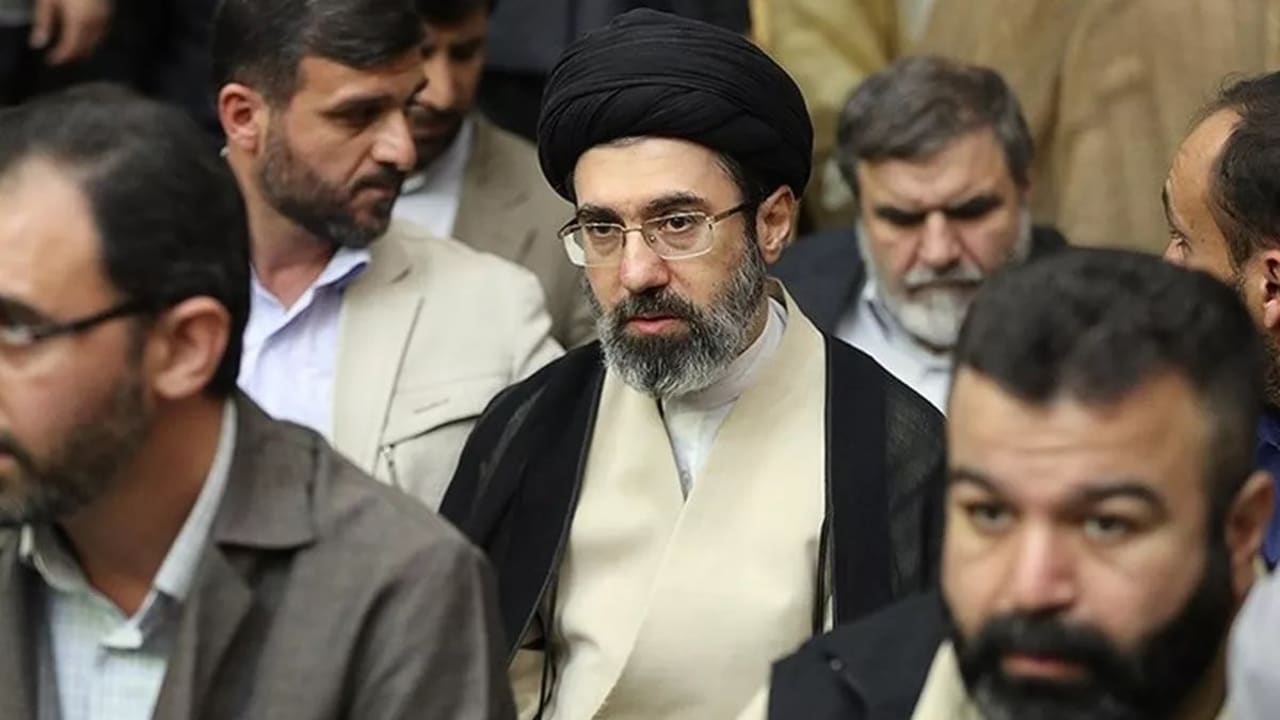
On the night of March 5, reports emerged of a major Israeli airborne operation: roughly 50 fighter jets striking an Islamic Revolutionary Guard Corps command bunker in Tehran. The objective was not merely tactical. According to these reports, the strike aimed to eliminate several senior commanders and Mojtaba Khamenei, who was recently designated by Iran’s Assembly of Experts as the new Supreme Leader of the Islamic Republic.
If successful, the operation would have removed a critical piece from the Iranian regime’s board. Beyond its military significance, such a strike would carry immense symbolic weight, potentially accelerating internal fractures within the regime. In conflicts of this scale, symbolism can be nearly as decisive as firepower.
The real opponents: time and oil
For President Donald Trump, however, Iran itself is not the most formidable opponent. Militarily, the balance between the United States, Israel, and Iran is not seriously in doubt. The real adversaries are time and oil prices, two variables closely linked.
A prolonged war would almost certainly drive oil prices sharply upward, fueling global inflation and economic instability. For any American administration, particularly one focused on economic stability, that scenario is deeply problematic.

For Iran’s Revolutionary Guard, however, rising oil prices could become a strategic lifeline. If energy markets panic and prices surge, international pressure to end the conflict would intensify. In that sense, the regime’s most effective strategy may simply be endurance: survive long enough for the economic consequences of the conflict to reshape global calculations.
Tehran’s strategic calculations
This logic may explain Iran’s potential moves on the board. Threats to Gulf oil infrastructure and the possibility of disrupting the Strait of Hormuz, through which a significant portion of the world’s oil supply flows, are precisely the kind of actions that send markets into panic.
At the same time, the regime must project strength domestically. In moments of internal fragility, appearances matter. Political authority in Iran is built not only on power but also on the perception of stability.
The question of Mojtaba Khamenei
This leads to one of the most intriguing questions surrounding the current confrontation: is Mojtaba Khamenei alive?
Since the reported bunker strike on March 5, no clear proof of life has emerged, only scattered reports suggesting he may have been injured. At the same time, Iran’s Assembly of Experts has announced that Mojtaba has been appointed as the Supreme Leader of the Islamic Republic.
If he is alive, the regime retains a visible center of authority.
If he is not, the situation becomes significantly more complex.
In chess terms, keeping a piece “on the board” even after it has effectively been removed, through ambiguity, misinformation, or delayed confirmation, can buy valuable time. If Mojtaba were in fact dead, maintaining the illusion of his leadership could help stabilize the regime internally while denying Washington and Jerusalem a decisive symbolic victory.
The oil market factor
Oil markets have already reacted dramatically. Prices surged from roughly $60 per barrel before the conflict to nearly $118 at their peak. For Washington, bringing those prices down quickly became a strategic priority.
The response was swift. By repeatedly signaling that the conflict could conclude within four to six weeks, the administration helped calm markets and push prices back toward the $80 range.
The endgame
Yet lowering oil prices is only half the equation. The larger strategic question remains: how can the US deliver a decisive blow that weakens the regime while accelerating the possibility of internal change?
The answer may lie in identifying who truly holds power in Tehran. If Mojtaba Khamenei is not directing events, someone else must be. Revealing and potentially removing that figure could deliver both a strategic and symbolic victory, the kind that alters the balance on the board and encourages internal challengers to act.
In chess, the endgame often hinges on discovering which piece actually controls the position. If this analysis holds any truth, we may soon discover who that piece is in Tehran and whether the match is approaching its final phase.
Liron Rose is a major (res.) in IDF Intelligence, a tech entrepreneur and investor, and the creator and host of the podcast HaYanshuf (The Owl).
Amit Shabi is a former analyst in Unit 8200, an investment professional, the author of several finance books, and a competitive chess player.