In June 2025, Israel and the United States decided to push back against the Iranian regime, paving the way for a potential regime change in Iran.
After eight months, once again Israel and the United States launched Operation Epic Fury against the Shi’ite caliphate system – the Shi’ite “octopus” establishment that has defended Islamic terrorism since 1979. The most important factor is that US policymakers’ appetite for regime change has not diminished.
Realpolitik considerations drive American actions. This preventive intervention, aimed at weakening an authoritarian rogue state, is expected to succeed. America’s preferred agenda, logic, and strategic objectives behind this hegemonic regime change are crystal clear.
The global picture has become increasingly bizarre in an anarchic multipolar world that is far less secure and stable. The Middle East remains the world’s primary hotspot, full of turmoil. It is already a complex and volatile region and will continue to be unstable if the need for dramatic surgery is denied. That surgery, in this view, is regime change in Iran.
Instability in the Middle East
Since 1979, there have been constant red flags and alarm bells regarding the Shi’ite mafia regime in Iran. As an irrational actor, this regime has disturbed order, peace, and stability. From this perspective, reshaping the political terrain in this part of the world is not an easy task for Israel and the United States.

After 1979, some American presidents were reluctant to engage deeply in the Middle East and showed limited desire to punish an outlaw anti-American and anti-Israel state in Tehran. Eventually, after 47 years, the perceived necessity of removing what is viewed as a cancerous regime – one accused of sponsoring terrorism and pursuing WMDs and nuclear weapons – strengthened interventionist rhetoric.
The Iranian regime, since Khomeini’s revolutionary takeover in 1979, has been portrayed as a global threat with profound dimensions for five decades. Today, many observers argue that diplomatic dialogue with the Shi’ite terror caliphate in Tehran – the so-called Islamic Republic – has reached its limits.
The first JCPOA (nuclear deal) achieved little, critics argue, because it was based on deception and flawed assumptions, projecting weakness globally during the Obama administration. Ali Khamenei, Tehran’s dictator after 37 years of rule, outmaneuvered international diplomacy.
Trump's attempts at negotiation
Then President Donald Trump entered the stage. Initially reluctant to confront the regime directly, he sought to give the mullahs another opportunity for negotiation. Predictably, however, negotiations went nowhere and produced no meaningful outcome.
Under the rule of Shi’ite hardliners, the Iranian regime has built comprehensive non-conventional and strategic capabilities, including chemical, biological, and nuclear programs, delivery systems, and an extensive proxy network across the Middle East.
Trump knocked on the door repeatedly for a peaceful agreement, but Khamenei never opened it nor extended a diplomatic welcome. The leader of what critics call the Shi’ite octopus pursued a different agenda: humiliating Trump and testing American resolve. He refused to move from his ideological positions or grant the president any political victory.
The boundaries of negotiation were therefore clear. The regime had 47 years of opportunity to reach an agreement but instead invested in regional destabilization, evolving into a perceived threat to global stability. With reasonable certainty, Khamenei miscalculated. He appeared to believe that escalating rhetoric and advancing toward a nuclear capability would force acceptance of Iran’s regional hegemony. This became a sword of Damocles hanging over the region.
After a prolonged silence, Trump abandoned appeasement; negotiations could not continue indefinitely. Meanwhile, the regime’s ultimate ambition – the announcement of a first nuclear weapon – faced disruption as major combat operations shattered assumptions about regime survival.
Following escalating alarms, rhetoric resembling that of ISIS and al-Qaeda emerged, as Iran called on Islamic states worldwide to confront the United States and Israel.
Removing Khamenei
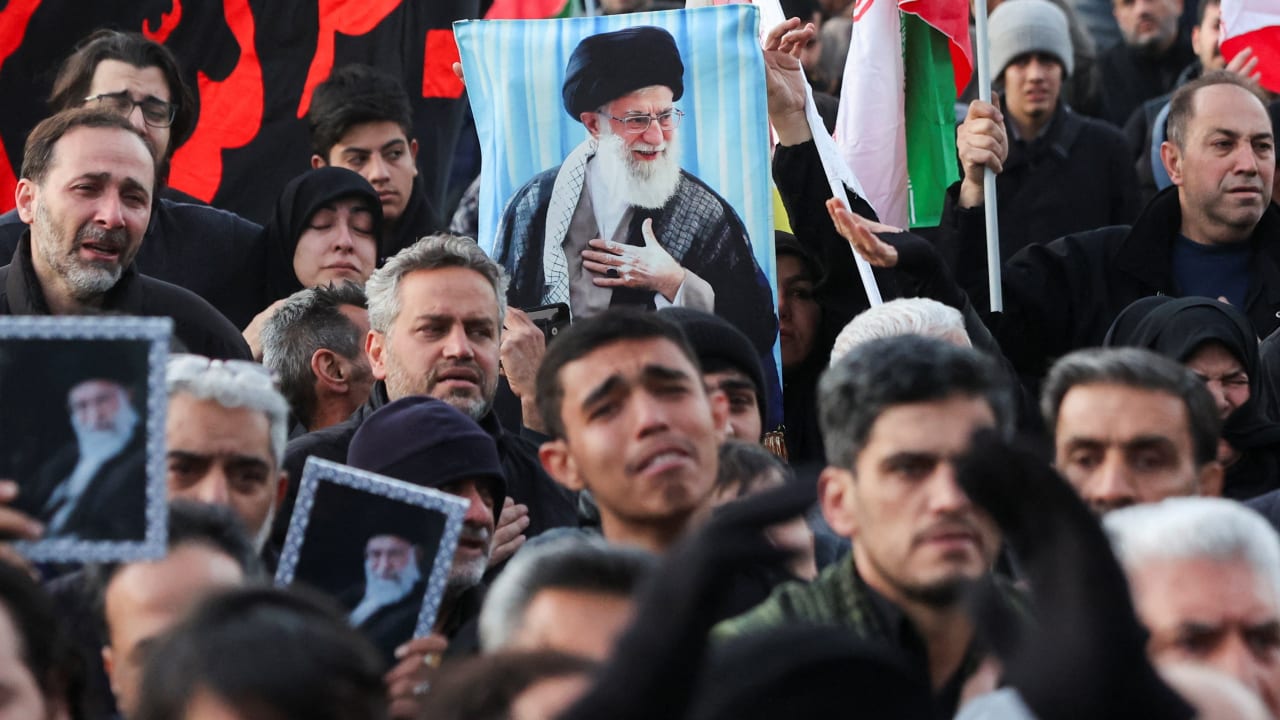
Based on multiple factors, some analysts argued that Khamenei, as a supporter of terrorism, could become a legitimate military target. Reports even suggested signs that he might have been killed. Yet within Shi’ite political structure, leadership is not a one-man system; the religious establishment could quickly install another figure, portraying Khamenei as a martyr – an old propaganda playbook reminiscent of communist regimes.
The removal of Khamenei from power will likely bring relief to Israel. Increasingly, he had come to resemble authoritarian figures such as Stalin or Saddam Hussein. Some clerics would likely respond with symbolic fatwas – storms in a teacup.
In today’s unstable, multipolar order, terrorism remains a central threat. Now that Khamenei’s removal has been confirmed, prospects for a more rational regional resolution might emerge. Allegations have long claimed that Iran supported assassination plots and sleeper cells targeting Western and Israeli leaders.
After regime change, Iran could move toward becoming a cooperative state. Iranian society already possesses a potential political alternative in Crown Prince Reza Pahlavi. In this scenario, a new ally of the United States and Israel could emerge in the region – a major trading partner respecting mutual national interests.
Pragmatically, proponents argue that Israeli and American intelligence communities would need to support and cooperate with nationalist groups aligned with the crown prince during a transitional period, potentially rebuilding security institutions to prevent chaos. Otherwise, remnants of the 1979 revolutionary system could increase the likelihood of civil war in a post-regime Iran.
Trump can publish and declassify the letters exchanged between Khamenei and Bin Laden, seized by US intelligence and sealed after the operation of May 2, 2011. These documents would reveal, with crystal clarity, the depth of coordination between two Islamic terrorists. Obama targeted Bin Laden; now Trump has done the same against Khamenei. The world will be safer and more secure after this great success. Today, the young Iranian generation chants in the streets of Iran: “The only good mullah is a dead mullah.”
More turbulence may still come from Iran. The road ahead remains long and full of twists and turns.
The author is a Middle East political analyst. His latest book, Tehran’s Dictator, examines the theocratic era of Ali Khamenei (1989-2026). Twitter/X: @EQFard