
Israel is racing toward a fiercely contested general election – the first since the horrors of October 7 – at a moment of extraordinary strategic vulnerability.
Hamas remains armed and embedded in Gaza. Iran continues to murder and repress its own population while openly threatening Israel and the United States. The Houthis have demonstrated their ability to disrupt both global trade and daily life inside Israel, and Syria is moving against its own minorities at a disturbing pace.
Regional actors like Qatar, Saudi Arabia, and Turkey that once aligned more closely with Washington have shown increasing willingness to recalibrate their positions. The United States’ desire for control of Greenland has created an alarming tension between Europe and the US, which is stretching and straining American global political influence, thereby negatively affecting Israel.
All of this is unfolding as Israel faces an intensifying and highly organized cognitive war aimed not at its borders but at its legitimacy.
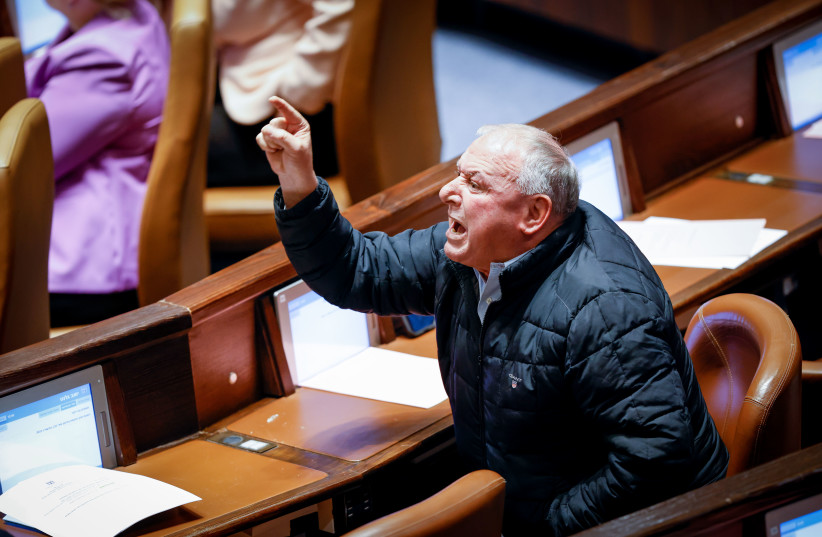
Now consider the tone and scope of Israeli political rhetoric in the weeks ahead. All that Israel’s enemies will need to do is press record and wait. Accusations and imagery hurled across the domestic political spectrum will be captured, stripped of context, translated, amplified, and weaponized on social media. This content will be broadcast globally, supported by well-incentivized anti-Israel voices across Western politics, academia, entertainment, and digital influence networks.
This is not rhetorical exaggeration. Western militaries, intelligence agencies, and academic institutions now openly acknowledge that modern conflict includes information operations, narrative manipulation, and psychological influence at scale. The battlefield is the human mind. The weapons are language, imagery, repetition, and moral framing. The targets are trust, cohesion, and legitimacy.
Israel itself has acknowledged that it has struggled in the information war in recent years. Against that backdrop, an election fueled by incendiary internal rhetoric risks solidifying dangerous perceptions among undecided allies at precisely the wrong moment.
This raises a difficult but unavoidable question: Are Israel’s current legal and ethical guardrails around political speech – particularly concerning national security, incitement, and sedition – adequate for an election conducted under sustained cognitive attack?
This is not a call to suppress dissent. Democracies endure precisely because dissent is protected. But democracies also fail when they cannot distinguish between legitimate criticism and speech that materially endangers public safety, the armed forces, or the state itself.
Treason has not changed – but the threat landscape has. Legally, treason remains narrowly defined across Western democracies. In Israel, as in the United States and the United Kingdom, treason requires intentional assistance to an enemy during wartime or direct attempts to undermine state sovereignty. That threshold is intentionally high, and it should remain so.
But the narrowness of treason does not render everything else benign.
Modern democracies rely on adjacent legal frameworks to address dangerous speech that falls short of treason: national security offenses, sedition, and incitement to violence or hostility. These categories were not designed for tanks crossing borders; they were designed to preserve social order, military effectiveness, and public safety during moments of internal stress.
What has changed is the scale, speed, and foreign amplification of speech in the digital age.
Israel is not alone – democracies have already adapted
After September 11, the United States revisited long-dormant doctrines concerning material support for terrorism, coordination with hostile entities, and incitement that leads to violence. While the First Amendment remains robust, the US Supreme Court has been clear since Brandenburg v. Ohio that speech loses protection when it is intended and likely to produce imminent lawless action.
The United Kingdom has gone further. Facing Islamist radicalization, Russian information operations, and online extremism, the UK updated counterterrorism and public-order laws to include indirect encouragement, reckless dissemination, and hostile-state narrative operations. The Online Safety Act imposes duties on platforms – not to censor politics but to mitigate foreseeable harm.
France, Germany, and the EU have taken similar approaches, criminalizing certain forms of coordinated disinformation, Holocaust inversion, and speech that knowingly places identifiable populations at risk.
None of these democracies abandoned free speech. They clarified responsibility.
Israeli context is more acute
Israel’s challenge is structurally different.
The IDF is a people’s army. Military service is woven into family life, civic identity, and national survival. Statements made by Israeli political leaders about the conduct of Israeli soldiers do not remain abstract. They travel instantly – translated, amplified, and stripped of context – and reappear as legal filings, arrest attempts, and hostile media narratives abroad.
When senior Israeli figures accuse IDF soldiers of genocide, war crimes, or systematic atrocities without an evidentiary process, those claims are not received internationally as internal critique. They are weaponized.
The consequences are not merely reputational. They include personal risk to millions of Israelis who served in uniform and now travel, study, or conduct business overseas. They include diplomatic exposure and strategic vulnerability.
This is not hypothetical. Universal-jurisdiction lawsuits, campus blacklists, visa denials, and attempted foreign arrests already exist. Words have consequences.
Why this is not treason – but still dangerous
Labeling such speech “treason” may feel emotionally justified, but legally, it is incorrect. That distinction matters. Expanding treason to include political speech would collapse democratic legitimacy.
But it does not follow that no adjustment is required.
The relevant question is whether Israel’s definitions and enforcement thresholds for national-security harm, sedition, and incitement are sufficiently calibrated for an election conducted under cognitive assault.
Democratic guardrails – not gag orders
What might responsible adjustment look like?
Clarifying national security harm in speech: Israeli law already recognizes that certain speech can harm national security without constituting espionage. Clarification – not expansion – could focus on senior officeholders whose statements foreseeably expose soldiers, diplomats, or civilians to harm abroad. This is about role-based responsibility, not opinion control.
Revisiting sedition in the digital age: Sedition is often dismissed as archaic, but its core concern is speech that systematically erodes loyalty to the constitutional order or armed forces during active conflict. In a modern context, the relevant test should combine intent with foreseeable external exploitation, not emotional outrage.
Strengthening incitement standards without criminalizing criticism: Israel already criminalizes incitement to violence and terrorism. The question is whether reckless incitement to international harm – through false or inflammatory claims presented as fact – should trigger civil, ethical, or electoral sanctions even when criminal thresholds are not met. Democracies possess tools beyond imprisonment.
Election-period ethical norms: Other democracies employ heightened standards during wartime elections. Israel could adopt binding election-period guidelines for security-related speech by candidates, enforced by the Central Elections Committee or independent panels. This preserves debate while deterring recklessness.
Encouraging responsible journalism: Israel’s competitive media environment offers an opportunity to demonstrate democratic maturity. Citizens can choose not to reward outlets that amplify dangerous rhetoric for ratings. Public trust, international legitimacy, and national security are not abstract concerns; they affect whether Israelis and their children can travel safely and whether critical Western support endures.
Core democratic principle
The issue is not silencing opposition. Opposition is essential.
The issue is whether leaders – particularly former generals, ministers, and senior officials – accept that their words now function as strategic assets or liabilities, not merely political slogans.
Cognitive war collapses the distance between domestic speech and foreign action. Democracies that ignore this reality do not become freer; they become fragile.
Israel does not need new accusations of war crimes. It needs updated clarity, role-based accountability, and democratic maturity suited to a battlefield that no longer respects borders.
The coming election will test not only Israel’s politics, but its capacity to defend itself without surrendering the values that make it worth defending. That balance – difficult, imperfect, and essential – is the true democratic challenge of this moment and one that deserves open, serious dialogue among Israel’s leaders and public alike.
The author is an experienced global strategist for the public and private sectors. globalstrategist2020@gmail.com