Iran’s current unrest is not a discrete episode; it is a repeatable stress pattern: economic shock, street mobilization, security-force escalation, and state attempts to constrain communications. Public reporting indicates protests began around Tehran’s Grand Bazaar amid a currency crisis, spread across multiple cities, and have been met with mass arrests and reported fatalities.
The judiciary chief’s warning of “no leniency” for those supporting unrest is an explicit signal that the system is defaulting to coercion rather than accommodation.
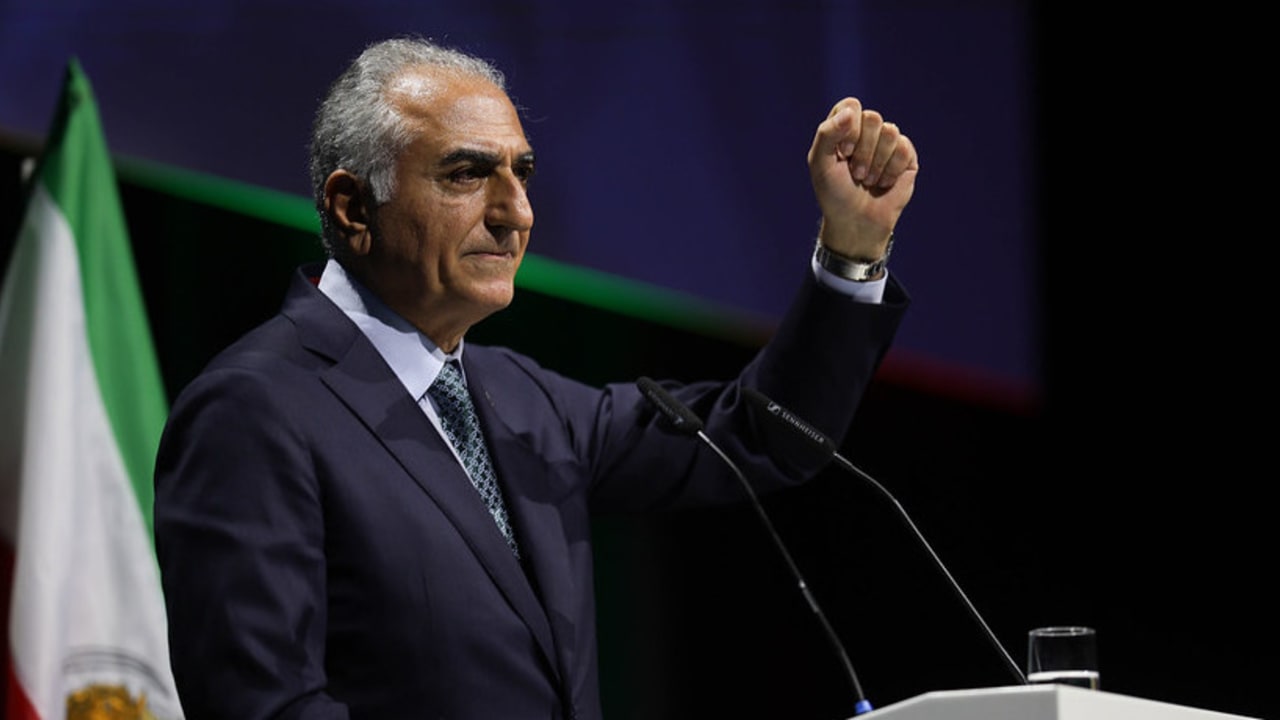
US policy should be evaluated against concrete objectives: (1) increase costs on repression, (2) reduce Tehran’s capacity to finance internal coercion and external operations, and (3) improve the probability of a stable transition scenario if regime cohesion weakens. A White House meeting with Crown Prince Reza Pahlavi advances those objectives only if it is treated as an instrument inside an operational package rather than as symbolism.
A presidential meeting is a signal that the US is prepared to engage a credible transition interlocutor and align existing tools to an end state beyond open-ended “containment.” Pahlavi has argued publicly that Iran is “ready for a democratic transition,” emphasized territorial integrity and civil liberties, and described transition planning, including secure channels for regime insiders to communicate and defect.
The meeting also strengthens escalation control if it formalizes a clear constraint. In a recent interview, Pahlavi rejected a foreign military intervention model and stated that the US does not need “a single boot” on the ground in Iran; he framed change as the responsibility of Iranians, with outside governments playing a supportive role. That line matters because it narrows the policy debate to feasible instruments–communications resilience, sanctions enforcement, and transition-risk reduction–rather than open-ended commitments.

From a policy standpoint, the meeting would have three practical effects. First, it clarifies the end state: US pressure is not merely punitive, but linked to a transition-risk-reduction framework focused on institutional continuity, civil order, and basic governance capacity.
Second, it increases perceived optionality for insiders: in authoritarian systems under stress, elite cohesion depends on expectations about the future; engagement with a transition interlocutor raises the perceived value of exit options relative to unconditional loyalty.
Third, it improves partner synchronization by creating a planning baseline for sanctions, financial tracing, and communications support. Any transition posture must explicitly prioritize territorial integrity, border security, protection of critical infrastructure, and continuity of essential state functions to prevent a vacuum or fragmentation.
Iranian internal security relies on censorship
The invitation should therefore trigger near-term, measurable actions targeting Tehran’s two internal-control levers: information dominance and hard-currency access.
On communications, Iran’s internal security model relies on censorship, surveillance, and episodic network disruptions to limit coordination and documentation. The US already has a relevant licensing architecture.
The US Office of Foreign Assets Control (OFAC) has stated that regulation 31 CFR § 560.540 supersedes General License D-2 while preserving the objective of supporting communications tools for ordinary Iranians resisting censorship and surveillance. A White House meeting should be paired with a “civilian communications continuity” package built around four deliverables:
Establish a standing coordination mechanism with providers, implementers, and partner governments so authorized communications support can be deployed rapidly during state-imposed shutdowns.
Publish plain-language compliance guidance mapping what is authorized under 31 CFR § 560.540 and what requires a specific license, with defined expedited review timelines to reduce self-deterrence by companies.
Treat user safety as a first-class requirement: prioritize privacy-preserving tools and anti-surveillance design choices consistent with the regulation’s stated purpose.
Impose consequences for censorship infrastructure and decision-makers when nationwide blackouts facilitate repression, using established authorities. Treasury has already designated entities tied to censorship enablement, including Arvan Cloud and related actors, for facilitating state internet censorship.
This approach aligns with longstanding US authorities focused on grave human-rights abuses “via information technology,” including Executive Order 13606. The binding constraint is not doctrine; it is operationalization with measurable outputs.
The second pillar is cashflow. Repression capacity is a budget problem as well as a coercion problem. The US has repeatedly used legal tools to disrupt illicit petroleum revenue and to raise counterparty risk for sanctions evasion networks. For example, DOJ has announced civil forfeiture actions targeting proceeds from schemes to ship and sell Iranian petroleum product using deceptive practices, including AIS manipulation and falsified documentation to obscure origin. The policy priority should be enforcement predictability–making facilitators price in sustained risk rather than episodic penalties:
Increase maritime and trade enforcement against evasion networks and repeat facilitators that enable hard-currency access.
Expand financial tracing and proceeds-based disruption to raise risk across the payment chain, not only at the vessel level. Synchronize with partners to reduce rapid rerouting and reflagging options.
A White House invitation will be attacked from two directions: critics will call it destabilizing, and maximalists will oversell it as determinative. Both errors reduce effectiveness. Messaging should be constrained to three lines: the United States supports the Iranian people’s right to political choice; the United States is engaging transition planning to reduce the risk of chaos if regime cohesion fractures; and the United States will operationalize communications support while tightening enforcement against revenue and infrastructure that enable repression.
A White House meeting with Crown Prince Reza Pahlavi is not a substitute for policy; it is a policy instrument. Used correctly, it clarifies end-state intent, increases option value for insiders, and provides the platform to operationalize pressure on the regime’s core control systems–information dominance and hard-currency access–while maintaining escalation control.
The writer is an energy and industrial policy expert focused on Iran. Follow him on X: @Aidin_FreeIran