
CNN wants you to picture Israel as a theocratic state descending into The Handmaid’s Tale, so it published a piece built around a single metric. Pointing to Israel’s drop in the Women, Peace and Security (WPS) Index, the article nudges the reader toward the intended conclusion: women’s rights in Israel are “eroding,” to the point that Israel now trails Qatar and Saudi Arabia.
This misleading conclusion is implied, not demonstrated. And it rests on a sleight of hand that collapses the distinction between wartime insecurity and legal regression, which are not the same thing. Conflating them may generate outrage and clicks, but it is not analysis, and it has no business on CNN.
The WPS Index is not a civil-rights audit. It is a multi-factor ranking that blends measures of inclusion and justice with an entire pillar devoted to security, including women’s perceptions of safety and proximity to organized violence. In plain language, it is designed to move when a country becomes less safe. While it can be valuable for measuring women’s lived experience under threat, it cannot be treated as a direct verdict on women’s legal status unless actual legal changes are also shown.
Israel’s own trajectory makes the point. In the 2021/22 WPS Index, Israel ranked 27th. Four years later, in the 2025/26 report, Israel is ranked 84th, Qatar 70th, and Saudi Arabia 63rd. During the interim, October 7 and a prolonged, painful multi-front war took place.
When a country is living through mass terrorism, rockets from Hamas and Hezbollah, ballistic missiles from the Islamic Republic of Iran, drone attacks from the Houthis, mass displacement, and organized Islamist violence, a war-security index will punish it, regardless of whether a single women’s rights statute changes.
The Israel profile in the index of the Georgetown Institute for Women, Peace and Security shows the mechanistic statistics: women’s “community safety” drops from 77 in 2021 to 63 in 2025, and Israel’s “proximity to conflict” rises from 97.2 to 99.6. It shouldn’t come as a shock that a war-security index moved during wartime. CNN sells that movement, however, as women’s legal regression.
How did rights for Israeli women worsen?
THIS IS where any serious piece must ask the following: Which right did Israeli women lose? Which law was passed? Which protection was repealed? Which remedy disappeared? Which court became inaccessible? CNN does not name a single such lost right because it cannot. It offers a blurry picture and a ranking, then lets readers do the rest.
And the “rest” delivers an extraordinary reputational upgrade to regimes that have not earned it.
If CNN wants to imply Qatar is “ahead,” it should state what women’s autonomy looks like there in law, not in glossy PR. Qatar’s legal regime and social enforcement still constrain women’s freedom in structural ways, not just cosmetically. Human rights organisations have documented guardianship-style constraints over key life decisions like education, travel, marriage, and access to healthcare, and Qatar criminalizes sex outside marriage, a legal reality that can chill rape reporting because the victim may fear becoming the defendant. These are not abstract complaints: They are the difference between women being treated as full legal adults and citizens by default in a democracy, and women being treated as conditional adults whose words in court are worth half those of a man.
So when CNN encourages readers to treat Israel as “behind” Qatar on women, it is not defending women. It is laundering authoritarian reputations through an index that rewards peacetime and punishes war, then dressing the result in feminist outrage.
That laundering is only possible because Western coverage repeatedly refuses to hold Israel’s context in its mind. Israel is not Sweden: It is a country in the East, containing religious and traditional communities that will not assimilate into Western secularism. It is also the world’s only Jewish state, which means it incorporates aspects of Jewish law, especially in family law, that differ from Western secular norms. This produces a permanent tension inside Israeli democracy: how to remain both Jewish and democratic; how to balance identity and equality.
THIS IS where CNN reaches for the rabbinical courts. Here, criticism can be justified. Religious jurisdiction over marriage and divorce can disadvantage women, and reform efforts deserve full attention. But what the media giant often sells as a sudden theocratic rupture is, in reality, a long-running institutional battle that predates the current government by generations.
Rabbinical courts were not “invented” by Prime Minister Benjamin Netanyahu, National Security Minister Itamar Ben-Gvir, or Finance Minister Bezalel Smotrich. They are part of a contested legal arrangement that has existed under left-wing, centrist, and right-wing governments alike.
CNN blurs two different things: legal rights and political representation. While representation fluctuates in democracies with elections and coalition math, rights don’t vanish because a cabinet reshuffles.
The honest story is not “women are losing rights.” The honest story is that women have been fighting for reform inside a democratic system that still forces institutions to change. Israeli women are not passive figures devoid of agency; they organize, litigate, and win. The 2025 High Court ruling compelling the religious establishment to open state rabbinic certification exams to women is one example, and not a minor detail. It is the democratic mechanism at work: women using courts, civil society, and law to force change. That is not how theocracies work.
And if you want a reality check that cuts through the mythology, look at what Israeli women are doing right now. While Islamist movements have waged a multi-front war that targets civilians, minorities, and women, Israeli women are increasingly serving in combat roles defending the entire society, including communities that do not always reciprocate that equality in their own political ranks.

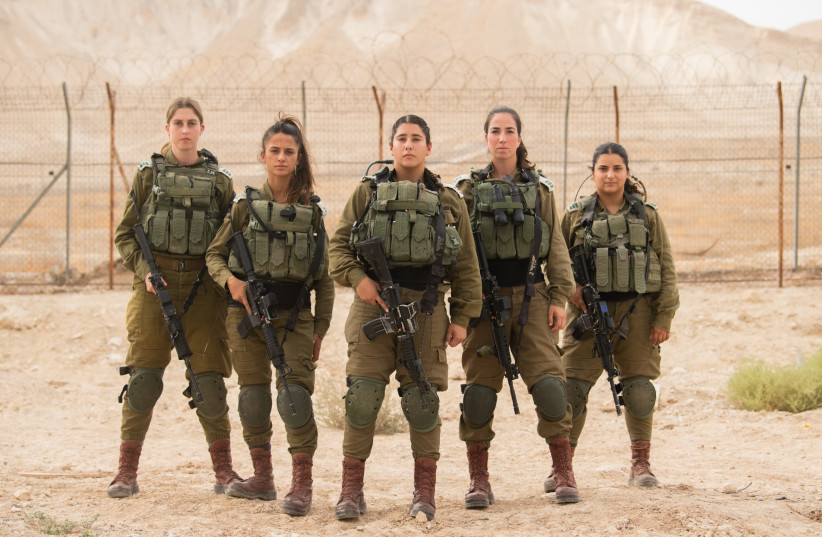
The IDF has explicitly turned to “womanpower” as ultra-Orthodox enlistment remains limited; today roughly 30% of combat soldiers are women. This does not solve every injustice, and we certainly agree that there should be higher representation of women in political office. But it does annihilate the claim that Israel is structurally pushing women out of public life. A society preparing to erase women does not integrate them deeper into its most demanding civic duty.
IF CNN wants to compare women’s rights, it should start with enforceability: regime type, courts, and the mechanisms that allow women to contest power. Democracies are not perfect, but they do have tools; autocracies can grant reforms and reverse them at their discretion. This is why the Economist Intelligence Unit’s Democracy Index matters more than moralistic storytelling. It describes a global democratic recession, and in its ranking, Israel sits far above Qatar, Oman, and Saudi Arabia. Even the Palestinian territories rank higher than Qatar on paper, despite being split between an undemocratic Palestinian Authority in the West Bank and Hamas, a terrorist organization, in Gaza.
The point is not that rankings are sacred; it is that democracy provides infrastructure that women can use: courts, civil society, press freedom, and electoral accountability. Those are not decorations: They are the difference between rights that can be asserted and reforms that can only be granted.
Israel’s legal baseline also reflects that enforceability. Israeli law prohibits discrimination based on sex in key employment contexts, and women have access to courts and remedies in a way that is simply not comparable to monarchies whose reforms depend on political permission. And if one insists on a law-centered metric rather than a war-safety one, the World Bank’s Women, Business and the Law scores place Israel far above Qatar and Oman. That is a more relevant measure of women’s legal and economic autonomy than an index built to swing during wartime.
Which brings us to the Qatar dimension CNN tiptoes around. Qatar is not just a neutral “comparator”: It hosts Hamas’s political leadership in Doha while marketing itself as a respectable mediator. It projects influence through state media, money, and soft power in foreign policy.
Qatari capital has flowed into Western institutions at a scale that should make any serious journalist pause before casually presenting Qatar as a moral benchmark. Under US Department of Education Section 117 reporting, analyses of Georgetown University’s public disclosures place Qatari funding at nearly a billion dollars as of late 2024, within the same Georgetown ecosystem that houses the WPS Index brand. You do not need to think in conspiracy theories to understand incentives. Prestige money shapes elite ecosystems. It also shapes which narratives become socially accepted and which become taboo.
CNN ALSO gestures toward a causal story linking expanded firearms licensing to femicide. Israel’s own femicide monitoring tells a more precise story. The Israel Observatory on Femicide’s 2024 findings show that half of femicide victims were Israeli Arab women, despite Israeli Arabs being only about 21% of the population, and that in the overwhelming majority of cases, the woman knew her killer, often a husband or close family member.
That isn’t a problem you can summarize with a lazy “more guns, more problems” headline. It is domestic violence, enforcement failure, and community realities that demand targeted policing and serious policy. If CNN wants to claim that policy caused murder, it has to prove it, not insinuate it.
After October 7, Israelis sought firearms because they watched civilian communities overrun – and women get brutalized and raped – while the state struggled to reach them in time. In that environment, any discussion of firearms policy has to grapple with the security reality, not pretend it doesn’t exist.
Israel faces real challenges: War strains institutions, coalition politics can empower illiberal agendas, religious courts can harm women, representation can decline, and violence against women remains urgent. These risks must be confronted clearly and honestly.
But turning wartime insecurity into a “women’s rights collapse” advances neither women’s advocacy nor protection, but degrades both. It also hands authoritarian regimes a reputational gift they do not deserve.
If CNN wants to claim women’s rights are eroding in Israel, it should do what journalism owes to the public: name the specific right, identify the legal change, show the rollback, and document the harm. Until then, this is not a women’s rights story: It is a political story, using women, wrapped in sensationalism, and sold as ideology.
Fleur Hassan-Nahoum is Israel’s special envoy for trade and innovation and a former deputy mayor of Jerusalem, with a long record of advancing women’s leadership and democratic governance. She hosts the Jewish News Syndicate’s all-women podcast: The Quad. Chama Mechtaly is the founder and executive director of the Emma Lazarus Institute, where she works on deradicalization and Middle-East integration. She writes on Middle East policy and the failures of the Western “peace” industry.