Nadifa Mohamed’s novel, The Fortune Men, is based on a true story: the wrongful conviction and execution in 1952 of a Somaliland sailor in Cardiff, Wales, for the murder of a Jewish shopkeeper. The author reconstructs this real miscarriage of justice with restraint and care, returning dignity to lives flattened by legal records. The book was shortlisted for the Booker Prize, bringing renewed attention to a case long buried in the margins of British legal history. It comes to mind now because it is rooted in a moment of contact between two minority communities – Somalilander and Jewish – living side by side in mid-20th-century Cardiff, both shaped by empire, migration, and vulnerability.
People from Somaliland commonly refer to themselves as “Landers,” marking a distinct historical and political identity rather than a regional variant of Somali identity. The book is not a story of intercommunal hatred; it is a story of how two marginalized peoples are caught within a system that fails to see either of them fully, and how institutions decide, often silently, whose lives count as real.
Both communities arrived in Cardiff through the structures of empire, but by different routes and with different horizons. Somalilanders came primarily as seamen recruited into British merchant shipping through imperial labor circuits linking Berbera and Aden to Britain’s coal ports; Cardiff’s Tiger Bay became a place where men stayed between voyages, formed families, and rooted themselves over generations. Their presence was working-class, maritime, and bodily anchored to the port itself. Jews, by contrast, arrived largely from Eastern Europe in the late 19th and early 20th centuries, drawn by commercial opportunity and relative legal safety. They established shops, synagogues, burial societies, and kosher infrastructure – portable institutions that allowed communal life to flourish even as families gradually moved on to more secure or prosperous settings.
As a result, the Jewish sojourn in Cardiff was institutionally dense but ultimately transitional, leaving traces rather than continuity, while the Somalilander presence became familial and enduring. These different trajectories – one oriented toward upward exit, the other toward local anchoring – shaped how each community was seen, mis-seen, and remembered.
At its core, The Fortune Men is a study in misrecognition, in how institutions cling to inherited categories even when those categories no longer describe reality. The tragedy it reconstructs is not only a miscarriage of justice against one man, but a deeper failure to see what is actually there – a life, a community, a set of facts that do not fit the prevailing narrative. Recognition comes too late, after irreversible harm has been done, exposing the moral emptiness of posthumous acknowledgment.

Easier to mourn dead Jews
Yet a necessary caution must be stated, following Dara Horn’s insight in People Love Dead Jews: Modern culture often finds it easier to mourn dead Jews than to contend with a living Jewish presence, continuity, and agency.
Sympathy after death can coexist with indifference – or discomfort – toward Jewish life as an ongoing reality. The novel largely avoids exploiting Jewish death, but the risk it illuminates remains real and worth naming.
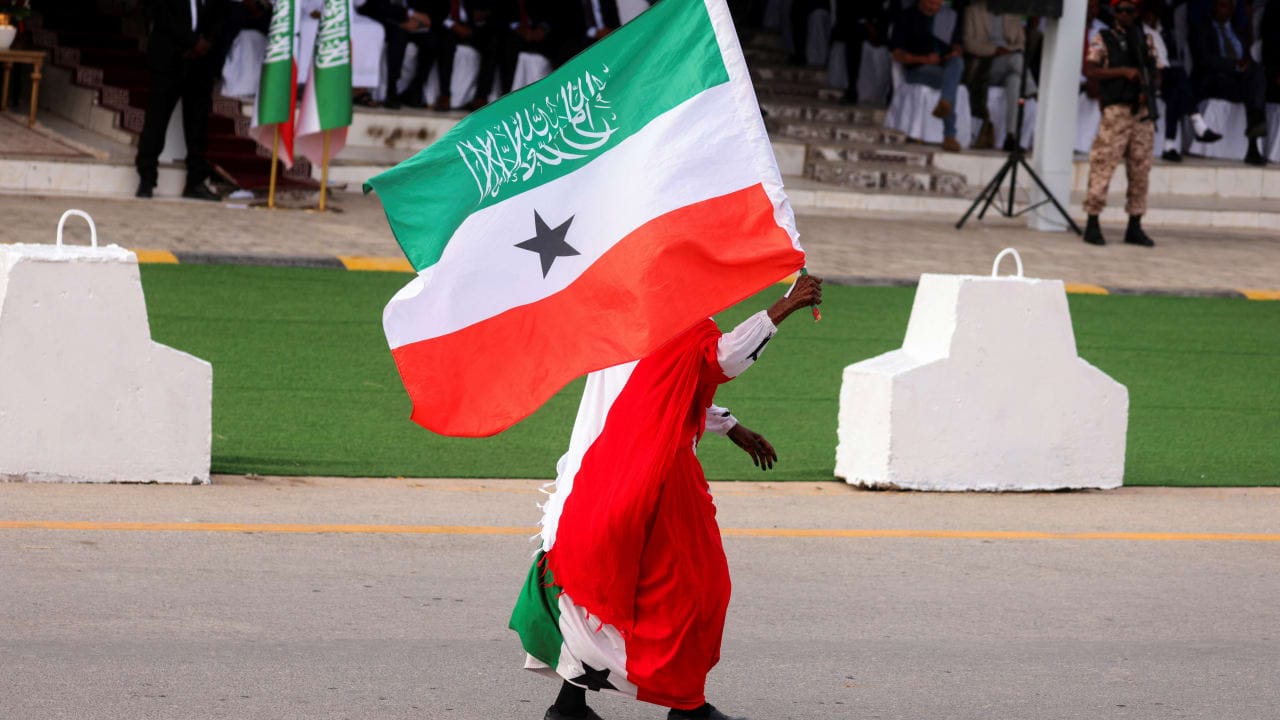
This is why Israel’s recognition of Somaliland resonates beyond diplomacy.
Those who have themselves been told they do not exist understand that denial is never merely procedural. Recognition is not a favor bestowed by the powerful; it is an acknowledgment of what already is.
Somaliland has functioned as a coherent political and social entity for decades, yet international institutions
continue to insist on a fiction that contradicts lived experience.
To recognize Somaliland now is to refuse the logic that justice must wait for catastrophe or commemoration. It is to say, plainly and without sentimentality: We know what it means to be told you do not exist, and we choose not to repeat that error.
The writer is a psychoanalyst and counterterrorist expert. Her latest book is A Soldier’s Guide to Hamas’s Genocidal Psychosis: The Unconscious in Psychological Warfare, Beyond Ideology, Before Words (Atzmaut Press, 2025). Among her other books is The Last Two Jews of Mogadishu Living Under Al Shabaab’s Fire.