Israel knows how to fight wars. Since 1948, it has faced at least one major armed conflict every decade, developing unparalleled expertise in military operations and crisis management. Two years after the devastating October 7, 2023, massacre, Israelis would likely support any conflict framed as “preemptive self-defense,” a policy of “never again” that resonates deeply with a traumatized nation.
But around the world, Israel’s image is shattering.
Here lies Israel’s paradox: The state excels at war but struggles with peace. Throughout its conflicts with a rejectionist Middle East unwilling to recognize Jewish sovereignty, Israel has drawn strength from collective trauma. Its leaders have wielded the nation’s devastating past to foster social cohesion, national resilience, and a security apparatus convinced that only its vigilance stands between Israel and another Holocaust.
Israel needs peacetime skills as well as wartime capabilities
This doesn’t mean Israel seeks out armed conflict. Rather, it navigates it with a strategic understanding that existential threats paradoxically reinforce national unity and public faith in defense institutions. Israel has mastered the machinery of war – the mobilization, the resilience, the collective purpose that emerges when survival is at stake. But thriving during peacetime requires entirely different skills.
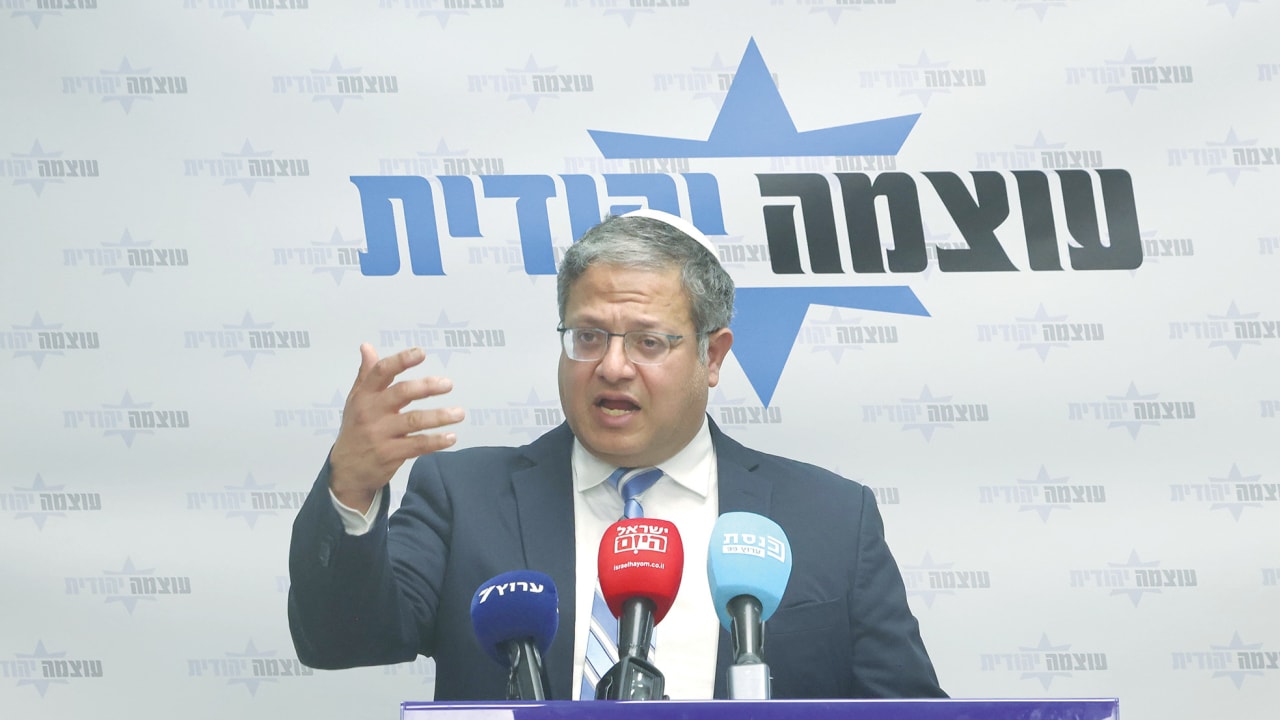
Israel must confront the escalating crisis of settler violence that threatens to undermine its hard-won security gains. The IDF has recorded 752 incidents of Jewish nationalist crime since the start of 2025 – already surpassing the 675 incidents in all of 2024. Yet as attacks have surged, police enforcement has collapsed. Under National Security Minister Itamar Ben-Gvir, himself a West Bank settler and former lawyer for far-right extremists, investigations have plummeted 73% since 2023. Police opened only 60 investigations this year, compared to 235 in 2023, and only 10% resulted in indictments.

This impunity corrodes Israel’s legitimacy, signaling that some citizens operate above the law. IDF Chief Lt. Gen. Eyal Zamir’s condemnation that settle attacks “cross a red line” rings hollow when the state fails to enforce consequences. A nation that declares “closed military zones” to restrict Palestinian movement after settler attacks – rather than prosecuting the attackers – reveals a fundamental unwillingness to impose order on its extremist fringe.
Israel must also acknowledge that the international community has already legitimized Ahmed al-Sharaa’s government in Damascus. Sharaa has met with EU officials, been embraced by the Trump administration, and is accepted by most of the Middle East as Syria’s de facto ruler. Saudi Arabia hosted him as the first foreign destination for Syria’s new president and foreign minister. Qatar’s emir became the first foreign leader to visit Syria post-Assad.
Prime Minister Benjamin Netanyahu’s hesitation stems from legitimate concerns: Sharaa’s roots in al-Qaeda and the Islamic State of Iraq, his support for Hamas, and his close relationship with Turkey’s Erdogan. But clinging to Assad’s ghost, a known enemy who provided “structural stability,” while refusing to engage Syria’s new reality is strategic malpractice.
Israel now enjoys an unprecedented opportunity. Iran’s supply lines to Hezbollah have been severed. The IRGC has been “largely defanged” in the Levant. Syria faces monumental reconstruction after 14 years of civil war, constraining external ambitions for years. Sharaa has disbanded rebel militias and engaged with the US and Arab states, signaling pragmatic statecraft over idealistic militancy.
Rather than indefinitely occupying Syrian territory, including positions just 40 kilometers from Damascus, Israel should negotiate an agreement addressing its security concerns, particularly regarding the Golan Heights, while respecting Druze communities’ rights in southern Syria. Such an agreement would secure Israel’s northern border and assuage regional fears of Israeli expansionism, demonstrating to skeptical Arab neighbors that Israel seeks peace, not just war.
Finally, Israel must offer a credible pathway toward Palestinian statehood. This need not be overnight – indeed, it cannot be. But a vision must be articulated, a project initiated, and a process begun. The alternative is perpetual conflict with millions of Palestinians in Gaza and the West Bank who are not going anywhere.
Israel has achieved astounding military victories against Hamas and decimated Hezbollah’s capabilities. It has weakened Iran’s regional reach and secured unprecedented acceptance from Arab states. Yet military dominance without political vision is a recipe for endless war, not lasting security.
A viable pathway requires concrete benchmarks: comprehensive deradicalization programs in Palestinian education and civil society, complete dismantlement of militant infrastructure, transparent governance preventing groups like Hamas from resurging, and robust security arrangements protecting Israel’s legitimate concerns. This will take years, perhaps decades.
Critics will argue that previous concessions – such as the Gaza withdrawal and the Oslo accords – led to increased violence. But the absence of any political framework is helping fuel the very extremism Israel seeks to combat. Netanyahu’s government has spent over a year prosecuting a war in Gaza with no endgame beyond military objectives.
Israel stands at a crossroads. It can leverage unprecedented military success to forge durable political arrangements by cracking down on settler lawlessness, negotiating with Syria’s new leadership, and charting a path toward Palestinian self-determination. Or it can continue its current trajectory, mistaking tactical victories for strategic triumph while international legitimacy erodes and regional opportunities slip away.
The question is not whether Israel can survive another decade of conflict – it almost certainly can. The question is whether it can build something beyond survival: a future where security stems not from perpetual mobilization but from political resolution. Israel has proven it knows how to fight. Now it must prove it knows how to win.
The writer is a fifth-year doctoral candidate at Northeastern University, focusing on international relations theory.