In March 1997, when a Jordanian soldier opened fire on Israeli schoolgirls at the Island of Peace, killing seven young teenagers aged 13-14, the nation’s King Hussein bin Talal did something extraordinary. The Jordanian monarch personally traveled to Israel to visit the grieving families, offering his condolences in person.
After the 1997 massacre, King Hussein crossed into Israel and visited the bereaved families, a gesture widely remembered in Israel as reinforcing the spirit of the 1994 peace treaty. The Jerusalem Post later contrasted that empathy with Amman’s current posture.
Fast forward to September 2025, and the world witnessed a different response from Hussein’s successor.
On Thursday, “A driver bringing humanitarian aid from Jordan for Gaza opened fire and killed two Israeli military personnel at the Allenby crossing” before being shot dead, authorities in both countries said. Israel then moved to shut the crossing, pending review.
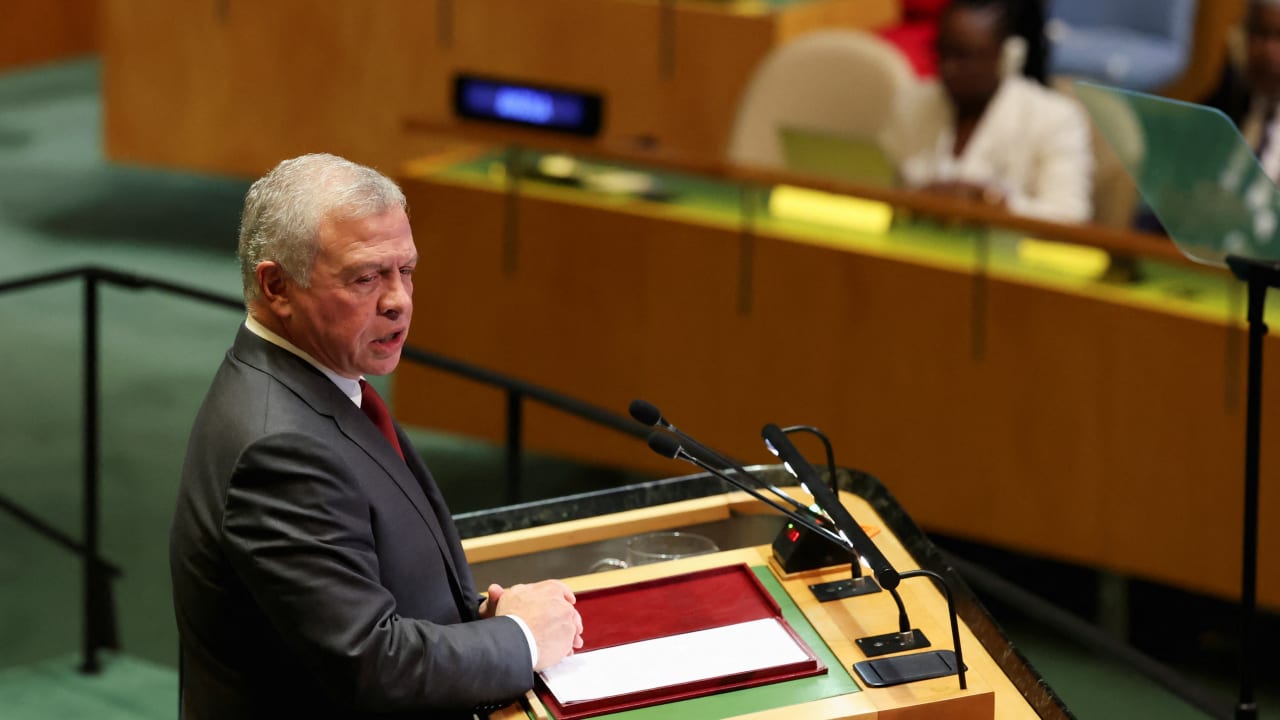
King Abdullah II, Hussein’s son, has remained conspicuously silent.

This silence has precedent, too.
Silence on terror attacks
In 2024, “A gunman from Jordan killed three Israeli civilians at the Allenby Bridge border crossing,” the IDF said after the attacker exited a truck and opened fire. Jordan announced an investigation and temporarily closed the King Hussein (Allenby) crossing.
Does Abdullah’s silence over two terror attacks committed by Jordanians prove his thoughts on the Israel-Jordan relationship?
Last week, at the Arab summit to discuss Israel’s attack on Hamas leaders in the Qatari capital of Doha, the Jordanian king stated that “the strike in Qatar is proof that the Israeli threat knows no bounds, and our response must be clear and deterrent.”
He also called on Arab and Islamic states to adopt practical decisions on the matter and to “review all tools of joint action” to face this threat.
Israeli concerns about threats from Jordan have grown so serious that the IDF established the 96th Division specifically to defend the Jordan border, fast-tracking it into operation in June. The 47th Battalion, known as the Lions of the Valley, now patrols the Jordan Valley as a coeducational combat unit. The fact that a new unit was forced into creation shows that Israel recognizes that the Jordanian border has become a problem.
The relatively small transit corridor at Allenby has become a point for terror attacks and weapons smuggling. In April 2024, a Jordanian member of parliament was arrested attempting to smuggle 12 machine guns and 270 other firearms through this very crossing. Most of the weapons smuggled in end up in the hands of terror groups in the West Bank.
Jordan faces its own challenges. Parts of the kingdom struggle with poverty and radicalization. Iranian influence, while limited in Jordan’s predominantly Sunni population, remains a concern for regional stability. There is also the matter of the overwhelming percentage of Jordan’s population that is Palestinian. Does Abdullah focus his geopolitical strategies on simply keeping his throne safe and appeasing the Palestinians in his kingdom?
Radicals within Jordan have been emboldened by months of street pressure. Reuters recorded thousands near the Israeli embassy chanting, “No Zionist embassy on Jordanian land” and “They said Hamas is terrorist; all of Jordan is Hamas,” alongside repeated calls to scrap the peace treaty – scenes that weaken moderates who argue for continued cooperation with Israel.
King Abdullah must break his silence and follow his father’s example. Even this publication’s own analysis after the Allenby attack warned that the incident “highlights [a] rising terror threat from Jordan,” emphasizing why unequivocal condemnation and outreach are necessary now.
More importantly, he must address the growing radicalization within his kingdom and take concrete steps to prevent future attacks. Jordan’s security services themselves have flagged the danger: In May 2024, Reuters reported that the kingdom had “foiled a suspected Iranian-led plot to smuggle weapons” to opponents of the monarchy, and Abdullah publicly urged Arab states to confront weapons-smuggling networks tied to Iranian-backed groups in southern Syria.
Whatever his reasoning, the king’s silence sends the wrong message both domestically and internationally. It suggests a tolerance for extremism and indifference to the peace treaty that has benefited both nations for three decades.
King Hussein understood that preserving peace required a proactive approach rather than passive silence when that peace was threatened.
His son should condemn Thursday’s attack unequivocally, offer condolences to the families of Lt.-Col. Harosh and Sgt. Hershko, and prove to Israel that Jordan remains committed to peace – and to countering the radicalization that fuels these assaults.