
On September 15, 2020, Israel signed the Abraham Accords with the United Arab Emirates and Bahrain, followed shortly thereafter by Morocco and Sudan. These agreements marked a major milestone in Israel’s diplomatic history and a significant step in its integration into the region. Five years later, in the wake of the Hamas attack and the war in Gaza, what remains of these accords, and what dangers lie ahead?
The Abraham Accords countries found themselves united by a broad regional interest: containing Iran’s influence, advancing economic modernization, and strengthening ties with the United States. These developments, combined with “carrots” from the first Trump administration, helped transform their previously covert ties with Israel into formal and public ones. In contrast to the traditional framework that conditioned normalization on progress with the Palestinians, the accords signaled a clear prioritization of strategic, security, economic, and geopolitical interests.
The Abraham Accords positively impacted Israel’s standing in the Middle East – diplomatically, militarily, and economically. A notable diplomatic achievement was the establishment of the “Negev Forum” in March 2022, bringing together the foreign ministers of Israel, the US, Egypt, Morocco, the UAE, and Bahrain.
The forum was intended to meet annually to discuss regional issues, and six working groups were formed in areas such as security, energy, tourism, health, education, water, and food security. However, its activities were suspended following the outbreak of war.
The accords helped institutionalize security cooperation under an American umbrella and bolstered bilateral military and intelligence ties. The Trump administration’s 2021 decision to move Israel under the responsibility of US Central Command (CENTCOM) reflected the willingness of Arab states to cooperate with Israel – not only in secret.
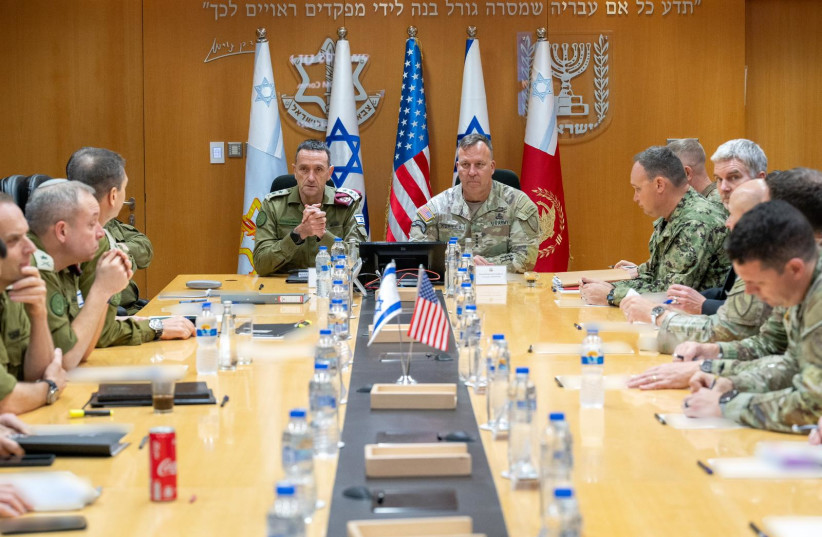
Even prior to the shift, Israel had participated in joint military exercises with regional neighbors, but its official integration into the CENTCOM framework marked a qualitative leap in intelligence and military collaboration, as demonstrated during the Iranian attacks on Israel in April and October 2024 and June 2025.
The Abraham Accords also led to the deepening of bilateral defense ties with the UAE. For example, reports indicated that Israel supplied missile defense systems following Houthi attacks in early 2022. Furthermore, the UAE permitted Israeli defense companies to participate in the international arms exhibition in February 2025.
Morocco, too, significantly strengthened its security cooperation with Israel: in November 2021, the two countries signed the first-ever defense cooperation agreement between Israel and an Arab state, and Morocco has since purchased Israeli military equipment worth approximately $2 billion.
By 2024, Israeli defense exports reached a record $14.8b., with the share of Abraham Accords countries in total exports jumping from just 3% in 2023 to 12% the following year, despite the war.
The Abraham Accords also had a major economic impact. In April 2023, a free trade agreement between Israel and the UAE went into effect – the first of its kind between Israel and an Arab state. The agreement included mutual tariff reductions, regulatory easing, and cooperation in services, standards, intellectual property, and small businesses.
As a result, bilateral trade soared from $200 million in 2020 to over $3b. in 2024 (including diamonds). Israel and Morocco also signed an economic cooperation agreement in 2022, which significantly increased trade volumes compared to the pre-accord years.
The outbreak of war in October 2023 undoubtedly posed a serious test to the accords. Images of destruction in Gaza heightened public sympathy in Arab countries for the Palestinians and raised questions about the accords’ durability. Nonetheless, none of the signatory countries severed ties with Israel.
Some took symbolic steps – Bahrain suspended economic agreements and recalled its ambassador, much like Jordan – but diplomatic, trade, and security channels remained open, sometimes quietly.
This endurance points to the depth of these countries’ strategic choices. The UAE, in particular, emphasized its continued commitment to the accords, portraying its relationship with Israel as a national asset, even in the face of domestic criticism. Unlike Jordan and Egypt, the UAE and Morocco maintained a relatively warm peace and even legitimized Israeli presence in public spaces.
The issue of West Bank annexation
HOWEVER, ISRAEL’S plans to annex parts of the West Bank prompted the UAE to issue a public warning, stating that such a move constitutes a red line and would severely harm the “spirit of regional integration.” While Abu Dhabi did not explicitly threaten to annul the accords, this marked the first time since 2020 that the Emiratis took such a step – intended, perhaps, primarily for American ears.
During the war, the UAE emerged as the most actively involved Arab actor in Gaza in providing humanitarian assistance, even more so than Egypt, despite its geographic proximity. The Emiratis hoped this role would also improve their image in Arab public opinion, where they are sometimes seen as collaborators with Israel.
Their response to such criticism is that their ties with Israel allow them to achieve gains for the Palestinians that would otherwise be unattainable. Behind this message lies another motive: bolstering Emirati influence in Gaza after the war, at the expense of rivals such as Qatar. The UAE views its near-exclusive ties with Israel as an advantage and seeks to leverage them further.
The accords’ endurance amid a protracted war illustrates the existence of “functional normalization” – driven by state interests even during moral or political crises. This functionality also characterizes Morocco’s ties with Israel, though they rest additionally on shared historical, religious, and cultural legacies.
Nonetheless, the gap between elite positions and Arab public opinion – especially among younger generations– continues to widen across all countries, placing pressure on ruling elites to respond.
It is therefore not surprising that the political cost of ties with Israel for Abraham Accords countries is rising. While governments present these ties as strategic necessities, the broader public reacts with hostility, vocally supporting the Palestinians. One result of this public pressure is the avoidance of overt gestures toward Israel, with states returning to the prior model of mostly quiet, behind-the-scenes engagements.
Saudi Arabia, which before the war had been considered the leading candidate to join the Abraham Accords, is now treading very carefully. As the “custodian of the two holy mosques” and leader of the Sunni world, it is unwilling to move forward without significant progress on the Palestinian issue or receiving substantial American security and nuclear guarantees. The war in Gaza has pushed the prospect of normalization even further away.
Still, the kingdom leaves the door open for normalization after the war – but conditions it on the establishment of a Palestinian state or, at a minimum, meaningful steps toward a two-state reality. Any Israeli annexation of parts of the West Bank would severely jeopardize the chances of such a breakthrough.
The damage the war inflicted on the Abraham Accords is significant, but not irreversible. Restoring and even expanding the accords – possibly to include Saudi Arabia – is possible, but this can only happen once the war ends. It will also depend on how the conflict concludes and the degree of progress made on the Palestinian issue.
Five years after their signing, the Abraham Accords have built a new regional infrastructure – fragile but resilient. Their endurance even during conflict is a testament to a new pragmatism in Arab-Israeli relations, but also a reminder that normalization remains limited without deeper people-to-people engagement.
As long as the ties are based solely on regime interests, they will remain vulnerable to regional upheavals. The UAE decision to bar Israel from a conference to be held in Dubai is a testimony to the possible regression of the accords.
Israeli decision-makers tend to treat the Abraham Accords as a given. These relationships – like those with Egypt and Jordan – require ongoing “irrigation and fertilization,” lest they wither away. More importantly, the accords’ future will be determined not only in the arenas of diplomacy and security, but also in whether they evolve into a living fabric of relationships, trust, and genuine regional partnership.
Prof. Elie Podeh teaches in the Department of Islamic and Middle Eastern Studies at the Hebrew University of Jerusalem and is a board member of the Mitvim Institute.
Dr. Yoel Guzansky is head of the Gulf Program at the Institute for National Security Studies at Tel Aviv University and a non-resident fellow at the Middle East Institute.