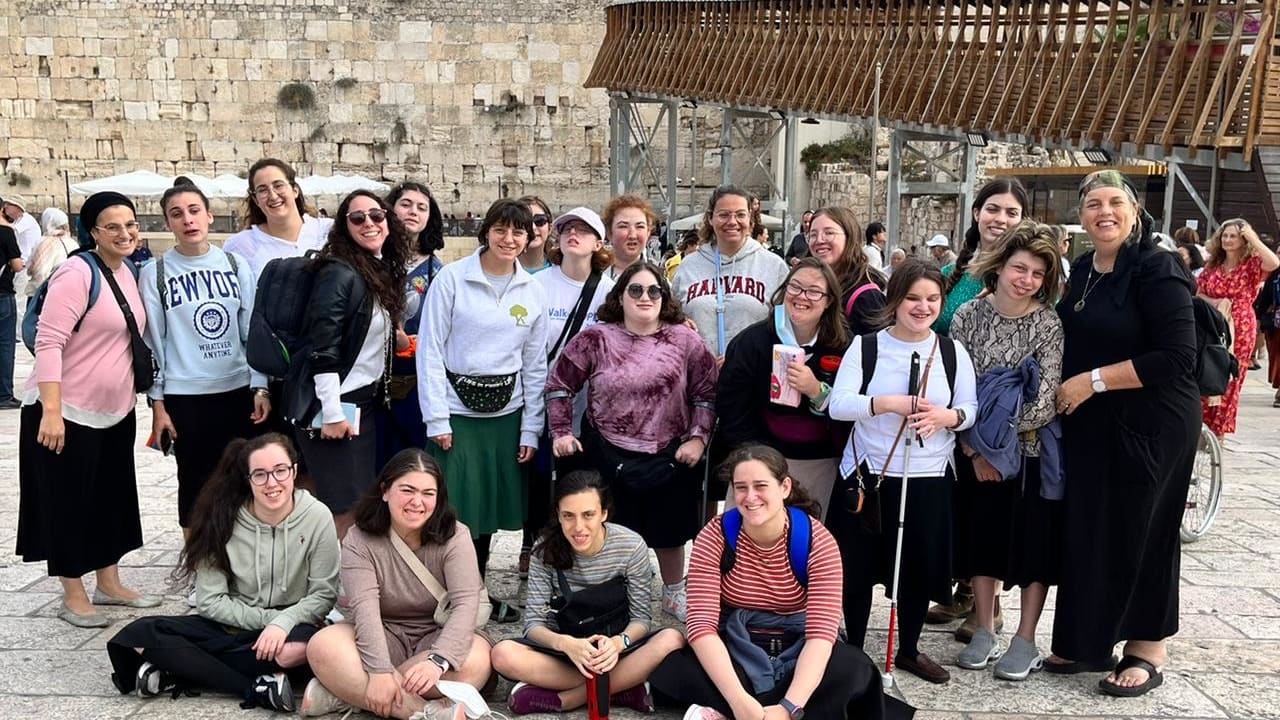
For young lovers of Israel in the United States, spending a year in Israel after high school graduation is a rite of passage.
It’s called the “gap year.”
Over the next few weeks, flights to Ben-Gurion Airport will be filled with laughter, chatter, excitement, and occasional farewell tears as these eighteen- and nineteen-year-olds embark on one of the most transformative adventures of their lives.
According to figures released by Masa Israel, the government- and Jewish Agency for Israel-sponsored organization that orchestrates many of these programs, approximately 4,000 North American youth join gap year programs. According to their numbers, 2,700 young Orthodox men and 1,300 young women join yeshiva/seminary programs. About another 1,000 participate in non-Orthodox programs, the largest of which is Young Judaea’s Year Course.
Humble beginnings
It all began very rustically, even before the Jewish state was created, with Hachshara. The word means preparation. Those getting prepared were groups of young adults who went to the countryside, in upstate New York and elsewhere in the United States, to learn the rudiments of farming. Then, they would hop on a boat to the not-yet declared State of Israel and, during their voyage, engage in an intensive program to learn Hebrew. It was an ulpan on a boat.

Upon arrival, the participants would volunteer on a kibbutz. They would stay as long as they wanted before returning home. Many would eventually move back to Israel, especially after 1948 and the establishment of the state.
The first successful Israel programs emerged in the 1950s, and they were secular programs. In 1951, Ulpan Akiva was set up to teach Hebrew in an immersion style. In 1956, Young Judaea launched its Year Course, which combined study and experiential learning in Israel.
In the aftermath of the 1967 Six Day War, Orthodox, post-high school students became enthralled with Zionism and with Israel. It was then that the phenomenon of spending a year dedicated to studying in Israel became commonplace. The Conservative movement launched Nativ, their gap year program, in 1981. In 2004, the Jewish Agency created Masa to coordinate programs that ranged between two and 12 months long.
The number of programs, yeshivas, seminaries, and schools grows year after year. There is something tailor-made for everyone who wants to attend. According to Masa, approximately 12,000 young people come to Israel for two to 12 months in the course of a year. It is an impressive number by any standard.
Investing in the Jewish future
These programs do more than teach. They instill a love of Judaism and pride in the Jewish people. They imbue a sense of Jewish peoplehood and forge a connectedness between the Jewish past and the Jewish future.
The teachers and rabbis they learn with, as well as the friends and roommates they meet, become their lifetime partners. Trust me; I know. I am not only a proud alumnus of a gap year program, but I was also, for nearly 20 years, an educator in those programs.
Today, we watch friends prepare to send their children off for their gap year. It is nothing like sending them to camp or to college. Nothing like in my day when we wrote to our parents, reporting our escapades on turquoise tri-fold, pre-paid papers called “aerograms.” Today, parents proudly sponsor kiddush in shul to honor their children’s departure. They pack and repack their suitcases, stepping on and off scales, deciding which item of clothing to take and which to leave behind.
When I went to Israel for the year, it wasn’t yet called a gap year. When I went, we never considered going home mid-year for Passover or a cousin’s wedding. Sometimes, we called home – from the post office. Seldom did parents visit and take all our friends out to dinner.
A love for Israel
Today, some colleges sponsor gap years and encourage their incoming students to attend. Yeshiva University claims that 650 students are enrolled in their Israel program, and they get full credit for the year.
The gap year is a great investment for the participants. Yet the real beneficiary is the Jewish people. These students come back charged. They come back excited. Many make aliyah. Some eventually come back to Israel, some as lone soldiers, some as singles, some married with families, and some as retirees.
The writer is a columnist and a social and political commentator. Watch his TV show, Thinking Out Loud, on JBS.