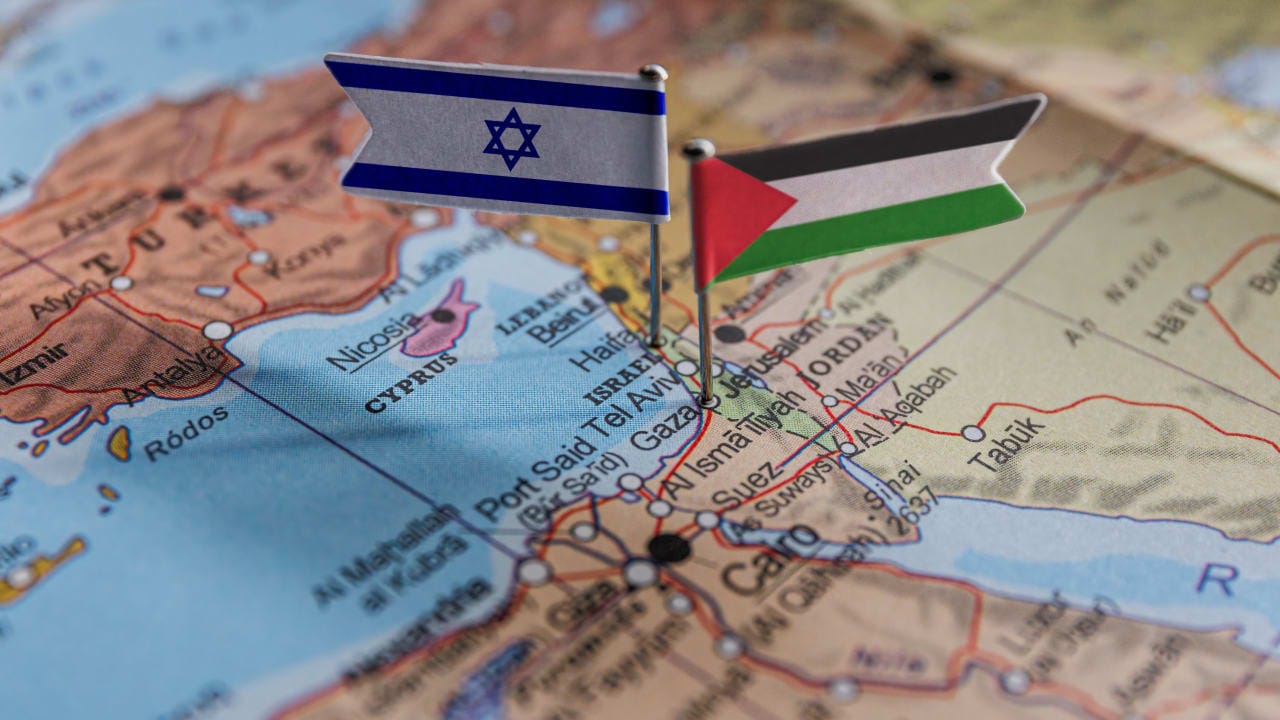
A new Reuters/Ipsos survey earlier this week found that 58% of Americans say every United Nations member should recognize a Palestinian state, 33% disagree, and 9% did not answer.
The six-day online poll of 4,446 adults, with a margin of error of about two percentage points, also reports that 59% now believe Israel’s response in Gaza has been excessive, up from 53% in February 2024. Sixty-five percent want the United States to do more to alleviate starvation in Gaza.
These numbers emerge as recognition gathers speed among close Western partners. In 2024, Spain, Ireland, and Norway recognized a Palestinian state, followed by Slovenia and Armenia in June. In recent weeks, Australia announced it will recognize a Palestinian state at the UN General Assembly in September.
France, Canada, and Malta have also announced plans to recognize a state in September at the assembly, while New Zealand says it is considering recognition. Britain said it will follow suit unless Israel takes specific steps on aid, annexation, a ceasefire, and a political process. This comes on top of well over a hundred countries that already recognize Palestine.
On the one hand, the world’s momentum looks detached from realities on the ground. A one-sided state declared into a vacuum cannot resolve core issues that still define the conflict: Hamas’s rule and arsenal in Gaza, a fractured Palestinian polity, Israel’s legitimate security needs along and beyond the 1967 lines, and the basic requirement that any state exercise a monopoly on force and accept Israel’s right to exist.

Recognition without a workable security architecture, governance reforms, and a credible plan for disarmament risks becoming an act of symbolism that hardens maximalists on both sides and leaves civilians no safer.
On the other hand, the poll also tells us something uncomfortable about Israel’s standing and our own diplomacy. After almost two years of war, it is nearly impossible to maintain broad international support without a clear political horizon, even among Americans who remain instinctively pro-Israel.
When friends move ahead with recognition, it reflects not only their domestic pressures but also their sense that Israel is not offering a plan others can rally around. That perception is sharpened when headlines focus on settlement expansions and coalition infighting rather than a coherent “day after” strategy.
Israel needs to get its diplomatic act together
Israel must get its act together diplomatically, fast, and we should do so on two tracks at once.
First, we need an unapologetically assertive diplomatic campaign aimed at our closest allies. That means naming a senior special envoy with the full backing of the prime minister and war cabinet, empowered to engage Washington, Ottawa, London, Paris, Berlin, Canberra, and Wellington daily.
The mission: align expectations ahead of September, reduce surprises, and ensure that any recognition moves are tethered to concrete conditions Israel can live with, including firm commitments on demilitarization, security coordination, and education against incitement.
Second, we must finally table a credible “day after” blueprint that other capitals can support. The outlines are not a mystery: release of all hostages as a starting point for any sustained ceasefire; a restructured, reformed, and demilitarized Palestinian Authority that can govern Gaza and the West Bank with outside oversight – or an international body that would govern Gaza until local forces are able to.
In addition, a phased security regime in and around Gaza that guarantees Israel’s defense and prevents rearmament; a reconstruction fund locked behind strict monitoring and anti-corruption safeguards; and a political horizon that ties progress to performance. The point is not to promise the moon but to demonstrate that Israel has a sequence and a strategy.
Regional diplomacy is essential. Israel should work with Egypt, Jordan, the UAE, Morocco, Bahrain, and Saudi Arabia on a joint framework that couples hard security guarantees with practical steps for movement, trade, and governance. If Muslim partners sign onto a realistic plan, Western governments will find it easier to support Israel’s position, and recognition talk will be channeled into a path that strengthens moderation rather than rewarding violence.
None of this requires illusions about our enemies or denial about the trauma Israelis have endured since October 7. It does require clarity about the political marketplace we are operating in. The American public now tells pollsters that recognition should proceed.
September is around the corner. Israel should arrive with an agenda, not a reaction.