
Foreign Minister Gideon Sa’ar criticized France, the United Kingdom, and Canada for their recent decisions to recognize a Palestinian state, citing Hamas’s defining the move as “the fruits of October 7.”
How are Palestinians drawing a line from the October 7 attacks to recognition of a Palestinian State?
“The sad truth in the Arab world is that our children are being taught fundamentalist Islamic ideas that glorify violence... We rationalize and encourage terrorist and fundamentalist movements to continue following in their footsteps.” This quote from Muhannad Alazzeh, a legal expert and former member of the Jordanian Senate, is premised on an assumption that Arab culture is inherently violent.
However, this is a broad generalization that risks oversimplifying a diverse and complex cultural landscape. Arab culture spans over 20 countries, multiple ethnicities, religions, and centuries of history, making it difficult to claim that it is violent by nature.
If Alazzeh’s quote has any virtue, or even if he’s overgeneralizing about Arab culture but is pointing out verifiable phenomena of higher-than-average levels of violence in Arab society, the world is faced with a challenge. Should it ignore the high levels of violence in the Arab world with the goals of remaining ideologically clean from charges of over-generalization or should it recognize a problem that threatens the safety of moderate Arab and Western communities across the globe?
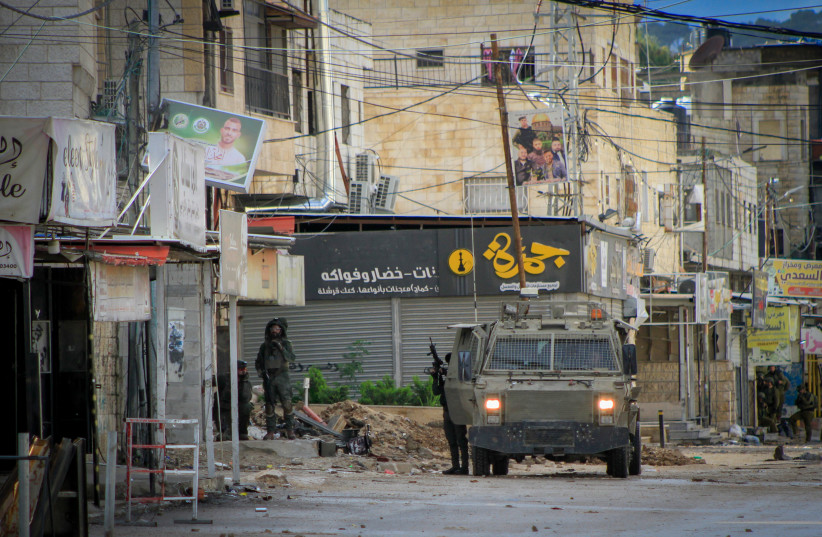
A troubling trend seen over the past decade is the world’s purposeful indifference to Arab violence. This is easily measured by comparing mainstream media coverage of such violence with that of other comparable conflicts around the world.
The Syrian Civil War has been raging for over a decade. Estimates of the amount of people killed during this civil war range from 580,000 to 656,493, with 306,887 civilian deaths documented between March 2011 and March 2021. Similarly, the civil war in Yemen has also lasted over a decade. Estimates for the Yemen Civil War suggest 377,000-400,000 deaths occurred by 2023.
More than a fifth of the population
ARAB CITIZENS make up to 21% of the current Israeli population.
Israeli police statistics demonstrate that Arab-on-Arab murders account for a disproportionate share of murders in Israel. For example, in the 2018–2023 period, 712 of 981 total murders in Israel were Arab-on-Arab murders. Most of were linked to organized crime, illegal firearms, and family feuds.
In comparison, Jewish-on-Jewish homicides are estimated at 20-30 annually.
One of the best-known challenges to consumers of media coverage of the Israel-Hamas War is the mainstream media’s reliance on numbers provided by the obviously biased Hamas-run Gaza Health Ministry. The figures Hamas provides are largely exaggerated and distorted to vilify Israel by inflating mortality rates, especially among civilians. Using these numbers and comparing them to the Syrian Civil War demonstrates world’s purposeful indifference to Arab violence – especially if Israel isn’t involved.
By July 30, 2025, Hamas reported 60,000 total deaths since October 8, 2023, with scholars estimating 80% (48,000) as civilians. Some estimates are higher, with one independent survey of deaths claiming almost 84,000 people died in Gaza between October 2023 and early January 2025 as a result of the Hamas-Israel War, over half of them civilian deaths.
In comparison, in just one year (2014) of the Syrian Civil War, surveys claim 110,000 total deaths, with 50,000-60,000 of those killed being civilians.
With demonstratively more violence occurring in Syria and Yemen, one would expect the world and mainstream media outlets would pay more attention to the civil wars in those countries than to Israel’s war against Hamas. That expectation is wrong. In studies comparing media attention to various conflicts around the world, Israel has received between five and 10 times more attention than other conflicts.
Many observers of the higher-than-average coverage of the Israel-Hamas War will charge antisemitism and accusations of “No Jews, no news.”
While antisemitism is a factor in the amount of attention Israel receives, focusing solely on anti-Israel bias obscures the issue of the world’s indifference to Arab violence.
The world doesn’t only ignore Arab violence and terrorism, it also accepts it.
MANY SCHOLARS consider that Arab terrorism in Israel began during the era of British Mandate Palestine, with the 1920 Nebi Musa Riots. Arab mobs attacked Jews in Jerusalem during a religious festival, killing four Jews and injuring 216. These attacks were fueled by anti-Zionist sentiment and British mandate tensions.
Arab terrorism continued in the 1929 Palestine Riots/Hebron Massacre. Incited by rumors of Jewish plans to seize the Temple Mount, Arabs killed 133 Jews (67 in Hebron) and wounded hundreds, along with widespread property destruction.
The situation worsened during the 1936 Arab Revolt, a major uprising against British rule and Jewish immigration, that resulted in the deaths of 415 Jews and 200 Britons.
The British responded to these attacks weakly, and Arab terrorism rose precipitately under the British mandate.
Between 1949 and 1956, approximately 1,300 Israelis were killed or wounded in Palestinian fedayeen (commandos) cross-border raids from Jordan, Egypt, and Lebanon. After the 1967 Six-Day War, Palestinian groups, such as the Popular Front for the Liberation of Palestine (PFLP) and the Palestinian Liberation Organization (PLO, today’s Palestinian Authority), shifted to international terrorism, including 16 plane hijackings from 1968 to 1976.
The 1972 Munich Olympics attack by Palestinian terrorists killed 11 Israeli athletes.
Between 1970 and 1990, Palestinian terrorism targeted Israeli schools and civilian areas, exemplified by the 1974 Ma’alot massacre, where Palestinians killed 21 schoolchildren and four adults after taking 115 hostages. Since then, two murderous Palestinian intifadas took place; and Palestinians commit or attempt three to six attacks on Israelis every single day.
Palestinian terrorism has been accepted by the world and rarely receives any attention.
WHILE FRAUDULENT claims of Israeli violence in Judea and Samaria (known as “settler violence”) make international headlines, Palestinian shootings of pregnant Israeli women and children are rarely mentioned, let alone covered by mainstream media.
The world has accepted Arab and Palestinian terrorism as a natural and expected occurrence.
To the global community, Arab violence is no more immoral or attention-deserving than playground fights at the local park. It is almost as if the world claims, “Children will be children, and Arabs will be Arabs.”
The world’s tolerance for Palestinian violence directly led to the Palestinian massacre of innocent Jews and Israelis on October 7, 2023. Palestinians in Gaza fully expected the world to excuse their actions and instead focus on Israel’s response.
The world’s reaction reached absurdum when cities around the world hosted rallies and demonstrations calling the massacres “resistance.”
The PA, now being recognized as the government of a Palestinian state by governments around the world, even incentivizes terrorism through its pay-to-slay program – and the world embraces it with no qualms.
The world, and even Israel, has no one to blame for the normalization of Palestinian terrorism than themselves.
By treating Palestinians as petulant and spoiled children, the world has trained Palestinian society to glorify terrorism.
As Sa’ar intimated, the latest recognition of a Palestinian state is just one more step in teaching Palestinians that terrorism pays dividends.
Until the world begins rejecting Palestinians for their terrorism, it can expect Palestinian terrorism to rise.
The writer is a certified interfaith hospice chaplain in Jerusalem and the mayor of Mitzpe Yericho, where she lives with her husband and six children.