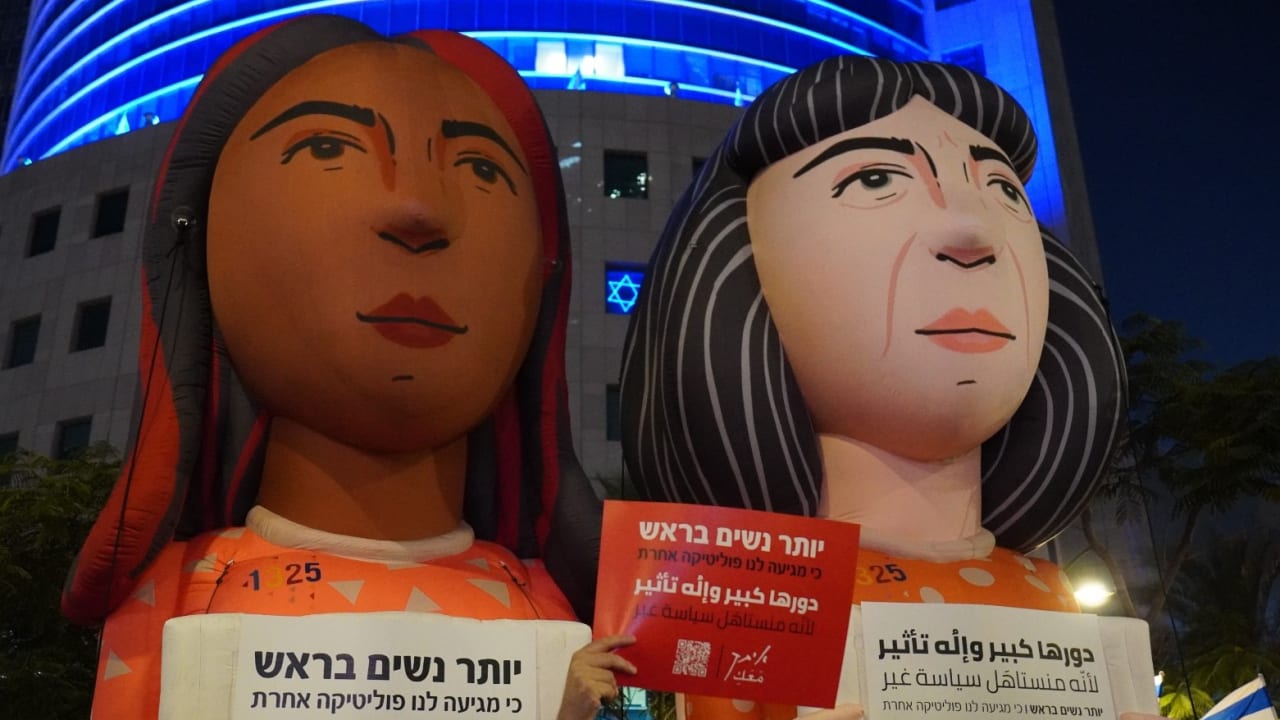
In a world plagued by devastating wars, not only in Israel, the absence of women from decision-making arenas, especially in peace negotiations and conflict resolution, is a deeply troubling issue.
Twenty-five years ago, the UN Security Council adopted the historic Resolution 1325, calling for the representation of women from diverse groups in decision-making on peace and security, the protection of women from all forms of violence, and the integration of a gender perspective into peace and security deliberations.
Thanks to the relentless lobbying from women’s organizations, Israel was among the first countries to adopt elements of the resolution into national legislation in 2005 (requiring representation for diverse women in policy teams or committees).
Women's voices are being silenced and excluded
In 2014, the government decided to develop a national action plan for the implementation of Resolution 1325. Yet, as of 2025, that commitment remains unfulfilled. On the contrary, there are countless examples of women’s voices being silenced and excluded from key decision-making forums.
For example, the war cabinet for the Iran conflict included six male ministers and one MK (chairman of the Shas party), though the war harshly influenced millions of women. Their voices were not included or considered in decision-making.
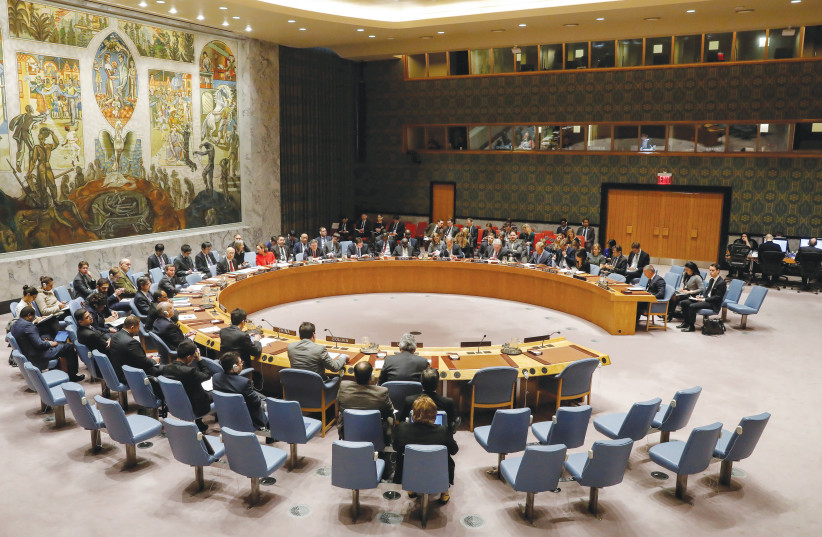
It is important to remember that the UN Security Council’s mission is to promote peace and resolve conflicts, and Resolution 1325 was enacted for that goal. Women’s participation in peace and security decision-making has been shown to significantly contribute to successful conflict resolution.
Peace agreements that incorporate gender perspectives tend to be more inclusive and sustainable, as they reflect the full spectrum of human needs of those living in conflict zones (like access to education, health, including emotional health, safety from gender-based violence, food security), not just the issues of weapons proliferation, security measures, and violence de-escalation.
Women's participation increases the likelihood of successful agreements
Research shows that when women participate in peace negotiations, the likelihood of reaching an agreement that lasts at least 15 years increases by 35%.
Women bring a broad range of perspectives, lived experiences, and a deep understanding of varied societal needs, which can lead to innovative, inclusive solutions. They often serve as intermediaries between different population groups, helping to build bridges of understanding and cooperation.
Numerous studies have demonstrated that diversity in leadership and decision-making yields better outcomes because combining the best minds with different viewpoints enhances creativity and the ability to envision and implement effective solutions. We can see the influence of women participating in informal peace deliberations and civil society initiatives, but unfortunately, they do not have a seat at the formal decision-making tables that determine our lives.
Countries scarred by bitter, violent, and prolonged conflict and war have shown that women can lead a different kind of diplomacy – one that paves the way for transforming entrenched disputes. In Northern Ireland, for example, the women who helped end the conflict were the only negotiators representing women from both sides of the conflict, breaking down rigid dichotomies and forging common ground.
In the Philippines, women pioneered grassroots peace initiatives such as “peace zones,” where weapons were banned or ceasefires declared during holidays, which were later adopted nationally and inspired the peace process by showing that it was possible. In Colombia, women’s testimonies showing the impact of the war, their needs, and their visions for possible solutions became influential and fundamental to the peace process, demonstrating the necessity of gender-inclusive approaches.
This is what Israel lacks
In Israel, however, decision-makers have not yet realized the importance of implementing Resolution 1325. Over 100 countries have developed and implemented Women, Peace, and Security national action plans, but Israel has not, despite its official decision to do so in 2014. Even the short-lived “change government” that began drafting such a plan ultimately backed away from addressing the core issue of the Israeli-Palestinian conflict.
Today, it is painfully clear: We lack female representation in decision-making bodies and in peace negotiations. We lack a gender lens and a human-centered approach in policymaking. We lack protection for women in Israel, the West Bank, and Gaza. And we lack a strong international stance demanding the inclusion of women at decision-making tables.
In conflicts around the world, the international community has played a pivotal role in ensuring women’s participation in peace negotiations. Mediators have demanded it from conflicting parties and supported women’s groups in amplifying their voices during peace talks.
In Israel, however, the political leadership remains entrenched in a hawkish stance, insisting on perpetual war regardless of its devastating consequences for Israelis and Palestinians – for the 50 hostages still held in Gaza and for the civilians there. As such, no one dares to demand women’s inclusion, thinking it is a peripheral issue compared to core issues on the table. But perhaps insisting on women’s representation could shift the dynamic altogether.
Global experience shows that including women from diverse backgrounds in peace efforts leads to more creative, inclusive, and lasting solutions. After 22 months of war and 25 years since Resolution 1325, it is time to understand that equal representation of diverse women’s voices in diplomacy is not only the right thing to do but also a key to breaking out of the deadlock we find ourselves in.
The writers are attorneys and co-CEOs of Itach Ma’aki – Women Lawyers for Social Justice.