Iranian officials demanded that the Islamic Republic begin developing intercontinental ballistic missiles (ICBMs) in a letter addressed to Iran's Supreme Leader, Mojtaba Khamenei, the reformist Iranian newspaper Asriran reported on Wednesday.
A total of 85 officials were reported to have penned the letter, which expressed condolences to Khamenei on his father’s death and cast doubt on the trustworthiness of Washington in ceasefire negotiations, asserted that the parliamentarians would “continue to support our military forces and defense industries until the day comes when the range of our missiles reaches the offices of the killers of the deputy of the Imam of the Age (Muhammad al-Mahdi, the twelfth and final Imam) and the martyred Khamenei.
“We believe that to end the cycle of terror by the so-called ‘Al-Epstein,’ who adhere to no moral, human, or international principles, it is not merely an eye for an eye; rather, the enemy must know that it will be a head for an eye.”
Experts from the Institute for the Study of War interpreted this as a call to develop missiles capable of reaching the United States. The Islamic Regime has often referred to Israel and the United States as the “Epstein Regime” as part of its propaganda campaign to affiliate Jerusalem and Washington with the crimes of the late child sex offender Jeffrey Epstein.
Maj.-Gen. (ret.) Yaakov Amidror, a former advisor to Prime Minister Benjamin Netanyahu and a senior fellow at the Jerusalem Institute for Strategy and Security, told The Jerusalem Post that it has long been within the Islamic regime’s goal to develop a missile capable of reaching the US.

He warned that should Tehran walk away with favorable financial terms in the ongoing ceasefire talks with Washington, the Islamic regime would have the financial capacity and longevity to eventually see this goal through.
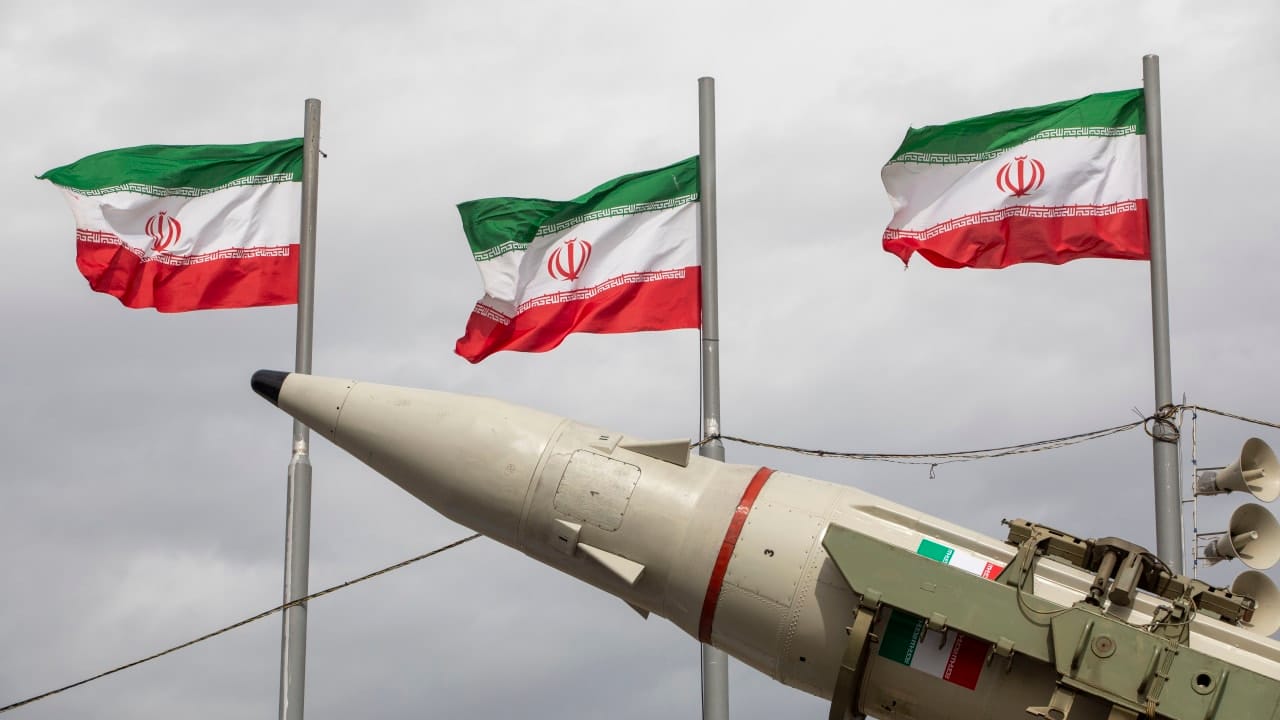
Iran’s ballistic missile stock was understood to have a maximum range of around 2,000 km, according to the regime’s own claims, with its longest-range systems being the Khorramshahr, Sejjil, and Shahab-3 missiles.
Iran's long-range missiles
The Khorramshahr missile has a range of 2,000 km and can deliver a massive 1,500 to 1,800 kg warhead, which can be adapted as a cluster munition, while the Sejjil can pack 700kg of explosives with a range of 2,000 km. The Shahab-3 is also estimated to have a range of 1,300 to 2,000 km, with a capability of carrying 1200kg of explosives.
Notably, The Wall Street Journal reported in March that Iran launched two ballistic missiles toward the joint US-UK military base on Diego Garcia, located roughly 4,000 km from Iran. According to those reports, one missile failed in flight, while the other was intercepted by US forces.
IDF Chief of the General Staff Lt.-Gen. Eyal Zamir noted at the time that the 4,000 km range would place Germany, France, and Italy ”within direct threat range.”
Amidror warns Iran may increase missile range
With parts of Europe in range, and the whole of the Middle East, Amidror cautioned that the Islamic Republic may soon be able to extend its range, though he discredited the parliamentarian’s letter as propaganda.
Among the letter’s most notable signatories is Manouchehr Mottaki, who held the position of foreign minister from 2005 until 2010. Now a member of Parliament representing Tehran, Rey, Shemiranat, Eslamshahr, and Pardis, Mottaki has recently made headlines for his demands that the United Arab Emirates and Saudi Arabia, in addition to the US, pay compensation to the regime.
Other signatories also included ideological hardliners who have frequently appeared in Iranian media over the past month, speaking against negotiations with Washington.