Damascus’s reported willingness to allow the International Atomic Energy Agency (IAEA) to remove nuclear material from the Assad-era “Site 99” underscores why Israel’s security arrangements must extend beyond the military sphere to the diplomatic arena, Gil Murciano told The Jerusalem Post on Tuesday.
Murciano, the CEO of Mitvim and an expert on Israeli foreign and security policy, spoke with the Post after Axios reported that the Trump administration had orchestrated a diplomatic agreement to see nuclear material removed without Israeli attacks on the site.
The material, said to be leftover parts of the Al-Kibar nuclear reactor project, has reportedly not yet been removed. Though not capable of being used to produce nuclear weapons, Axios reported that it could have been utilized to make a “dirty bomb,” a radiological dispersal device (RDD) that combines conventional explosives with radioactive material.
A US official told Axios that Israel had threatened to bomb Site 99 if the material was not removed or if there was any indication that Damascus was trying to access the material, though sources claimed that few in Syria were even aware of its presence in the country.
Murciano said this was an example of why Israel should take a more active role in diplomacy, rather than relying exclusively on its military might and closest ally, Washington.

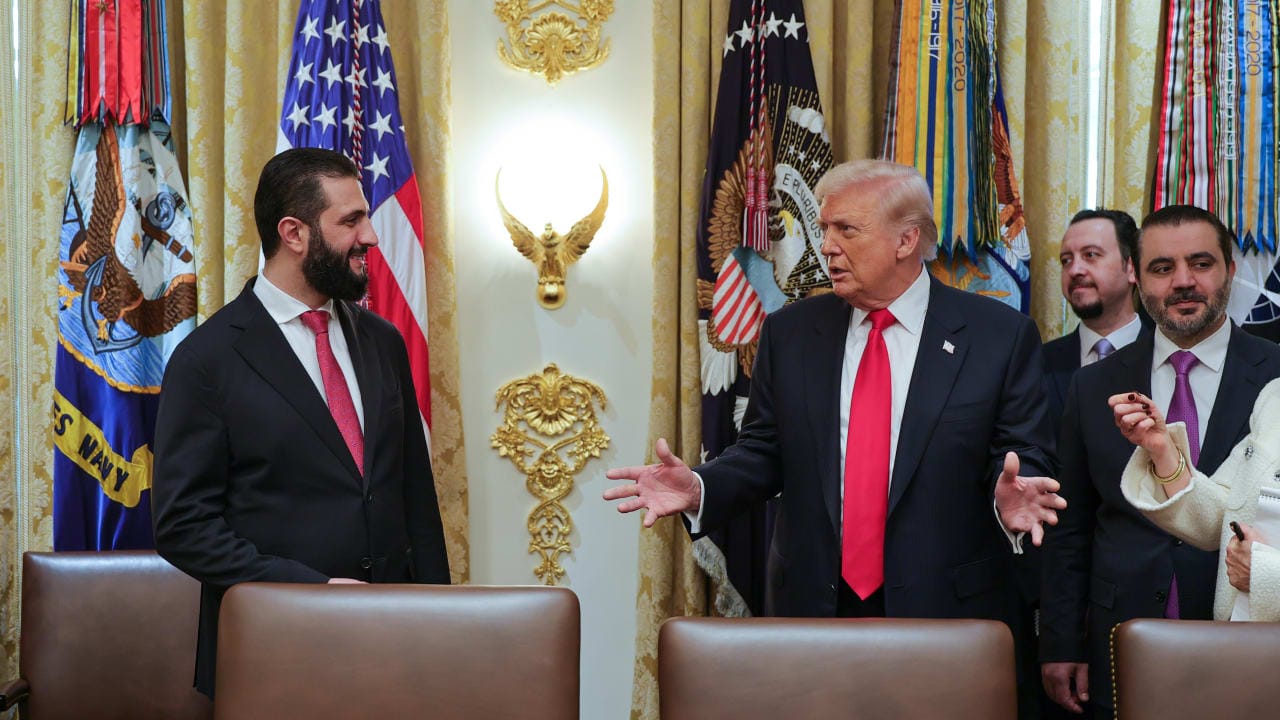
With Syria and Israel sharing many key security concerns, such as wanting to prevent the infiltration of Iran-aligned groups like Hezbollah, there is significant ground to hold discussions, even if interim Syrian President Ahmed al-Sharaa’s background makes him a difficult figure to trust.
Jerusalem has remained cautious since the hostile but predictable Assad regime fell in 2024. Sharaa’s history as a wanted jihadist and former leader of Hay’at Tahrir al-Sham (HTS) did little to ease Israeli concerns when he rose to power, while sectarian attacks against Syria’s Druze, Alawite, and Christian communities only fueled those fears.
“In Israel, we tend to look at Sharaa in an either-or, all-or-nothing way: either as the next great hope or as a jihadist in a suit, a kind of dichotomous perception of him as either a villain or a hero. I think that is a mistake,” Murciano explained, adding that it was becoming essential for Israel to cooperate with regional actors and “shape” the new roles and relationships within the region as an active member.
Several int'l partners interested in ensuring nonproliferation in Syria
Far from suggesting Jerusalem should simply trust Damascus, Murciano said diplomacy could be based on shared goals and an understanding of what the other party is interested in, which in the case of Sharaa is legitimacy.
With that in mind, he said it was not surprising that Damascus would be willing to hand over the materials, although Jerusalem reportedly feared that Ankara was encouraging Damascus to retain the remnants.
Beyond Damascus, several potential international partners would be interested in ensuring nonproliferation in Syria, especially given the scale of chemical weapons manufactured and utilized by the Assad regime.
“The issue of non-proliferation is a very interesting topic that could be one of the topics that would enable Israel to join forces with other like-minded partners, even, in some cases, sides that are not in the greatest relationship right now with Israel,” he said.
While still in the crucial transitional phase, he continued, now is the time for Israel to shape the relationships and norms that will help solidify the future security of its northern border.
That relationship could either remain a hostile calm reliant on foreign actors to contain tensions, or develop into an active dialogue through which Jerusalem can translate military achievements into long-term strategic gains, something critics have argued Israel has failed to do throughout the multiple wars of the past three years.
“If any withdrawal from Syrian territory is seen as completely off the table for political reasons by this government, then you are going to be in the passive role again. Instead of taking the initiative, you are going to respond to the lesser evil, and you are going to be the one responding to a reality that is being imposed upon you,” Murciano warned.
“That is exactly what happened to us in Lebanon, and that is exactly what is happening to us in Syria. Political considerations are preventing us from taking an initiative that is crucial to preserving Israel’s national security.
“Right now, all we can offer are military aspects. We have completely failed to offer any form of political initiative, and national security cannot be served by these issues alone.”
Operation Bashan Arrow
Operation Bashan Arrow was a major achievement for the IDF, enabling it to destroy around 80% of Syria’s Assad-era strategic military capabilities.
However, Murciano said that at some point, a political next step would be necessary. He argued that Israel’s continued military presence in Syria, intended to create a buffer zone, was instead fueling actions against the Jewish state and causing long-term damage to relations with a neighboring state that is not going anywhere.
Reports of clashes between US President Donald Trump and Prime Minister Benjamin Netanyahu have periodically highlighted Washington’s frustration with what it sees as Jerusalem’s lack of flexibility and an excessive reliance on military solutions to security threats.
In June, Axios reported that Trump had confronted Netanyahu over strikes in Lebanon, which had threatened the US’s talks with Iran. “Everybody hates Israel because of this,” Trump reportedly told the prime minister at the time.
Murciano said that Netanyahu’s government had “lost control” over decision-making on Iran, Syria, and Lebanon as a result of its “hawkish approach” and “its inability to offer anything on the political level, rejecting every initiative.”
“I’m not saying that we should accept every initiative brought to us on Syria, but we need to address them. We need to provide our reservations and offer our own initiatives, because this is already happening with us or without us,” he concluded. “The ship has already sailed.”