Tension has mounted in Gaza in recent days after Hamas claimed that members of the Israeli-backed militias in the strip requested to break away and rejoin Hamas.
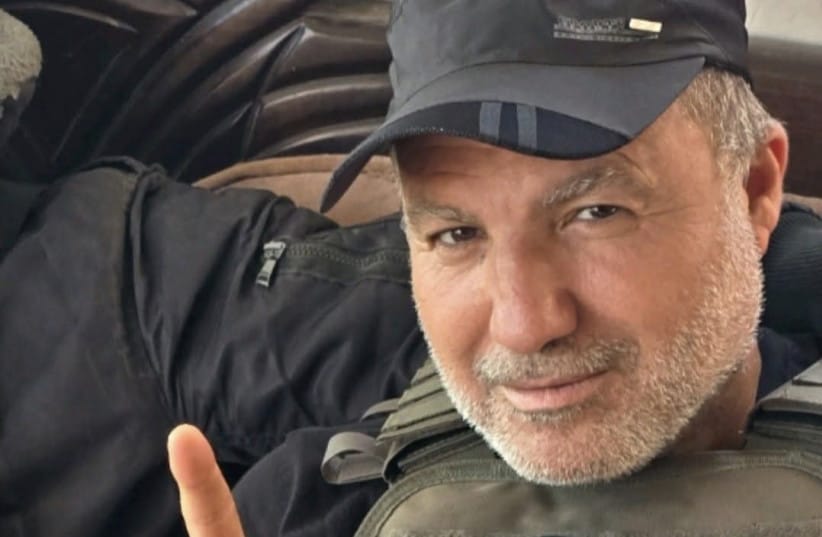
Hussam al-Astal, head of the anti-Hamas militia in Khan Yunis, southern Gaza, rejected Hamas’s claims, arguing they were part of the organization’s psychological war to undermine the armed groups' power and pressure Gazans not to reach out to them.
“What Hamas says is not true,” al-Astal argued. “Dozens, even hundreds, of people in Gaza are trying to move to our area,” he told The Jerusalem Post. “Hamas is afraid and wants to prevent that, so that’s why they spread these things,” he said.
Hamas has claimed in recent days that individuals associated with armed groups operating in the Strip, supported by Israel, have approached the organization, seeking to defect from those groups and reconnect with Hamas.
The Radea force, a special Hamas security unit tasked with cracking down on internal threats and suspected collaborators with Israel, announced that it had received 10 appeals within just 12 hours from what it described as “members of collaborator gangs” who asked to “resolve their security files and return to their people.”
“The Radea force affirms that the growing number of requests reflects the extent of confusion and collapse within these gangs following the disclosure of their criminal activities and complete subordination to the occupation,” it said in a statement published on social media accounts.
“Hamas sees us as a threat to their rule. They don’t want us to get stronger; that's why they incite against us and try to drive people away," al-Astal said.
Small number of families approach Hamas after sons regretted joining militia
However, a Palestinian source told the Post that a small number of families of young men approached Hamas, saying their sons regretted joining the militias, especially because of the difficult economic situation, and now want to turn themselves in.
“It’s maybe ten out of hundreds,” the source said. “They will likely be questioned by Hamas, which will seek information about the militias: how they operate, how they use their weapons, and other details. Afterward, Hamas may release them, hoping this will encourage others in the militias to defect and provide information as well," he added.
“They (Hamas) are saying that our people are collaborators," al-Astal alleged. "How, exactly? It’s not that we are a group of only a few people. It’s a force; a segment of society. We have now turned into a force that fights Hamas. Collaborators hide. We are not hiding,” he said.
“I remember that when we started our activity about a year ago, it was only me and three others. We have grown to several hundred members and affiliates, and every day I get calls from civilians, individuals, and families, saying they wish they could free themselves from Hamas and move to our side," he argued.
According to al-Astal, some Gazans living in the Hamas-controlled territory west of the yellow line realize that the terror organization puts them at risk- if any Hamas member hides nearby, they and their families could be targeted. However, he said, these residents face difficulties leaving the area because Hamas watches and they fear for their lives.
“They say that Hamas will not let them move; that they will be harmed or get shot. Others say they are concerned about how they will manage regarding schools for their children, medical care, and other services,” the Khan Yunis-based group leader explained.
Gazans say not much progress has been seen on the ground concerning the next phases of Trump’s 20-point plan for post-war Gaza.
Despite the apparent stalemate, al-Astal pointed to the efforts aimed at what he called rebuilding the New Gaza. “We already have a school here, and we call not only for youth to come join us in military training, but also for doctors, engineers, and anyone who can contribute and serve the people of Gaza,” he said.
"People are tired of Hamas. They’ve had enough," al-Astal said.
Yet, while al-Astal’s armed group and several other anti-Hamas militias across the Gaza Strip are trying to portray themselves as an alternative to Hamas, they appear to have gained little trust among Palestinians.
“Many of us are frustrated by Hamas,” said a resident of Gaza City. “We do not want Hamas, but at the same time, we do not trust these militias. They are not as organized as Hamas. They do not know how to manage things,” he alleged.
“We don't see them as capable of really protecting us,” the resident told the Post.
“Why should we live in war and death all the time? Hamas needs to go,” al-Astal said, noting that the rule of Palestinian political organizations, Hamas and Fatah alike, has failed.
“I tell the people of Gaza: let’s end Hamas’s oppression. No more political organizations that only care for their own members and interests. Let’s allow our young generation to live and develop," al-Astal said.
"We can live side by side with Israel; I do not see a problem with that,” he argued.