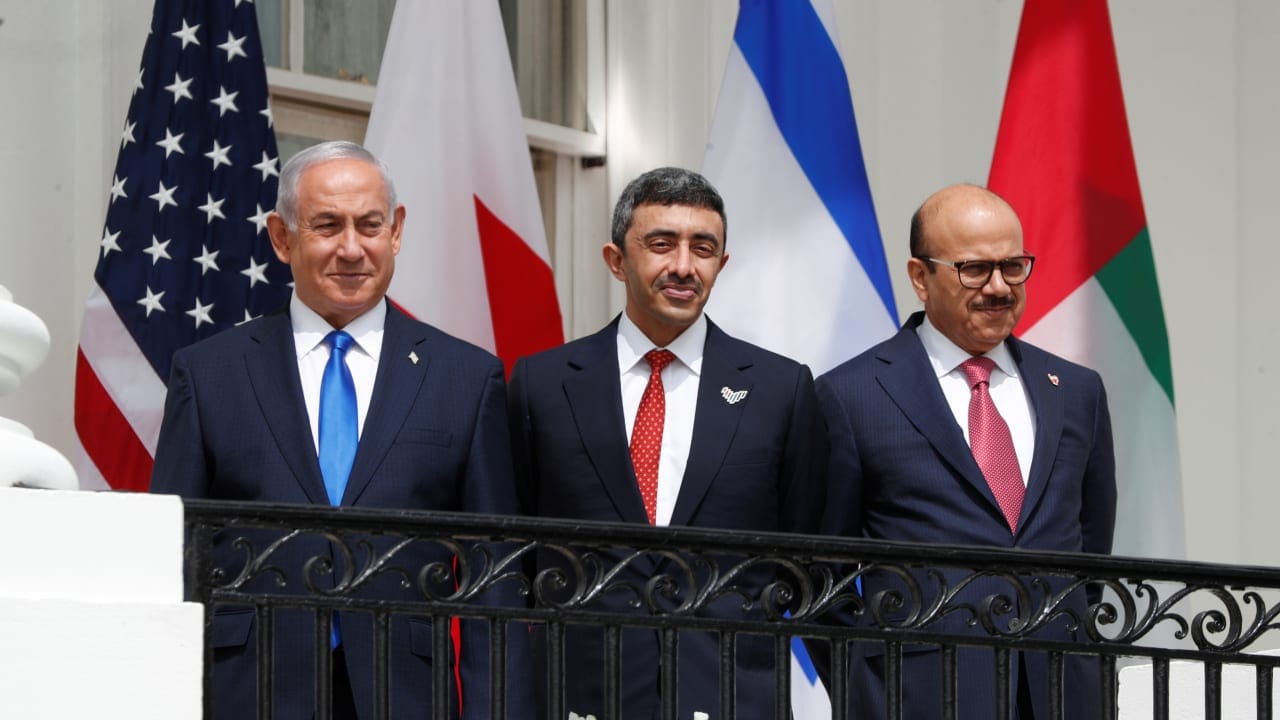
The Gulf countries are on edge due to the US’s renewed push for a deal with Iran, as well as US strikes. The US said that it conducted strikes in southern Iran in self-defense. According to the US Central Command, these strikes were used to protect US troops from threats.
The US was observing Memorial Day on May 25, when the attacks occurred overnight. US President Donald Trump had been pressuring Saudi Arabia and other countries to join the Abraham Accords. These countries appear to be pushing back, seemingly because they want, before anything else, to see Israel work with the Palestinians.
“US forces conducted self-defense strikes in southern Iran today to protect our troops from threats posed by Iranian forces,” Tim Hawkins, a US Central Command spokesman, said in a statement overnight. This statement is significant because it shows how complex the motions in the region are.
The tensions in the Gulf come as Israel is ramping up its attacks on Hezbollah. Arab News in Saudi Arabia said, “US forces on Monday conducted strikes in southern Iran against targets, including boats attempting to lay mines, and missile launch sites, in what it described as defensive actions.”
It further noted, “The strikes came as Iran’s top negotiator and its foreign minister were in Doha for talks with Qatar’s prime minister on a potential deal with the US to end the three-month-old war, an official briefed on the visit said on Monday, after Washington and Tehran played down hopes for an imminent breakthrough.”
Saudi Arabia would prefer less tension, and both Qatar and Pakistan are working on mediation.

Meanwhile, US Secretary of State Marco Rubio is in India. Arab News noted that he said the US would give diplomacy every chance to succeed. Rubio stated that there was a “pretty solid thing on the table in terms of their ability to open up the Strait [of Hormuz], get the strait open, enter into a very real, significant, time-limited negotiation on the nuclear matter, and hopefully, we can pull it off.”
This comes amid reports that Iranian leaders are hiding underground and communicating by courier. “Iran’s Supreme Leader Ayatollah Mojtaba Khamenei said on Tuesday that regional countries would no longer be shields for US bases, in a written statement carried by state television,” Arab News noted.
“What is certain in this regard is that the hands of time will not turn backwards, and the nations and lands of the region will no longer serve as shields for American bases,” Khamenei said in a statement for the Eid Al-Adha holiday.
Iran retains missile threat
Iran continues to work on repairing its ballistic missile launch sites. Gulf News noted that intelligence assessments say it now has access to 30 of 33 sites near the Strait of Hormuz, enabling missiles to be moved from bunkers onto mobile launchers.
“The latest confrontation highlighted what many military planners increasingly fear: that Iran still retains enough missile and naval capability to threaten US forces and commercial shipping despite nearly three months of US-Israeli attacks.”
Dr. Anwar bin Mohammed Gargash, the diplomatic advisor to the president of the United Arab Emirates, affirmed that the UAE is capable of overcoming these challenges.
“Wars may impose circumstantial challenges, but the UAE was built on solid foundations that make it more capable of cohesion and overcoming them. Conscious leadership, strong institutions, a developed and competitive economy, and authentic values based on solidarity, tolerance, and justice,” he wrote on social media platform X/Twitter.
“The UAE’s success was not born of chance, but the fruit of a steadfast vision and sincere, continuous work over the years. The UAE is capable of overcoming challenges with confidence and steadfastness.”
Faisal J. Abbas, the editor-in-chief of Arab News, noted that peace is possible with Israel, but that Israel “needs to embrace a two-state solution.”
Abbas wrote, in a piece that should be seen to reflect wider views in Saudi Arabia, that “the news about an imminent agreement between the US and Iran is certainly a welcome development. As mediators work to bridge the gaps between the American and Iranian positions, we need to remember that a negotiated outcome is by far the best possible solution for now, as it is the only one that gets us close to agreed-upon results.”
He also noted that Qatar and Pakistan were working to bridge gaps towards a deal. “Meanwhile, regional sources tell Arab News that Saudi Arabia is urging both the Americans and the Iranians to pursue positive engagement. At the same time, Riyadh is highlighting the need for clear wording on security and freedom of navigation without new restrictions. Previous positions have made it clear that Saudi Arabia wants to see the Strait of Hormuz [opened] unconditionally.”