Qatar’s decision to declare the security and military attaché in Iran’s embassy as persona non grata on Wednesday signals a “major break” from Doha’s previously tempered response to the regime’s strikes, regional analysts told The Jerusalem Post on Thursday.
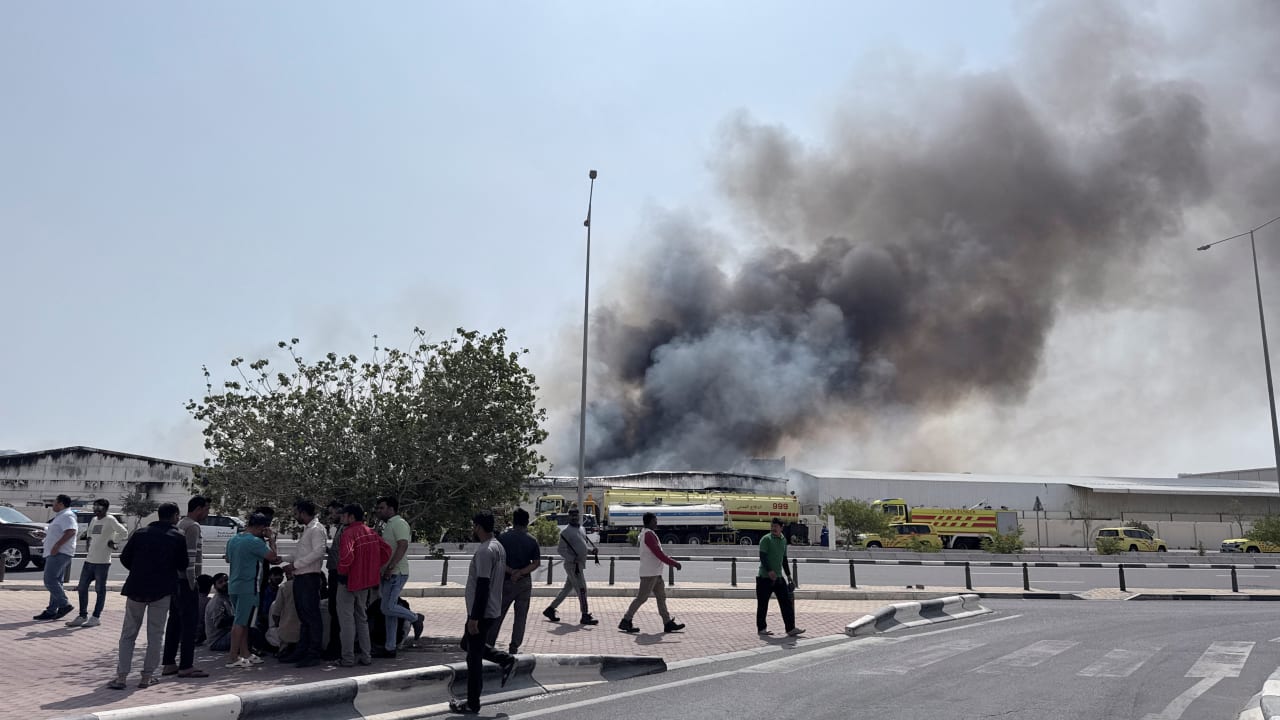
The military and security personnel were asked to leave within 24 hours of the notice after Iran launched repeated attacks against the country, the latest of which targeted Qatar’s Ras Laffan industrial city.
QatarEnergy reported “extensive damage” after the hit, which processes about a fifth of the world’s liquefied natural gas.
Bahraini political analyst Dr. Ahmed Alkhuzaie told the Post the expulsion was a “serious diplomatic rebuke.”
“While Doha stopped short of severing relations entirely, the decision to target Iran’s security presence rather than its broader diplomatic corps underscores Qatar’s concern about covert influence and its determination to protect vital energy infrastructure,” he assessed.

“This move also aligns with Gulf partners’ cautious but firm responses to Iranian aggression, signaling that Doha is willing to draw sharper redlines when sovereignty and economic lifelines are threatened.”
Despite the “rebuke,” Alkhuzaie said, failing to completely sever ties revealed that Doha was still interested in maintaining a pragmatic relationship with Iran, preserving prospects for trade and regional coordination.
“The gesture, therefore, serves both symbolic and strategic purposes; it demonstrates solidarity with Gulf neighbors and Western partners, while preserving space for dialogue. In effect, Doha is signaling that while it will not tolerate direct attacks on its territory, it still seeks to balance deterrence with diplomacy,” he said.
Dr. Najah Al-Otaibi, a Saudi researcher and analyst specializing in international relations and the Gulf region, told the Post that Iran’s attacks constitute “a betrayal of the diplomatic détente” established in 2023.
“The Gulf Cooperative Council, especially Riyadh, feels it has invested significant capital into rapprochement – only for Iran to respond with ballistic missiles,” she said.
Otaibi added that Qatar’s decision is “more than symbolic.” It is a “major break” from what has been seen during the conflict so far, she said.
Doha forced to align with Riyadh, Washington
Doha has acted as a mediator between the GCC and Tehran for years. The continuous attacks on Qatar and its gas facilities “have shattered this role, forcing Doha to align firmly with Riyadh and Washington,” Otaibi said.
Tehran’s latest escalation would likely lead Gulf states to shift “toward active deterrence,” she estimated. However, Otaibi noted Saudi Arabia “still signals a preference for diplomacy, [but] its officials explicitly stated it will not rule out military action if necessary.”
The reality and economic fallout of a full-scale war are undesirable to the GCC, she said. There is a lack of willingness to respond to Iran with military force, “but accepting these attacks is no longer possible.”
Tehran claimed the attack on Ras Laffan industrial city was a response to Israel’s strikes on Iran’s major gas plants, including the South Pars gas field shared by Qatar and Iran.
US President Donald Trump denied having advanced knowledge of the plan to strike the facility.
The Wall Street Journal reported that Trump had supported Israel’s plan to attack South Pars, and Israeli media reported widely on Wednesday that it had been carried out with Trump’s consent and in coordination with Washington.
Asked about this, Otaibi said that based on reports she was seeing, the US president “may have approved it to pressure Tehran.”
“This is making the Gulf leaders anxious about uncertainty and could lead the Gulf states to pursue independent security decisions away from Washington,” she said.
Noting that decisions may be made without consulting the US, Otaibi said she nevertheless believed that Iran’s actions were pushing “previously neutral neighbors into a unified front with the US and Israel... further isolating Tehran.”
While acknowledging Tehran’s actions were having a destabilizing impact on the region, Alkhuzaie said they were likely calculated and “rooted in a mix of deterrence signaling and strategic risk-taking.”
“By striking Gulf energy infrastructure, Iran aims to demonstrate that it can impose costs on its neighbors and disrupt global markets, thereby pressuring both regional states and Washington to reconsider their alignment with Israel.”
“Simultaneously, Tehran likely views these attacks as a way to project strength domestically, reinforcing its narrative of resistance against perceived encirclement and external aggression,” he continued.
“Yet Iran is also calibrating carefully, seeking to avoid crossing thresholds that would trigger full-scale military retaliation from the Gulf or direct US intervention,” Alkhuzaie said.
“Its choice of targets – energy hubs, shipping lanes, and cyber domains – reflects a strategy of asymmetric pressure designed to maximize disruption while minimizing the risk of outright war.”
“In this sense, Tehran’s decision-making balances the need to showcase resolve with the imperative of keeping escalation below a level that could unify Gulf states and their allies into a coordinated military response,” Alkhuzaie said.
He warned that clarity from the US is an essential way by which Gulf states can then calibrate their own response to the Iranian aggression.
“Mixed signals suggest either internal divisions within the US administration or deliberate ambiguity, both of which complicate Gulf leaders’ ability to align their strategies with Washington’s intentions,” Alkhuzaie noted.
Such ambiguity, he warned, risks the US appearing unreliable as a regional partner.
“If Washington’s stance appears inconsistent, Gulf capitals may hedge by strengthening their own defense postures, deepening intra-Gulf coordination, or even exploring alternative security partnerships.”
“In short, the lack of a clear US position risks eroding confidence at a moment when Gulf states are weighing whether to continue absorbing Iranian strikes or escalate in defense of their critical assets,” Alkhuzaie said.
Asked what would likely follow, he outlined several possible strategies he estimated Gulf states might take.
“Further tit-for-tat strikes remain the most immediate scenario, with Iran potentially targeting Gulf energy hubs again and Gulf states weighing whether to respond militarily or continue absorbing attacks.”
“Such exchanges would keep tensions high and could gradually erode the Gulf’s restraint, especially if critical infrastructure is repeatedly hit,” he theorized.
“Beyond direct strikes, cyberattacks and disruptions to shipping lanes are increasingly plausible,” Alkhuzaie said.
“Cyber operations allow Iran to inflict economic damage and signal capability without crossing the threshold of open war.”
“At the same time, attacks on shipping in the Strait of Hormuz or Gulf waters would threaten global energy flows and force international involvement,” he noted.
“Watching how Gulf states and their partners prepare for these contingencies will be crucial, as each scenario tests both their deterrence posture and their ability to maintain regional stability.”