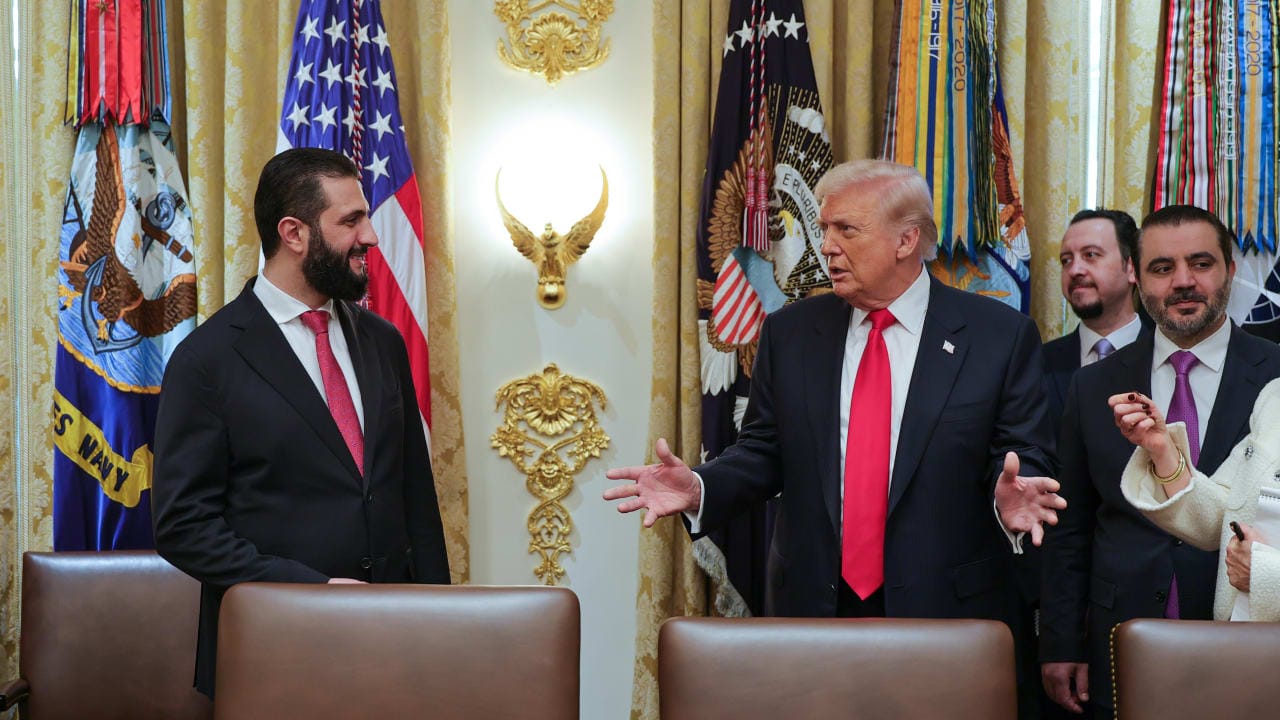
US President Donald Trump on Sunday praised Syria’s hard work and determination. His post on social media came weeks after he met with Syrian President Ahmed al-Sharaa and a few days after a deadly Israeli raid in southern Syria.
The message from the White House is that Israel should listen to the US and reduce tensions with Damascus.
Trump’s message was also posted around the time of a phone call he had with Prime Minister Benjamin Netanyahu regarding their possible meeting later this month.
As such, the Syria messaging is of utmost importance for Jerusalem. Israel’s current leadership is very suspicious of the government of Syria, and some voices are openly hostile.
The Foreign Ministry, for instance, frequently slams Damascus, as do key Israeli officials. The view of Syria in Jerusalem, among some key officials, is that it is run by “jihadists,” and that it could implode, or the new government could fall.

Israel’s Syria policy is also impacted by the success that Jerusalem believes it has had against Hamas, Hezbollah, and Iran. Israel now feels a sense of power with very few deterrents to doing what it wants on various fronts.
That has led to hundreds of strikes in Lebanon over the past year. There are also daily incidents in Gaza. In addition, Israel has stepped up operations in Syria.
The theory behind all these raids and strikes is that it keeps adversaries off balance. Instead of the policy before the October 7 massacre – when Israel’s borders were peaceful, but enemies gained strength – the current theory is that there will be low-level conflict on each border, but this will keep the enemies weak.
The question is whether there are enemies in Syria, or whether the policy is actually creating enemies.
Syria needs peace and stability
Trump’s message is clear: Syria needs peace and stability “to build a true and prosperous country,” he said, adding that it was important to end sanctions against it.
“I believe this was truly appreciated by Syria, its leadership, and its people,” Trump said.
“It is very important that Israel maintain a strong and true dialogue with Syria, and that nothing takes place that will interfere with Syria’s evolution into a prosperous state,” he said.
Trump, who praised Sharaa for making sure that “good things happen,” believes that this is crucial to peace in the Middle East. He has also worked hard on the Gaza ceasefire.
As such, the US is making it clear that Israel needs to rethink its policies on several borders. It’s possible that the White House may see a trade-off here, such as supporting Israel’s more robust action in Lebanon in exchange for more peace in Syria.
US Special Envoy for Syria Tom Barrack, for instance, was in Iraq and Syria recently. While in Iraq, according to reports, he had a message for Baghdad: Don’t support militias that arm Hezbollah, or Israel might carry out strikes.
In the past, Iranian-backed militias in Iraq have supported Hezbollah and also have launched drone attacks against Israel.
Jerusalem is at a crossroads in policies now. It has to think about its Syria policy a year after the fall of the Assad regime.
Has the policy of raids been effective? If the Trump administration does not support this policy, is there a way forward that leads to reduced tensions in Syria and also safeguards Israel’s interests?
These are key questions as Israel’s leadership prepares for meetings with the Trump administration.