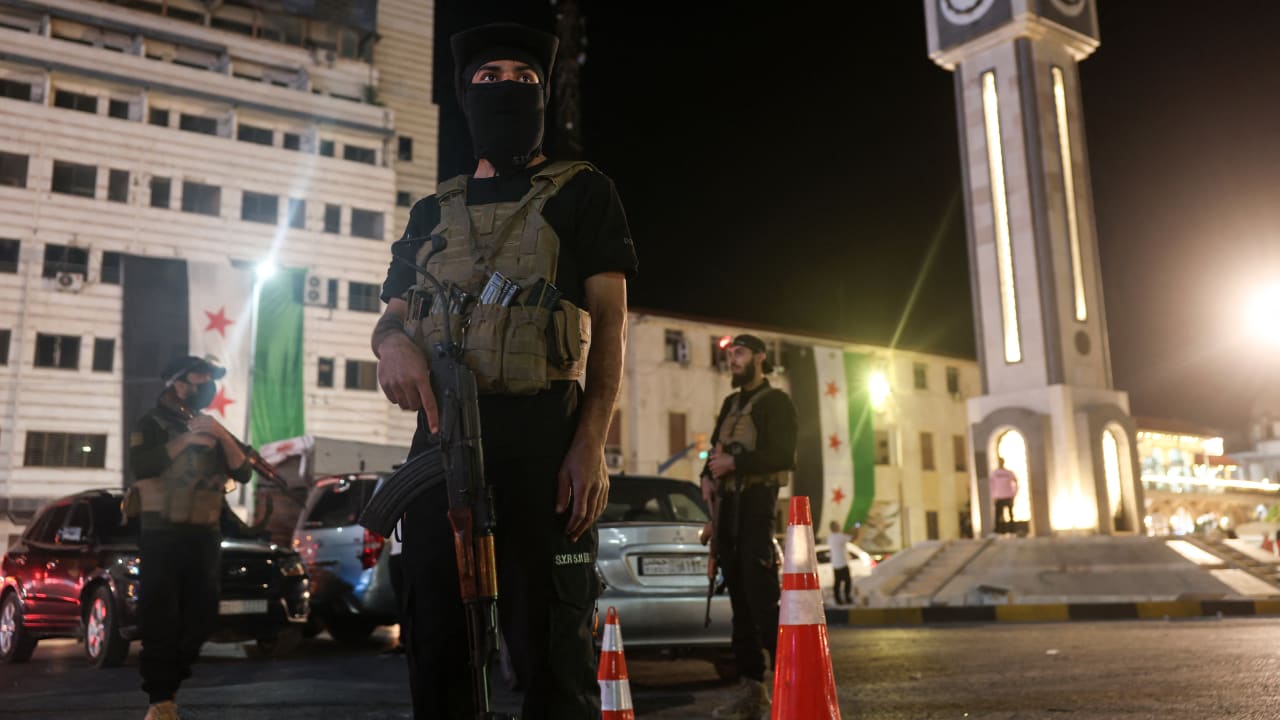
Clashes in Syria’s Homs province have shown that Damascus continues to have a problem controlling internal fighting between various groups, which usually results in the persecution of minorities.
The recent skirmishes began after two people were killed. The victims were a man and wife from a Bedouin tribe who were killed in their home south of Homs, and Bedouin began attacking members of the Alawite minority in turn.
The Syrian government responded with a curfew over the last several days. However, this doesn’t necessarily solve the problem of armed men taking the law into their own hands.
The events in Homs are very similar to clashes over the summer that targeted Druze in Sweida and also those in March that were aimed at Alawites in Latakia. In each instance, the minority group was accused of a crime, and then large numbers of mostly Sunni Arab men mobilized to attack.
Some will argue that this is a false narrative and that, actually, it is groups such as the Druze who have instigated by seeking to carve out areas of their control.

There is some truth in that because the Druze have sought to make Sweida autonomous, and they are well armed. As such, the Bedouin who clashed with them were also victims. In the case of the Alawites in Latakia, some claimed that they were regime supporters. However, the incident resulted in large numbers of uninvolved Alawites being killed.
The overall picture that has emerged is that Syria still can’t control many areas of the country from descending into these clashes. In Homs, the state did respond quickly.
One could see this as a positive development: The government is getting better. However, the problem of having different groups take the law into their own hands is still a major hurdle for Damascus.
A demand to end the 'ethnic cleansing' of Alawites
According to Rudaw, a Kurdish media outlet, “The leader of Syria’s Alawites called for a ‘unified demonstration’ across Alawite-populated regions on Tuesday, demanding federalism, political decentralization, and an end to what he described as the ‘ethnic cleansing’ of Alawites. The appeal follows reports from the community’s top religious leadership of attacks on Alawites in central Homs province the previous day.”
The report added, “The Supreme Islamic Alawite Council in Syria and Abroad released a video showing the community’s top leader, Ghazal Ghazal, calling for a ‘unified sit-in’ on Tuesday in all regions where Alawites are present.”
Meanwhile, the Syrian government extended the curfew on Monday into Tuesday. The Alawite council has called on the UN and the international community to do more to protect them as a minority group. “Unarmed civilians were terrorized by direct shootings, burning of homes and properties, destruction of shops, and cars set ablaze,” the Alawite Council said.
The curfew in Homs, which began on Sunday, still affects around 10 neighborhoods. It is not clear if it will continue throughout Tuesday. Syrian state media SANA noted that the local command center “calls on all citizens to comply with the decision to ensure the completion of ongoing field procedures.”
SANA noted that “the city’s Internal Security Forces announced the extension in a statement posted on the Homs Governorate’s official Telegram channel, specifying that the curfew will affect the following neighborhoods: Al-Abbassiya, Al-Armen, Al-Muhajireen, Al-Zahra, Al-Nuzha, Al-Ikrima, Al-Nazihin, Ashira, Zaydal, Karm Al-Zaytoun, Karm Al-Louz, Al-Weroud, and the Police Housing district.”