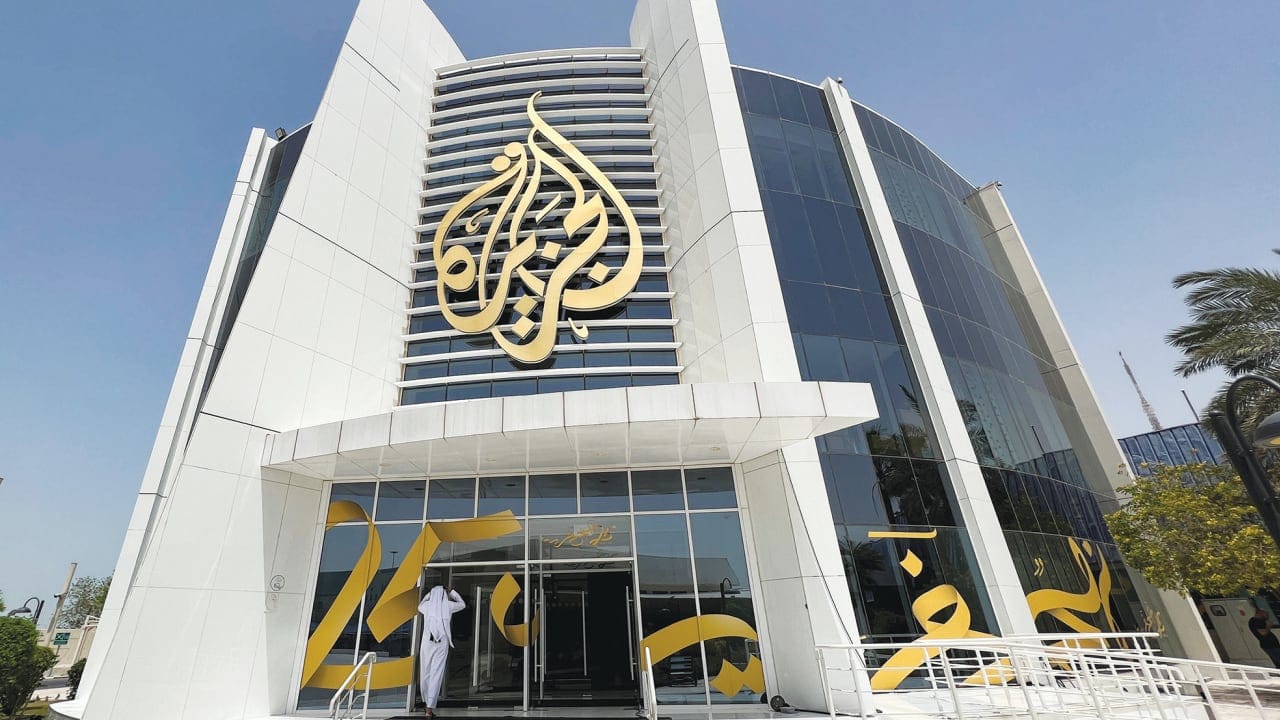
Al Jazeera appointed a member of Qatar’s royal family as its new chief executive officer on Monday, raising renewed concerns in Israel about the network’s editorial independence and its alignment with state policy.
The broadcaster announced that Mustafa Sawaj had stepped down as CEO and would be replaced by Nasser al Thani, a member of the ruling Al Thani family. Al Thani has previously served as a Qatari ambassador and has held a seat on the network’s board. This is the first time a member of the royal family has assumed the top executive role at Al Jazeera, which has traditionally appointed veteran journalists with no formal ties to the monarchy.
The leadership transition coincides with Al Jazeera’s participation in a wider campaign titled “Israel kills journalists.” Although the campaign was not initiated by the network, Al Jazeera actively took part in its visual and editorial messaging.
The campaign included a symbolic media blackout, during which over 200 outlets temporarily paused regular content or replaced homepage coverage with black screens to protest the killing of journalists in Gaza. Al Jazeera adopted key elements of the campaign across its digital platforms, drawing criticism from Israeli officials who viewed the network’s involvement as part of a broader effort by Qatar to apply pressure on Jerusalem after failed ceasefire talks.
Dr Ariel Admoni of the Jerusalem Institute for Strategy and Security said the appointment reflected a wider pattern of power consolidation within Qatar.

“This is a surprising change,” he said. “Qatar used to install media professionals at Al Jazeera to preserve an appearance of neutrality. Placing a royal family member in charge creates a different perception entirely.”
Admoni also noted that members of the Al Thani family have increasingly assumed senior roles in key national sectors, including defense, sports, and diplomatic affairs. This, he said, reflects a shift toward tighter control of influential institutions.
Appointment reflects growing state control over Qatari media
Israeli officials have responded with concern to the appointment, particularly given Al Jazeera’s longstanding influence in the Arabic-speaking world. The network is widely viewed in Jerusalem as an extension of Qatari foreign policy. The elevation of a royal figure to the top of its leadership is expected to heighten these concerns.
Al Jazeera has frequently been accused by Israeli authorities of bias in its coverage of conflict zones, especially during military operations in Gaza. Critics argue that the network often adopts a narrative that aligns closely with the positions of anti-Israel factions in the region.
Al Jazeera and Israel share a history of censorship and mistrust
The relationship between Israel and Al Jazeera has been tense for years and has grown more confrontational in recent months. In 2024, the Knesset passed a law allowing the government to temporarily close foreign news operations deemed to pose a threat to national security. Under this law, Al Jazeera’s offices in Jerusalem and the West Bank were shuttered. Equipment was seized, and the channel was removed from local cable providers.
Following the October 7 Hamas attacks, Al Jazeera’s editorial decisions were sharply criticized by Israeli leaders. The network aired footage of hostage releases that officials said served Hamas propaganda efforts. The IDF later named several Gaza-based Al Jazeera journalists it accused of having ties to Hamas and Palestinian Islamic Jihad. Al Jazeera rejected the allegations, stating that the charges were part of a wider campaign to delegitimize its reporting.
Although Al Jazeera continues to operate in many parts of the region, its access in Israel remains highly restricted. With Nasser al-Thani now serving as CEO, analysts expect further Israeli scrutiny of the network’s role in covering the Gaza war and its alignment with Qatari strategic interests.