There is a danger that the collapse of the Iranian regime could lead to a vacuum of governance and subsequent civil war, a new report by the Henry Jackson Society warned on Wednesday.
Civil war must be avoided at all costs for the Iranian people, and every step must therefore be made to ensure that any transition is “quick and painless,” the report advised. It suggested that civil war could be prevented by supporting viable opposition, and that for the regime to “implode of its own accord is extremely unlikely.”
The report comes in light of various setbacks to the Iranian regime: Israel’s targeted strikes in April 2024 and June 2025 resulted in the weakening of the Islamic Republic’s defense capabilities; Israel’s decapitation of Iran’s proxies in the forms of Hamas and Hezbollah has impacted its regional influence; and the overthrow of the Assad regime also resulted in a setback. As a result, the report states that Iran’s “Ring of Fire” strategy, surrounding Israel by its proxies while affording the Iranian regime strategic depth, “has been totally undermined.”
Nevertheless, the report predicts that Iran will seek to reconstitute its terrorist activities, as well as its nuclear program and missile programs. Despite the US and Israeli targeted strikes on its key facilities, Iran claims that it moved its fissile materials before the strikes took place, and thus remains a viable threat.

Worrying alternatives to the Iranian regime
In the event of a regime collapse, the HJS report argues that the worst-case scenario would be for the Iranian Revolutionary Guard Corps to consolidate power and establish an alternative leadership.
HJS writes that increased authoritarianism and concentration of power in the regime have created cracks and may drive a wedge between rival factions, such as hardliners and reformists.
Additionally, the IRGC already dominates the Iranian economy, existing as an economic conglomerate, HJS continues. For example, Khatam-al Anbiya, an Iranian engineering firm controlled by the IRGC and affiliated networks, owns industries including energy, automobile manufacturing, electronic sensors, construction, and logistics. The IRGC thus has the ability and infrastructure to regroup if needed.
Another worrying outcome could be a non-IRGC-led regime that nevertheless remains authoritarian and anti-Western. HJS argues that this is highly possible, as the current regime has survived this far by tapping into Persian nationalism and Shiite ideology. A regime change could, conceivably, therefore take the form of an alternative autocracy, either religious or Persian nationalist in nature.
While Persian nationalism is not exclusively anti-Western, HJS points out that the Iranian Revolution in 1979 was partly a reaction against perceived Western influence and interference in Iranian affairs under the Pahlavi regime and its close ties with the United States. “Even opposition movements that reject the Islamic Republic often retain anti-Western tones, viewing foreign powers as historically complicit in Iranian repression,” HJS explains, adding that this reflects a “deep national memory of colonization, resource extraction, and foreign meddling, such as British oil interests and the 1953 coup.”
Any future military strikes on Iran must be accompanied by influence campaigns aimed at the Iranian public, asserting that it is the Iranian regime that is “an Iranian historical aberration – as opposed to the West’s military intervention,” HJS advises. This is because, while Iranians may view the regime in a negative way, they still condemn foreign aggression.
Dabbagh, an Iranian, told HJS: “The feeling on the ground is one of hopelessness and heartbreak. Yes, many Iranians hold their own government responsible for decades of corruption, repression, and international isolation. But that doesn’t mean they accept or excuse Israel’s aggression, apart from those who openly supported the strikes. When bombs fall on cities like Tehran, Isfahan, or Tabriz, and when children are killed, it’s very hard for people to see this as anything but an unlawful and disproportionate aggression.”
“The Iranian people want change, but not through this kind of violence. If anything, these attacks complicate the democratic aspirations of many Iranians. They cast opposition voices as aligned with foreign enemies, when in fact most of us are simply calling for accountability, freedom, and a future grounded in justice, not revenge,” he concluded.
Additionally, HJS says that foreign military intervention may increase separatist resistance, for example, among ethnic groups or within women’s rights movements. An example is with the Kurdish groups, such as the Kurdish Freedom Party and the Arab Struggle Movement for the Liberation of Ahwaz, which HJS says may become militarized in order to resist the IRGC in their regions.
While these secessionist groups could help to bring about regime change – especially during times of external attack, where they may target the IRGC or the army – it does risk turning a future post-regime Iran into a “void.”
“The toppling of the regime will not necessarily lead to a centralized and coherent regime that represents all of Iran’s different ethnic groups,” HJS says, warning of the risk of decentralized power struggles.
To mitigate this, the report suggests that Western states help Iran’s opposition movements to integrate these movements into a post-regime framework, leading to a future constitution that both represents Iran’s multi-ethnic nature and prevents secessionism.
Building up the opposition
According to HJS, the best-case scenario would be for a participatory democracy to take over – one that capitalizes on the educational and cultural background of the Iranian people. However, in order for this to succeed, there would need to be a viable vision; otherwise, Iranians may not risk opposing the regime, fearing Syrian or Iraqi-style unregulated chaos.
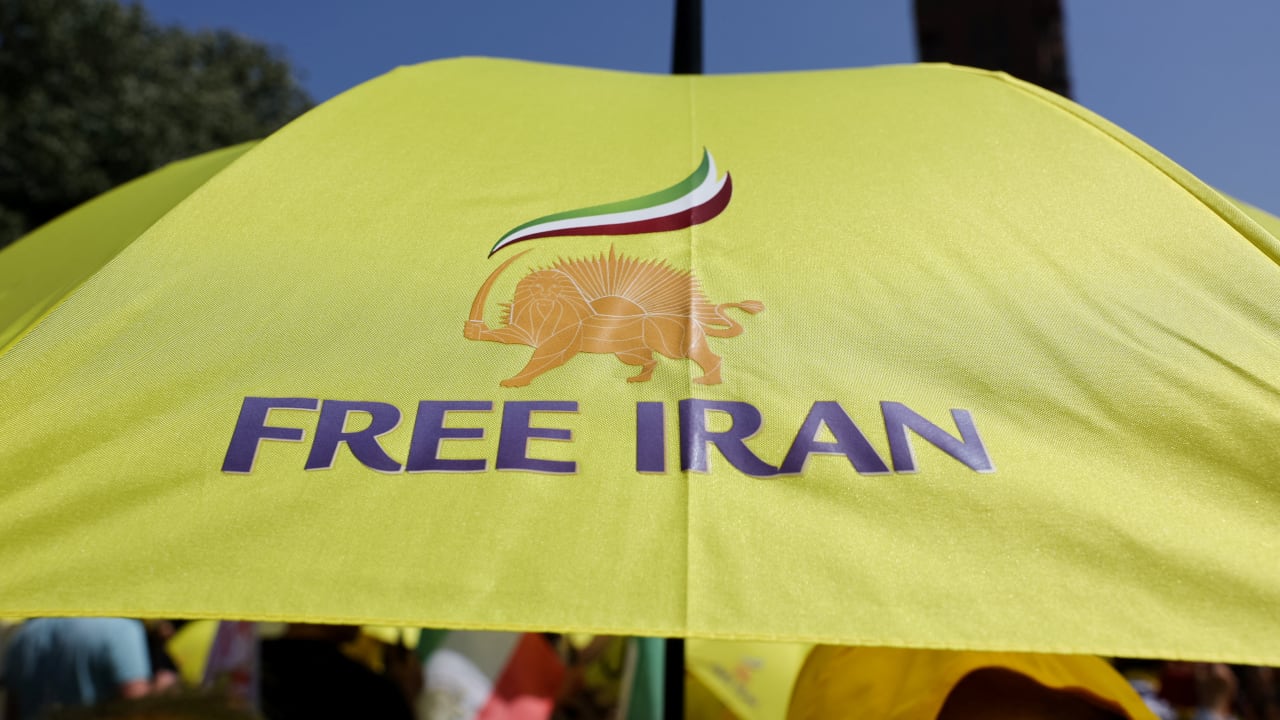
HJS encourages Western policymakers to offer training for all opposition groups, but only if they are outside of Iran’s political structures and only if they support regime collapse. Such training and coordination should address the opposition’s lack of a structured and unified leadership that is accepted by all opposition groups. Currently, the opposition is “decentralized, fragmented, and there is also no shared vision or strategy amongst the opposition,” it argues, citing other groups such as the National Council of Resistance of Iran (NCRI) and the Mojahedin-e-Khalq (MEK).
HJS explains that the lack of centralization on top of mutual distrust has historically undermined cohesive resistance to the regime.
Nevertheless, while opposition groups differ in tactics, HJS finds that they share a similar outlook. Both NCRI and MEK want Iran to be a non-nuclear state, with no weapons of mass destruction. Both also envision a liberal and secular democratic Iran. As a result, HJS argues that there is a great opportunity for Western states to “complement their military interventionism with recognizing opposition groups in exile and within Iran, and coordinating their positions to mitigate the potential negative effects of regime collapse with a transition of power and authority.”
Part of creating a viable opposition relies on creating economic continuity for Iran, HJS notes. The National Unity for Democracy in Iran (NUFDI) therefore established the Iran Prosperity Project to promote liberal democratic principles, such as freedom of individuals to make interest-based decisions, respect for private property, and fostering personal responsibility and innovation. The Project advocates eliminating barriers for domestic entrepreneurs and for women to participate in the labor market.
It would also be critical for the future government to establish regulatory frameworks before privatizing state-owned enterprises in order to prevent corruption and avoid elite asset capture and thus safeguard essential services; ensuring that water, electricity, food distribution, and healthcare would be provided uninterrupted through transitional budgets and oversight mechanisms during transition.
Multi-pronged attack
HJS concludes the report by saying that military intervention alone is a “counter-productive response as it serves to cause people to rally around the flag and entrench the regime’s true authoritarianism.”
It instead recommends a “pincer movement” in terms of both external pressure and the fostering of internal pressure.
In order to create further cracks in the regime, HJS recommends airstrikes and sanctions, as well as a communication strategy that “redefines Persian nationalism and Iran’s Islamic identity.” This could, for example, take the form of increased broadcasting to the Iranian people as well as covert assistance to the domestic opposition and the funding of NGOs. Coupled to this would be the continued support for exiled opposition and financial incentives for senior officials who defect.
This, HJS says, would help to mitigate the risk of a vacuum of governance, which would disincentivize opposition to the Iranian regime.