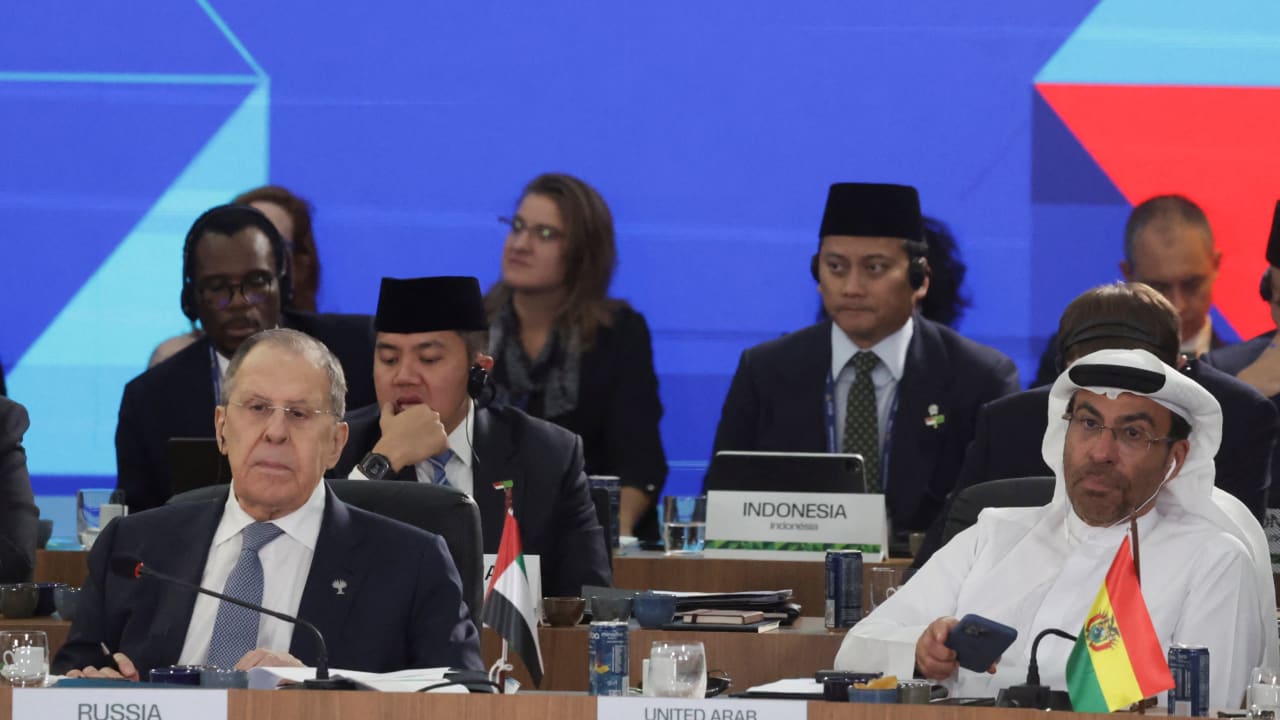
A meeting of several non-Western countries in Brazil this week has important implications.
The leaders of BRICS gathered in Rio de Janeiro on Sunday, presenting the largest bloc of countries that basically challenges or balances the Western economic powers that are embodied by the G7.
This matters for the Middle East because more and more Middle Eastern countries are moving towards BRICS and other non-Western groupings of countries. BRICS is also critical of attacks on Iran and the Israel-Hamas War.
Brazilian President Luiz Inácio Lula da Silva said at the meeting, “We are witnessing the unparalleled collapse of multilateralism… If international governance does not reflect the new multi-polar reality of the 21st century, it is up to BRICS to help bring it up to date.” He also critiqued NATO.
Meanwhile, US President Donald Trump also threatened the BRICS bloc, calling its policies “anti-American” and proposing additional tariffs on the countries that align themselves with those policies. This warning comes as Trump’s negotiation period for reciprocal tariffs ends on Wednesday.
An interesting time for BRICS
It is an interesting time for BRICS. Chinese leader Xi Jinping did not attend this year; instead, Premier Li Qiang represented Beijing. Russian President Vladimir Putin also did not physically take part in the summit this year. Indian Prime Minister Narendra Modi did attend. He has been traveling the Caribbean and Latin America, extending India’s influence in this region.

BRICS continues to expand. Brazil, Russia, India, China, and South Africa are now joined by Egypt, Iran, the United Arab Emirates, Ethiopia, and Indonesia.
BRICS matters because it brings together countries that may challenge the US-led world order that has emerged since the end of the Cold War. It also brings together emerging economies. BRICS is also more critical of Israel.
For instance, according to Turkey’s Anadolu, the meeting in Brazil condemned “attacks on Iran” and also said that Gaza is an “inseparable part of Palestine.” The group of countries is concerned about a possible escalation in the Middle East.
“We condemn the military strikes against the Islamic Republic of Iran since June 13, 2025, which constitute a violation of international law and the Charter of the United Nations, and express grave concern over the subsequent escalation of the security situation in the Middle East,” a joint declaration read.