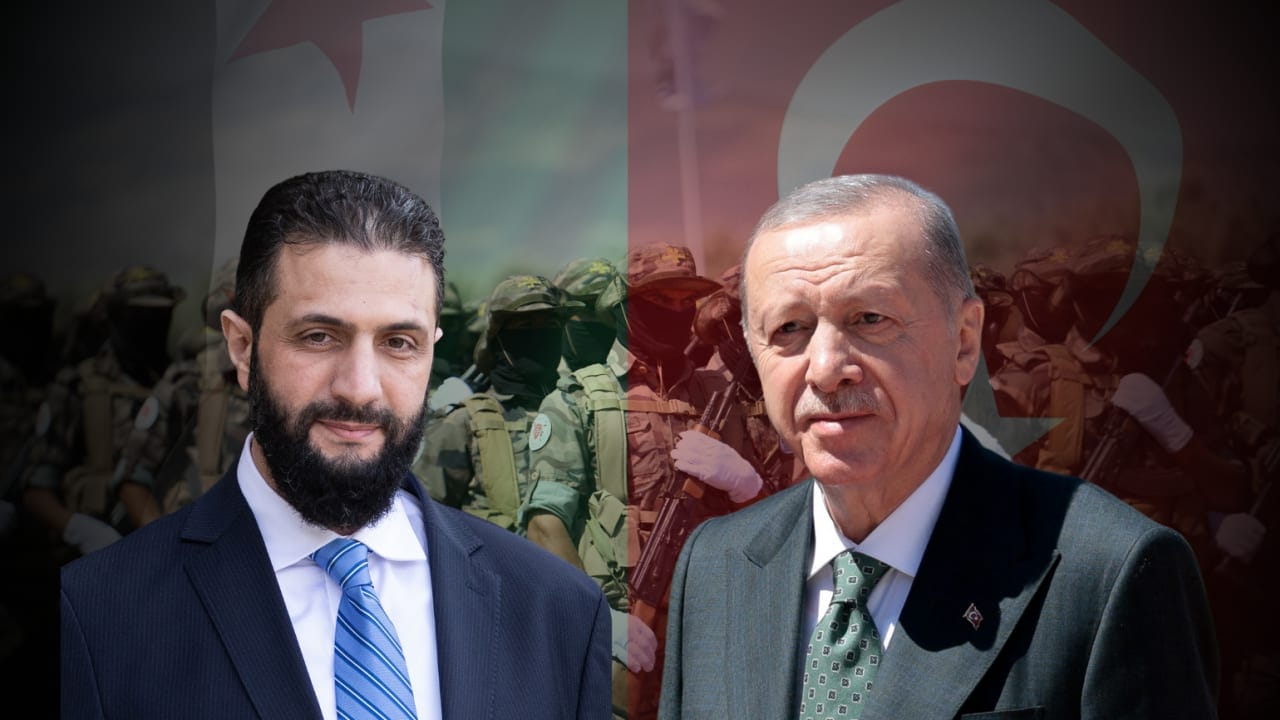
By strengthening ties with Israel, Syrian President Ahmed al-Sharaa is essentially trying to reduce Turkish influence in Damascus, Tel Aviv University's Moshe Dayan Center for Middle Eastern and African Studies's Dr. Hay Eytan Cohen Yanarocak told Maariv on Wednesday.
Sharaa is trying to reduce dependency on Turkey without completely severing ties, while Turkish President Recep Tayyip Erdogan is concerned as a country that was once under his influence may join the Abraham Accords.
Is Turkey's influence in Syria strong enough to prevent it from joining? A complex geopolitical struggle is unfolding with Turkey at the center.
Turkey sees every step Damascus takes toward joining the Abraham Accords as a direct threat to Ankara's regional position.
Sharaa's motives are far from ideological, however, Yanarocak argues. "Sharaa is making this move not because he's a Zionist, but because it grants him a sort of independence from Turkey," he clarifies.

A closer relationship with Israel opens the door for the new Syrian government to have sanctions lifted and to approach the wealthy Gulf states, which is key to gaining economic and security independence from Turkey's sphere of influence.
However, Turkey's influence in Syria is not just hypothetical. "Turkish intelligence was actually the first international body to conduct an open official visit to Syria after Assad's fall," Yanarocak noted.
"Northern Syria is still effectively under Turkish occupation. The Turks provide a lot of infrastructure for airports and transportation within Syria."
Not only that, but "a significant portion of Syria’s cabinet and leadership either studied in Turkey, while some are Turkish citizens, and most have ties to Turkey," he added.
The new Middle East's geopolitics also shapes Turkey's position.
Turkey benefits from Israel's weakening of Iran
"Iran and Turkey are historic rivals. The Turks won’t admit it, but they really benefit from the result of the last war, namely, the humiliation of the Iranians," Yanarocak analyzed.
In the wake of Iran’s humiliation, Turkey can now label itself as the only Muslim power in the Middle East," he added.
The result is a new reality where "at the top of the Middle East, as regional powers, who do we see? Only Israel and Turkey," Yanarocak told Maariv.
Given this, Syria becomes the central point of expected friction between Israel and Turkey, he noted.
"I definitely think Turkey will make efforts to ensure that the Syrians do not sign this agreement."
This is due to how Turkey "wants the Syrians to remain on their side along with Qatar. They also want to see Israel isolated."
While Erdogan is doing everything to delegitimize Israel, any agreement between Israel and Syria "also undermines Turkey’s strategy," Yanarocak added.