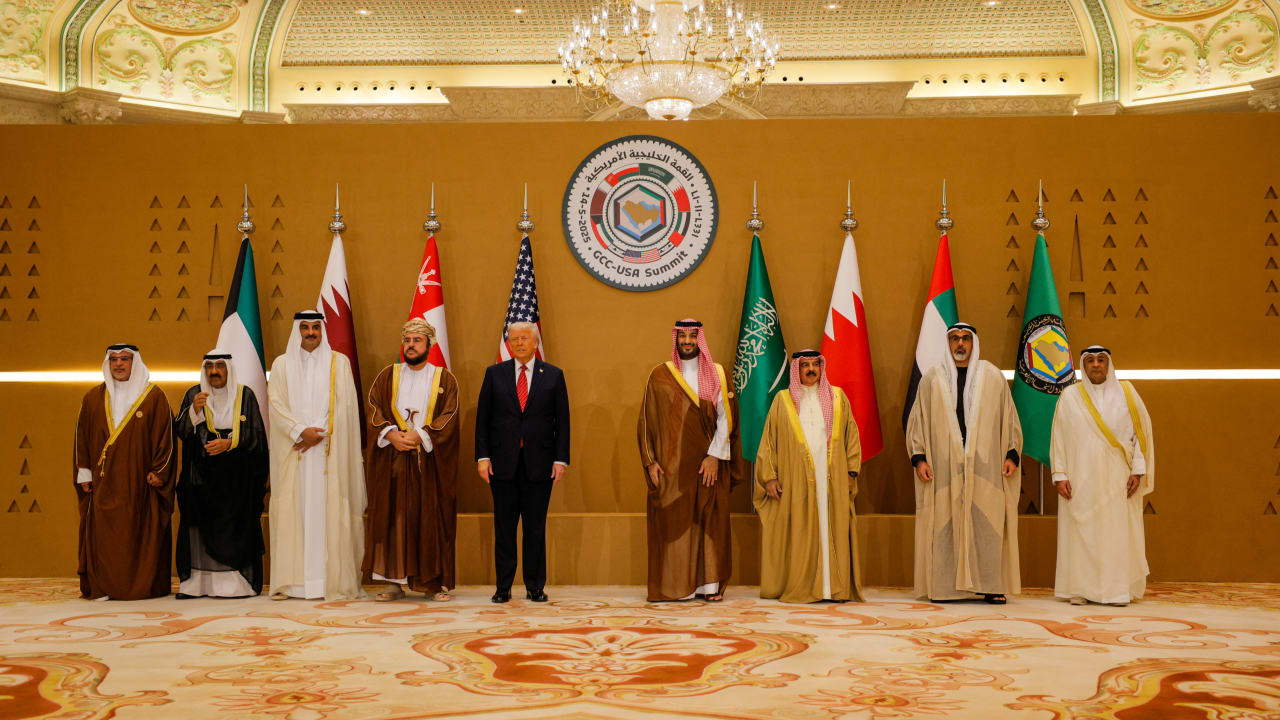
The US strikes on Iran early on Sunday potentially put the Gulf states on the front lines of any larger war. This is because Iran could move to close the Strait of Hormuz through which oil is shipped.
That would cut off Qatar, Kuwait, and Bahrain from access to the Indian Ocean. It would also affect the UAE, although the UAE has access to the Gulf of Oman and would not be completely cut off.
The Gulf states have expressed concern about the US strikes. These countries are US partners and allies, and they don’t want to condemn the Trump administration.
Nevertheless, they want to make it clear that they hope things won’t fly out of control. For instance, most of these countries host US bases. Bahrain has a US naval base, Qatar has Al Udeid Air Base and UAE has Al Dhafra Air Base. There are also US facilities in Kuwait.
As such, these countries already know they are perceived as close US partners and allies, and that any tensions could spill over.

On Sunday, the UAE expressed its deep concern over the ongoing tension in the region and the targeting of Iranian nuclear facilities. Its Ministry of Foreign Affairs called for “an immediate end to the escalation to avoid serious repercussions and a slide into new levels of instability in the region,” UAE-based Al-Ain media reported.
It stressed “the need to prioritize diplomacy and dialogue to resolve disputes, within comprehensive approaches that achieve stability, prosperity, and justice.”
The UAE hopes that the international community can help with a solution to the tensions that would protect the region from the “scourge of conflict.” It urged the UN Security Council to assume its responsibilities by working diligently to resolve the chronic issues in the region, which are at stake and pose a growing threat to regional and international security and stability, the report said. The UN secretary-general expressed similar concern, it said.
Saudi Arabia said it had “great concern” following US attacks on the Iranian nuclear sites, Saudi Arabia-based Arab News reported. The Saudi Foreign Ministry “affirmed its condemnation and denunciation of violating the sovereignty of the Islamic Republic of Iran, expressing the need to exert all efforts to exercise restraint, de-escalate, and avoid escalation.”
Qatar’s Foreign Ministry said it warned that “the current dangerous escalation in the region may lead to catastrophic consequences at both the regional and international levels. It calls on all parties to exercise wisdom, restraint, and to avoid further escalation.”
Oman denounced the escalation and expressed concern.
Clearly, most of these states have issued similar statements.
Gulf states know they would be the first to face repercussions from growing crisis
The messaging is clear: These states know that they will be among the first to face repercussions if the crisis grows. They hope mediation efforts will be successful. They could come via Turkey, Russia, Qatar, Oman, or some other channel.
Many countries have an interest in helping Iran climb down from the crisis. Most of them have already dealt with the more than 600 days of crisis that the October 7 massacre caused. They want regional stability and peace.