
The liberation from Egypt was a multilayered event. It transformed Jewish history by releasing us from more than two centuries of slavery and setting us on the path toward our ancestral homeland. Along that journey, we would stand beneath a trembling mountain and receive the divine word, charged with living a life shaped by commandment and covenant.
In time, we would assume a broader role – bearing witness to monotheism in a world fractured by paganism and superstition. Through our history and teachings, we would help redirect the human imagination away from idolatry and toward a vision of life grounded in moral responsibility and restraint.
God first reveals Himself to Moses through a bush that burns yet is not consumed. The visual paradox is deliberate. It signals that the divine cannot be reduced to scientific explanation or empirical inquiry. God exists beyond the categories through which human beings normally understand reality.
The image of a bush aflame yet not consumed also conveys separation. God is not part of the physical system He created. The laws that govern nature, energy, and decay do not bind Him. It symbolizes a God who transcends human understanding and stands apart from the world He governs.
Through this image, Moses is taught the first lesson of monotheism: God is not part of the created system and cannot be grasped by the human imagination. Years later, atop Mount Sinai, Moses would ask to perceive God’s nature and understand His essence, and he would be told, “You cannot see My face” – a metaphor conveying that while human beings may approach God and speak about Him, full comprehension remains beyond reach.
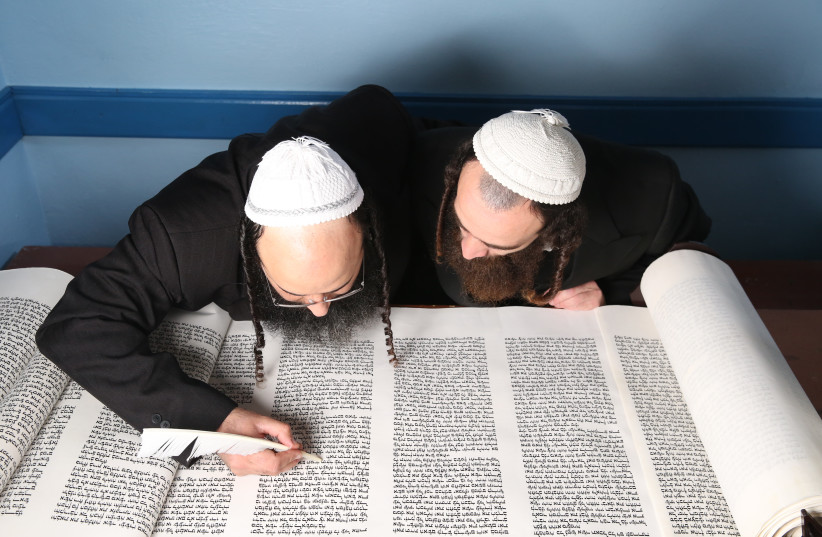
The encounter at the burning bush lays the bedrock of monotheism: God may be known, but He can never be fully understood.
Moses’ dilemma
Moses then asks a compelling question: How should he present God to a nation of slaves? They did not witness the burning bush. The challenge was not abstract theology but reaching people shaped by fear, exhaustion, and long oppression. They had been crushed by more than two centuries of bondage. Much of the spiritual legacy built by their ancestors had been shattered under Egyptian oppression.
Slaves live in survival mode – one step, one day at a time. They have little emotional or imaginative space for abstraction, let alone for a God who defies logic and resists definition. What language, what symbols, could convey God without reducing Him to something physical – or pulling them back toward the paganism of their surroundings? Moses’ uncertainty is understandable: How does one speak of an unknowable God to a people ground down by generations of slavery?
Eternity and consolation
God answers Moses: “I am that I am.” In this brief phrase, God introduces Himself as eternal, existing before the universe and independent of it.
Unlike human beings, who are shaped and altered by circumstance, God remains constant. Human lives move from strength to weakness, from promise to decline; God does not. He exists across all moments without change or development. This name allows Moses to describe God without images – as a reality beyond time and change.
This first glimpse of God as eternal and unchanging offered real relief. The people remembered Joseph – how he had saved Egypt from famine and how his family was welcomed with honor. Alongside these memories were stories of earlier generations, of a family once lifted to prominence.
Learning that God is eternal renewed hope. If God had acted once, He could act again. The promises whispered from generation to generation, passed along like bedtime stories, might yet be fulfilled. As distant and improbable as redemption seemed amid the misery of slavery, it suddenly felt imaginable.
They still struggled to picture a God without physical form. But they could grasp a God who transcends time and change, and whose promises endure in the darkest hours.
The process of learning about God and finding ways to relate to Him without physical form had begun. It would unfold gradually, shaping faith step by step.
God and human relationships
Moses now stands in Egypt confronting Pharaoh for the first time. His message is directed at an intransigent tyrant who sees himself as a demigod. Moses commands a ruler, whom no one dares challenge, to release the Jewish slaves, warning that refusal will unleash plagues that will shatter Egypt’s pride.
At this early stage, Moses names only one plague: the death of the firstborn. Speaking in God’s name, he declares that the Jewish people are God’s children. If Pharaoh refuses to free them, God will strike Pharaoh’s firstborn. Though delayed until after nine additional plagues, it is the first threat Moses delivers – meant to jolt Pharaoh into submission.
But Pharaoh was not the only audience. The Jewish people also heard God describe them as His children and pledge redemption – even at devastating cost to the tyrant. From this declaration, they learned another way to relate to a God they could not define. If God chose to describe them as His children, He was inviting them to relate to Him as a parent.
God invites us to draw upon human relationships as lenses through which to relate to Him. He is not our father in a biological sense, yet we are allowed, and expected, to imagine Him as a parent so that the emotions bound up in that bond – trust, dependence, and longing – can animate faith. Faith is meant to be lived emotionally, not only contemplated abstractly.
As that relationship matured, additional metaphors emerged. God is described as a spouse, demanding loyalty and offering a covenant. King David compares God to a mother, evoking the warmth and security an infant feels when embraced. He also speaks of God as a friend, drawing upon the trust that defines friendship.
Gradually, the contours of monotheism come into focus. God cannot be understood in human terms. However, to build a living relationship with Him, we are given conceptual entry points, such as the idea of an unchanging God, steady amid upheaval. We are also given metaphors – not to define God but to make a relationship possible. Through them, we are invited to bring the language and emotion of human relationships into our encounter with Him.
History, nature, and choice
Despite his ominous warning about the fate of the firstborn, Moses fails to persuade Pharaoh, and the result is harsher oppression. When Moses returns a second time, he introduces a vital idea to a broken people: God does not stand apart from events. He enters history and reshapes it.
Moses delivers divine promises of redemption – of release from Egypt and a journey toward the Land of Israel. The events that follow will reinforce God’s involvement in this world.
God does not act only through political upheaval or human rebellion. Nature itself is overturned; the orderly patterns of the world are suspended as the plagues unfold. The Nile, the land, the skies, and even time bend in service of redemption.
More striking still, God’s reach extends inward. Pharaoh’s decisions – his stubbornness and resolve – become part of the unfolding drama. Human will and inner struggle are no longer beyond God’s reach. Redemption moves through history, through the natural order, and through the inner life of human beings, revealing a God who governs not only events and nations but the deepest layers of human choice.
The liberation from Egypt was not only political or historical. It also initiated a gradual education in monotheism. God cannot be understood in human terms; like the burning bush, He remains a riddle. Yet we are asked to build a deep relationship with Him, even without full comprehension.
This has been our enduring legacy: commitment to a God we can never fully understand.■
The writer, a rabbi at Yeshivat Har Etzion, was ordained by Yeshiva University and has an MA in English literature. His books include To Be Holy but Human: Reflections Upon My Rebbe, HaRav Yehuda Amital. mtaraginbooks.com.