
Many patients and families facing terminal illness with no known cure confront the question of whether to pray for a “miracle” when medical experts have determined that death is inevitable. Is such prayer appropriate?
The Talmud records a story in which the biblical King Hezekiah declares, “Even if a sharp sword rests upon a person’s neck, he should not prevent himself from praying for mercy. As the commentators assert, Hezekiah learned this lesson from his royal predecessors, who were saved from death and defeat at the hands of their enemies. In war, it’s always possible that salvation may be found, just as a person can be pardoned before the guillotine falls on his neck.
The idea that our fate is never sealed is also found in discussions regarding prayer and repentance. According to some sages, even after a divine decree has been issued against a person, it can be overturned through the merit of repentance. According to several scholars, this establishes the paradigm that prayer for recovery, even miraculous, is always permissible to save someone’s life.
However, the Talmud clearly rules that there are limits to what we can pray for. As the Mishna declares, “One who cries out over the past in an attempt to change that which has already occurred – it is a vain prayer (tefilat shav).” For example, it is inappropriate to pray for a specific gender of a baby once the fetus has developed. Alternatively, if one is returning to his city and hears a scream, he should not pray to God that this sound is not coming from his house. In both cases, the event already occurred and, the Talmud explains, there is nothing to pray for anymore.
Similarly, we learn not to pray for rain in seasons when it is totally unnatural, no matter how badly we need it. When we’ve collected 100 stacks of wheat or barrels of wine, we should not pray that they will miraculously become 200. All we can do at this point is pray that these products will stay in good condition and sell for a profit. Once we know that the reality has been determined, we shouldn’t pray to undo the past. Perhaps such prayers were appropriate for great spiritual figures of the past, but it is utter hubris to think they can be utilized today.
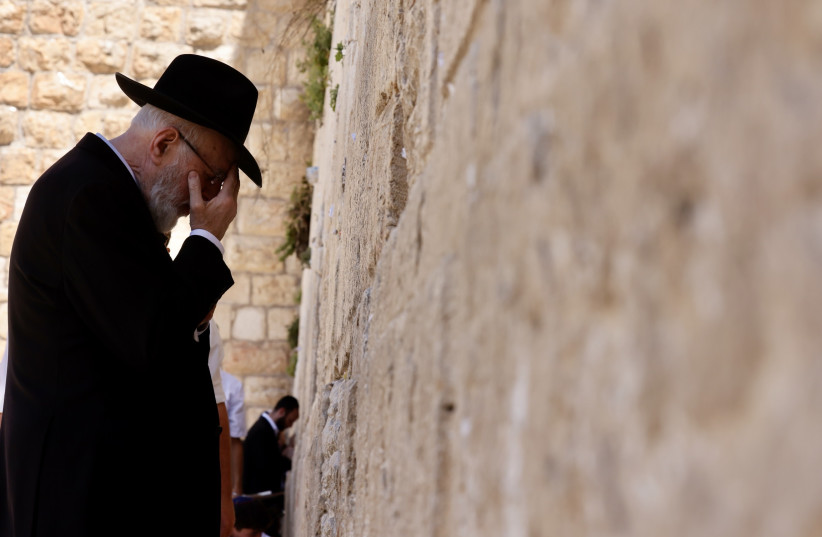
Despite these clear sentiments, some point to a prayer that is occasionally recited on Hanukkah which beseeches God to perform miracles for the Jewish people like He did in the times of the Hasmoneans.
Rabbi Alexander Sender Shor suggested that perhaps such prayers are allowed if directed to benefit the entire Jewish people or large masses. Alternatively, it may be permissible to pray for “hidden miracles” like the Maccabean victory in which there was no overt divine intervention. In this vein, Rabbi Chaim Kanievsky suggested that we can still pray for a miraculous healing, as a cure may be found, especially given the number of cases where what appeared to be a irreversible illness was surprisingly resolved. Sometimes what seems like a miracle might yet lie within nature’s hidden reach.
However, many decisors categorically assert that you can’t pray for any healing that goes against the natural order. Why not?
Medieval theologians teach that God desires to govern the world through the natural order. As figures like Rabbi Isaac Arama and Rabbi Nissim of Gerona explained, a world run by constant miracles would undermine human free will and moral responsibility. If nature were suspended regularly, human effort would become meaningless, and the divine system of reward and punishment would collapse. Miracles, therefore, are rare, purposeful deviations – never the norm.
This framework shapes the proper role of prayer. Rabbi Avraham Yitzhak Hakohen Kook emphasized that prayer must align with nature and reason. Its goal is not to force divine intervention but to elevate the soul, refine one’s character, and strengthen a person’s bond with God. To pray for something that contradicts natural law – such as a supernatural cure for a terminally ill patient – risks reducing prayer to self-serving magic and losing its real transformative power.
When not to pray for a miraculous healing
Rabbi Shlomo Zalman Auerbach reflected this approach in practice. He taught that when medical consensus deems recovery impossible, one should not pray for a miraculous healing. As he pithily noted, the Talmud says to pray when the sword is resting on one’s neck – not when it is already cutting the neck. At that point, prayer should focus on asking for God’s mercy to ease the suffering of the patient, however that might be, and bring strength and comfort to the family.
When a community once gathered for mass prayers for such a patient, he reportedly stopped the session after reciting one chapter of Psalms, arguing that is all that is needed to pray for their general welfare. Such restraint dignifies both prayer and the patient, while avoiding false hope or theological disillusionment when heartfelt prayers go unanswered.
Rather than abandon prayer in the face of tragedy, Judaism asks us to deepen it. We do not pray to overturn nature but to find strength within the divine natural order.
When we pray for comfort, clarity, or courage – not for a reversal of reality – we affirm the true power of prayer: a sacred act of humility and connection, grounded in faith, even when outcomes remain unchanged. ■
The writer is executive director of Ematai, an organization dedicated to helping Jews navigate end-of-life care dilemmas. For the Ematai Tefilot Project, see www.ematai.org/prayers.