
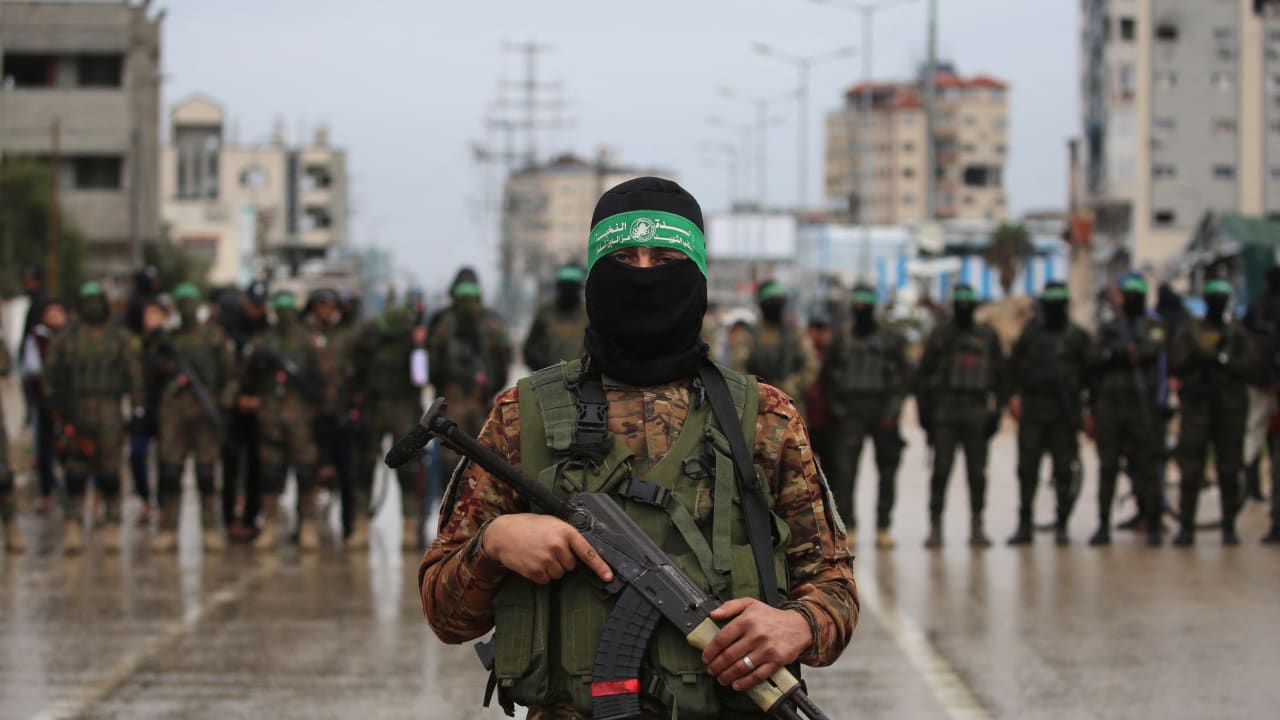

Eleven days. That was how long Mohammed Odeh lasted as Hamas’s military chief after an Israeli strike killed his predecessor, Izz ad-Din al-Haddad, in May. Then Israel killed Odeh, too.
Two commanders were dead in less than a fortnight. Across the border, there was no answering barrage.
By the first anniversary of the October 2025 ceasefire, AFP reported that Hamas had mounted no rocket attacks on Israel. For an organization that once made Israeli families measure the distance to a shelter in seconds, that silence was a measure of how much power it had lost.
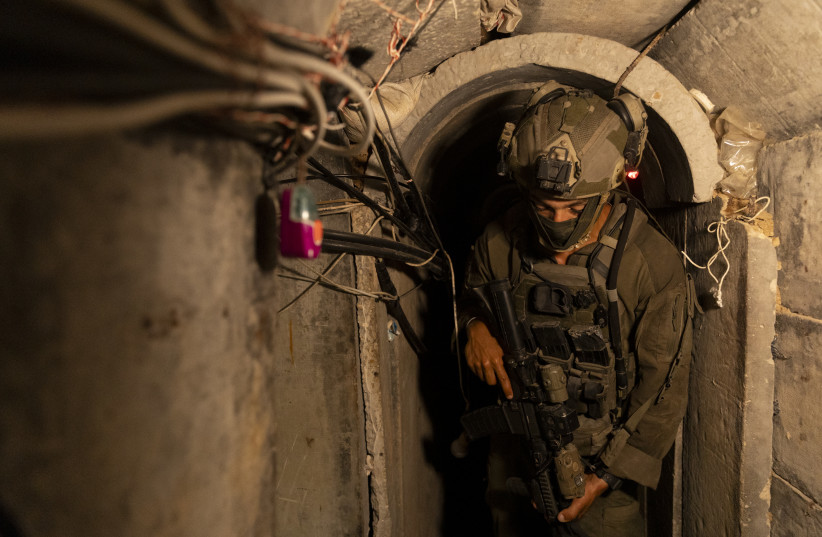
Before October 7, 2023, the IDF estimated that Hamas fielded roughly 30,000 fighters in five brigades and 24 battalions. Two years later, the military assessed that it had dismantled much of that structure. It also said it had destroyed the vast majority of the tunnels used for attacks, command, or weapons production.
Other tunnels survived, and Israeli intelligence subsequently reported repairs in areas beyond the IDF’s reach. The damage was substantial even without counting every passage under Gaza as destroyed.
Hamas can still recruit. But it is using teenage boys as lookouts or to plant explosives, and the IDF assessed that many recruits had received little meaningful training.
In October 2026, ACLED assessed that Hamas had lost much of its rocket arsenal and lacked the means to mount a large cross-border attack. It can still ambush soldiers and intimidate civilians.
Rebuilding the force that carried out October 7 is a different order of business. Israel has an opening to make that military decline permanent.
Dismantling Hamas’s power
The first demand should be the complete, verified dismantling of Hamas’s military apparatus. The timetable can be negotiated. The outcome cannot.
Weapons must be surrendered, military tunnels sealed and independently inspected, and command and financing networks broken up. A rifle transferred from a Hamas fighter to a policeman who still takes orders from Hamas has simply changed shoulders.
Israel should cooperate on defined tasks with Dr. Ali Shaath, chief commissioner of the National Committee for the Administration of Gaza, and with the Board of Peace, chaired by US President Donald Trump, through Nickolay Mladenov, its High Representative for Gaza.
Start with water, sanitation, and clinics. The committee will earn authority when a family can get clean water or see a doctor without going through a Hamas intermediary.
Gaza’s extended clans have a part to play. Hamas spent years curbing their influence. Some have since fought its gunmen, and some helped Israeli forces locate weapons and underground infrastructure
Israel should work with willing clans that have opposed Hamas and help bring vetted representatives into the new civilian administration alongside other Gazans.
Their local standing can help a new authority take root. Any members recruited into the police should answer to the same civilian command as everyone else. Gaza has had ample experience with armed men who answer to somebody else.
Preventing Hamas’s return
Qatar and Turkey are the wrong players in the wrong match with a negative impact. Both have ties to Hamas and helped mediate the ceasefire. If Doha and Ankara conclude that Hamas cannot readily rebuild its prewar army, they have an incentive to preserve its influence inside the next administration.
Before October 7, 2023, Hezbollah could sit in Lebanon’s cabinet while keeping its own armed command. Hamas could pursue a quieter version in Gaza, using loyalists in the police, the civil service, or the distribution of aid to recover power over time.
Israel should insist that Qatar and Turkey have no operational role in Gaza’s government, security, or reconstruction. A seat at the negotiating table comes with no claim on the keys to Gaza.
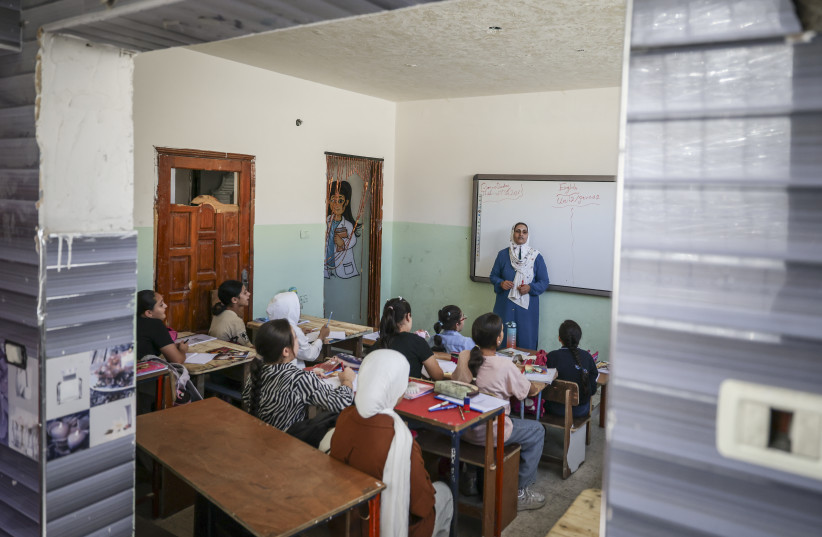
Finally, tie long-term reconstruction funding to education reform. Transfer Gaza’s schools from UNRWA to the new civilian authority in an orderly handover that keeps children in class.
UNRWA uses poisonous Palestinian Authority textbooks, so a change of operator must come with a review of what is taught. Independent inspectors should examine textbooks and teaching materials, visit classrooms, and publish their findings.
The children in Gaza should learn their own history and have the freedom to question anyone who dresses up antisemitism or the murder of civilians as patriotism.
The quiet across the border has bought Israel time. The world should use it to build a Gaza where a police chief can say no to Hamas, a teacher can do the same, and both can go home safely.
If Hamas can still make them pay for saying no, it has already found its way back into power.■
The writer is a former head of the Counterterrorism Division in the Mossad and is currently a researcher at the Jerusalem Center for Security and Foreign Affairs (JCFA).